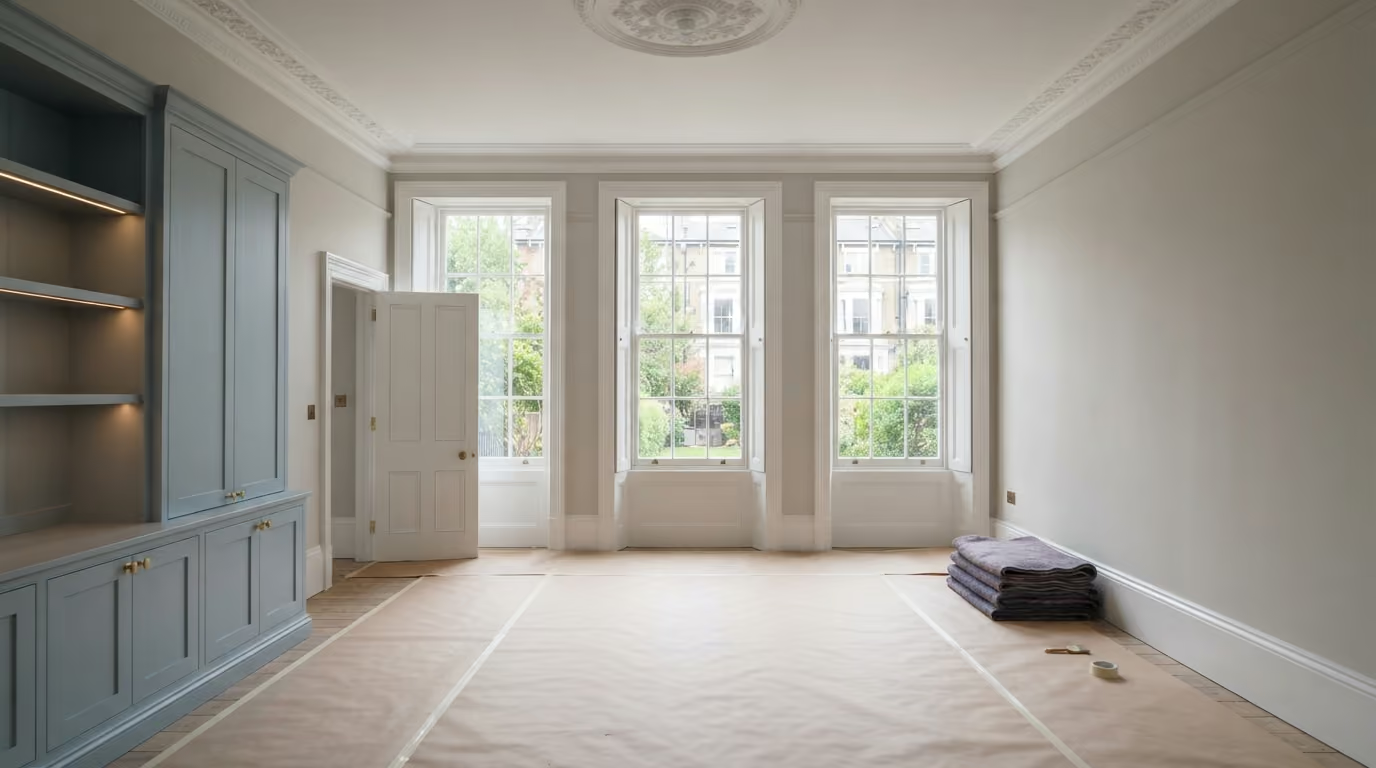
Decorating too early in a renovation can lead to damaged walls, repeated repairs, and unnecessary delays. This guide explains when painting should begin, what needs to be completed first, and how to coordinate plastering, joinery, electrical work, flooring, wallpaper, limewash, and final snagging for a refined result.
The practical answer: interior decorating should usually be one of the final major stages of a Kensington townhouse renovation, not something squeezed in while plastering, joinery, electrical work, and floor installation are still changing the surfaces around it. Fresh plaster needs to be ready, new joinery needs to be installed and prepared, electrical positions need to be final, and the property needs to be sufficiently clean before the final decorative finishes begin. For professional preparation and finishing, see our interior painting and decorating service.
Renovating a London townhouse rarely happens in one neat sequence. Several trades may be working across different floors, new bathrooms may be complete while the entrance hall is still being altered, and fitted furniture may arrive after much of the plastering has already finished.
This makes the decorating programme more important than it first appears.
If painting begins too early, freshly finished walls can be damaged by electricians, joiners, flooring installers, or furniture fitting. If decorating is left too late without enough preparation time, the final stage can become rushed just as the client wants to move back into the property.
The best result comes from treating decorating as part of the renovation programme from the beginning.
This guide explains when interior painting should happen after building work, what needs to be finished first, how new plaster and joinery should be assessed, and how to avoid unnecessary repairs to newly decorated rooms.
A newly plastered room can look almost complete long before it is ready for final decoration.
Before painting begins, consider what other work still needs to happen in the room.
This may include:
Each of these can involve drilling, filling, sanding, cutting, or moving equipment through the room.
If the walls are already finished, small construction tasks can quickly become decorating repairs.
New plaster is common during townhouse renovation, whether the property has been fully replastered or only repaired locally.
The important point is that the substrate needs to be ready before the decorative system is applied.
Drying conditions vary depending on:
A fixed number of days is therefore less useful than assessing the actual surface.
Large plaster repairs, newly skimmed rooms, and thicker areas may not all become ready at the same time.
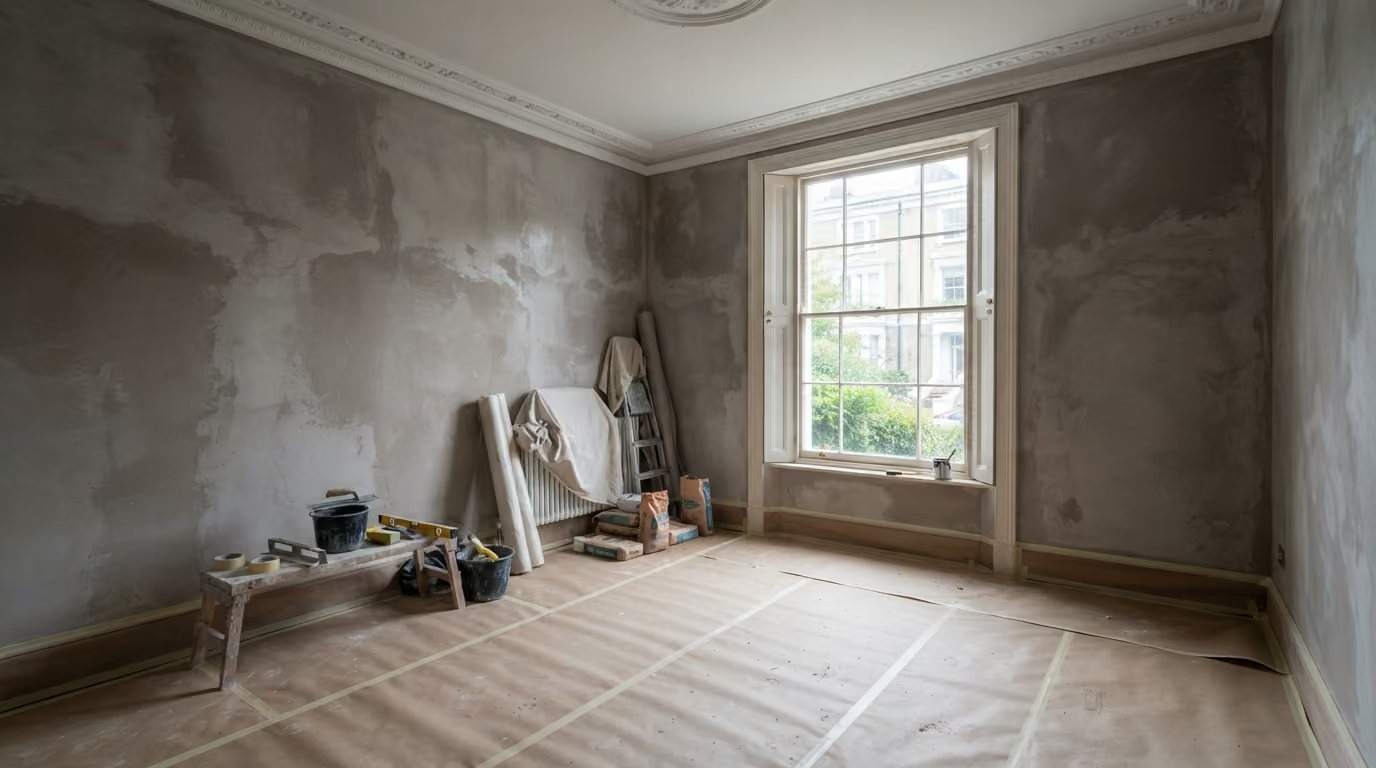
A renovation does not always create a completely new surface.
One wall may contain:
These sections need to be prepared so the finished wall reads consistently.
Otherwise, differences can become visible through the paint as changes in texture, absorption, or surface level.
The final coat should not be expected to correct inconsistencies that remain underneath it.
Electrical changes are one of the most common causes of damage to freshly decorated walls.
Before final painting, confirm the positions of:
Moving a wall light after the room has been painted can require a new cable route, plaster repair, sanding, priming, and repainting.
Even a small socket move can affect a much larger section of wall than expected.
Lighting does more than illuminate a finished room. It exposes the quality of the preparation.
Wall lights and picture lights can send strong directional light across a surface and reveal:
If these lights are part of the final interior, they should ideally be available during the later stages of preparation so the surfaces can be inspected under the conditions in which they will actually be seen.
Fitted joinery can create substantial disruption even when the room around it already looks complete.
Installing wardrobes, shelving, panelling, or alcove cabinets may involve:
The surrounding wall may also need local adjustment where the joinery meets plaster.
For this reason, it is usually better to complete substantial fitted furniture work before the final wall decoration.
New joinery often looks ready to paint when it first arrives.
In reality, installation may leave:
These details should be corrected before the final decorative coats.
This is particularly important in a period Kensington interior where skirting and architraves may have detailed profiles that catch light and make heavy filler or poor sanding more obvious.
Renovations often reveal original doors, shutters, skirting, or panelling that may be worth retaining.
This decision should be made early.
If old joinery is going to be repaired, stripped locally, adjusted, or refinished, that work may affect the neighbouring walls.
Completing the wall first and then deciding to restore the door can create unnecessary damage around the architrave and surrounding plaster.
New flooring, carpets, or underfloor work can alter how doors fit.
Before painting doors and frames, check:
Planing or adjusting a freshly painted door is avoidable when the fit can be checked first.
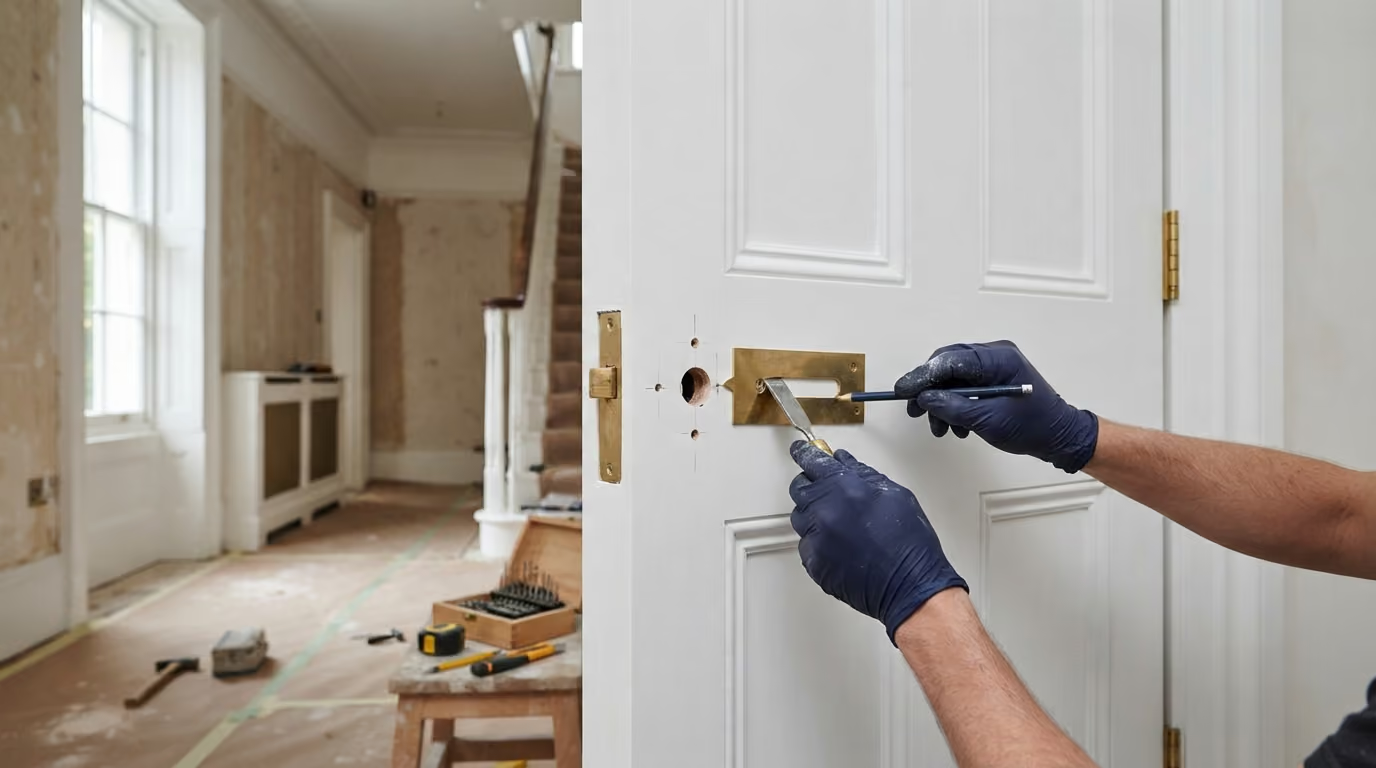
Changing handles after the doors are complete can create new holes or expose old ones.
Different hardware may use:
Final hardware selections should therefore be known before the last filling and painting stages.
There is no single sequence that works for every property.
Some flooring needs to be installed before final decoration. Other floor finishes are better protected until later in the programme.
The important part is deciding the sequence deliberately.
Consider:
Floor sanding, for example, creates fine dust that can affect decorating work if the stages are poorly coordinated.
Freshly finished timber floors also need careful protection during later painting.
Dust is one of the biggest differences between decorating a normal occupied room and decorating a property that has just undergone building work.
It can settle on:
A room that looks clean can continue releasing fine dust from adjoining spaces if building work is still happening elsewhere.
Good final decoration therefore depends on both local preparation and the wider site condition.
On a large townhouse project, waiting until every trade has left every floor may be unnecessary.
Decoration can often progress in stages.
For example, upper bedrooms may be ready while lower reception rooms are still undergoing joinery installation.
The key is to create genuinely finished zones rather than repeatedly returning to rooms that are still being altered.
This requires coordination between the main contractor, joinery team, electricians, flooring installers, and decorators.
Once a room is finished, it should be treated as finished.
That means avoiding:
A final decorative finish can be excellent when completed and still become damaged before handover if the room is not protected afterwards.
Snagging should not mean discovering major unfinished preparation at the end of the project.
It is a final inspection for smaller issues that only become visible once the room is complete and clean.
These might include:
The programme should include enough time for these details to be corrected before furniture and artwork fill the room.
A wall can look excellent under temporary site lighting and very different in strong daylight.
This is particularly important in Kensington homes with tall sash windows.
Side light can reveal:
The final inspection should therefore include the room in daylight where possible.
Leaving paint selection until the decorators are ready to start creates unnecessary pressure.
Colour should be tested against the elements that are already confirmed for the room.
These may include:
Large samples are much more informative than looking only at small colour cards.
They should be viewed in morning, afternoon, and evening light.
Renovated period homes often use several pale finishes, but small undertone differences become more noticeable when the entire interior is newly completed.
A white can appear:
This is why walls, ceilings, skirting, doors, and fitted joinery should be considered as a palette rather than selected separately.
Ceilings are sometimes treated as a quick final element, but renovation work can leave them with:
Large windows can create strong light across a ceiling, particularly in upper floor rooms.
These surfaces should therefore be checked carefully before painting.
Period plasterwork may have been repaired during the renovation.
Before the final coats, check:
Detailed plasterwork benefits from controlled paint application because excessive build up can gradually reduce definition.
If new panelling has been installed during the renovation, its colour and finish should relate to:
The panelling may be hand painted or spray finished depending on the design and desired result.
What matters is that its preparation and colour are coordinated with the rest of the room rather than being treated as a separate late decision.
If some rooms include wallpaper, the installation programme needs even greater care.
Wallcovering should not be surrounded by ongoing drilling, sanding, or joinery installation if this can reasonably be avoided.
The substrate also needs to be prepared specifically for the selected material.
For specialist preparation and installation, see our wallpaper service.
Bauwerk limewash has natural tonal movement, which is part of its appeal.
That also means local repairs after later building work may be more difficult to disguise than a simple touch up on a conventional painted wall.
Electrical changes, cabinetry, drilling, and major fittings should therefore be resolved before the final limewash application.
If mineral walls are planned, see our Bauwerk limewash service.
Paint can make a room look complete very quickly.
That does not mean it should be used to cover unresolved problems.
Before final decoration, investigate:
A decorative finish should be the final layer over sound work, not the material used to disguise defects that still need attention.
Newly completed properties can sometimes develop fine cracks as different materials settle and dry.
Not every small line means something serious has happened.
However, cracks should be assessed rather than automatically filled without considering:
If a crack keeps returning in the same location, repeatedly covering it with filler and paint may not resolve the underlying reason.
Some Kensington renovations take place while the owners remain in part of the property.
This changes the practical sequence.
The project may need to be divided by floor or room so that:
A phased programme can take longer than decorating an empty property, but it can make the renovation significantly easier to live through.
Large furniture can damage walls surprisingly easily.
Sofas, beds, wardrobes, tables, and large artwork may pass through narrow halls and staircases.
If possible, major deliveries should be considered when planning the final decorating stages.
It may make sense to leave some vulnerable circulation areas until heavy furniture has been moved through, or to protect finished walls carefully during delivery.
High value interiors often include substantial artwork and mirrors.
If their locations are already known, fixing requirements can sometimes be planned before the final paint.
This is particularly useful where specialist fixings or blocking are required.
It reduces the risk of drilling exploratory holes through a newly finished wall.
The most efficient decorating programme is not necessarily the one that starts earliest. It is the one that begins once each room has reached the point where the surfaces can be prepared, finished, protected, and then left largely undisturbed.
When should painting happen during a townhouse renovation? Final decoration normally takes place after the major plastering, electrical changes, joinery installation, and other disruptive work in that room are complete.
Can rooms be painted while other parts of the property are still being renovated? Yes. Large projects can often be divided into completed zones, provided finished rooms can be protected from ongoing dust and construction traffic.
Should fitted wardrobes be installed before painting? Major fitted joinery is usually best installed before the final surrounding wall finish because installation can involve drilling, filling, sanding, and local repairs.
Should flooring go in before or after painting? It depends on the flooring system and wider programme. The important point is to coordinate the stages and protect whichever finished surface comes first.
When should paint colours be selected? Ideally before the decorators are ready for final finishing, with samples tested against flooring, joinery, stone, lighting, and other confirmed materials.
Should electrical fittings be installed before final painting? Their positions should be finalised before decoration. Final plates and fittings can then be coordinated with the painting programme without creating new wall repairs.
Can painters fix all cracks left by building work? Decorative preparation can address suitable surface defects, but recurring cracks, moisture, loose plaster, or movement should be investigated before they are simply covered.
We carry out interior painting and decorating across Prime Central London, including Kensington, Chelsea, Belgravia, Notting Hill, Knightsbridge, and Westminster. Our work includes complete townhouse renovations, reception rooms, bedrooms, entrance halls, staircases, period plasterwork, doors, skirting, wall panelling, fitted joinery, and detailed preparation before final decoration.
Planning the decorating stage of a Kensington townhouse renovation? Send photographs of the property together with details of the plastering, joinery, flooring, electrical work, fitted furniture, and the finishes you are considering. We can assess which rooms are ready, identify preparation requirements, and help sequence the decorating work around the remaining renovation stages. To begin, request a site visit and we will arrange a time that suits you.
Tell us a few details about your project and our team will review the enquiry and come back to you within one working day.