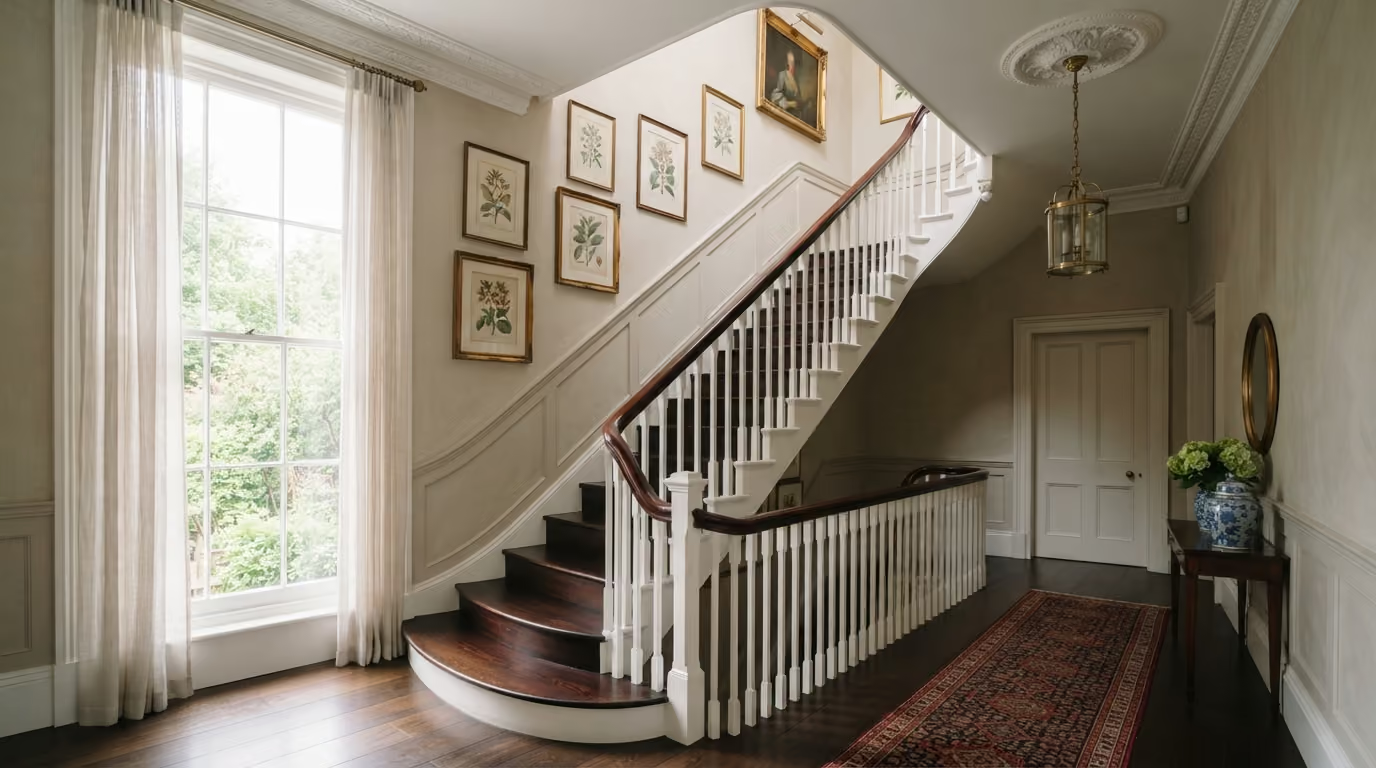
Repainting a period staircase involves more than choosing a new wall colour. This guide explains how to plan walls, ceilings, woodwork, handrails, spindles, lighting, preparation, and colour so the whole staircase feels connected from floor to floor.
The practical answer: Repainting a period staircase in a Kensington home requires more planning than simply choosing a new wall colour. Staircases combine walls, ceilings, skirting, handrails, spindles, newel posts, doors, and often decorative plasterwork within one continuous space. The best results come from preparing each surface correctly, deciding which architectural details should stand out, and planning the decorating sequence before work begins. For professional preparation and finishing, see our interior painting and decorating service.
A staircase is one of the most visually connected areas in a period home. Unlike a bedroom or reception room, it may link several floors without a clear stopping point. The colour seen beside the entrance hall continues upward past landings, doors, windows, artwork, and balustrades.
That makes decorating decisions more complicated. A colour that works beautifully on the ground floor may feel too dark on an upper landing. White woodwork can look crisp in one area and excessively bright beside warmer wall colours elsewhere. A dark handrail may add definition, but painting every spindle the same dark colour can make the staircase feel much heavier.
Preparation matters just as much. Older staircases may contain decades of previous paint, small cracks around skirting, worn handrails, damaged corners, old picture fixings, and movement around timber joints. Strong natural light from stairwell windows can make these defects especially visible.
This guide explains how to plan a period staircase repaint in a Kensington home, including walls, ceilings, woodwork, colour, lighting, preparation, sequencing, and the details that are easiest to overlook.
It is tempting to think of each landing separately, but the eye usually reads the staircase as a continuous architectural feature.
Before choosing colours, stand at several points:
This helps identify which surfaces are seen together.
A staircase may contain three different levels of natural light, but the colours still need to feel connected. The aim is not necessarily to make every surface identical. It is to create a sequence that feels intentional from floor to floor.
Stairwells often receive light from unusual angles. Tall sash windows, roof lights, landing windows, and wall lights can cast light directly across the wall rather than straight towards it.
This side light can reveal:
For this reason, staircase preparation should be inspected under both natural and artificial light before final painting.
A wall can look smooth in general room light and very different once a wall light is switched on.
Staircases are high traffic areas. Hands, bags, furniture, children, pets, and everyday movement all increase the chance of marks.
For staircase and landing walls, matt or soft sheen finishes are usually the most practical directions to consider.
Matt gives a flatter, quieter appearance and generally suits period interiors well. It can help walls feel softer beside decorative cornices, framed artwork, and traditional joinery.
Soft sheen can offer a slightly more practical surface where the staircase receives heavier use, although the subtle increase in sheen can make wall imperfections more visible under side light.
The right choice depends on the wall condition, level of traffic, lighting, and the appearance required.
For woodwork such as skirting, spindles, doors, and architraves, a suitable eggshell or satinwood finish may be considered depending on the desired sheen and existing decorative scheme.
It can be, and this is often the simplest way to create continuity.
Using one wall colour throughout can work particularly well when:
However, one colour is not compulsory.
A darker entrance hall may transition into lighter upper landings. A stairwell with excellent natural light may carry more colour than a narrow top floor corridor. The important point is that any change should happen at a logical architectural break.
Random colour changes halfway through a staircase usually feel accidental.
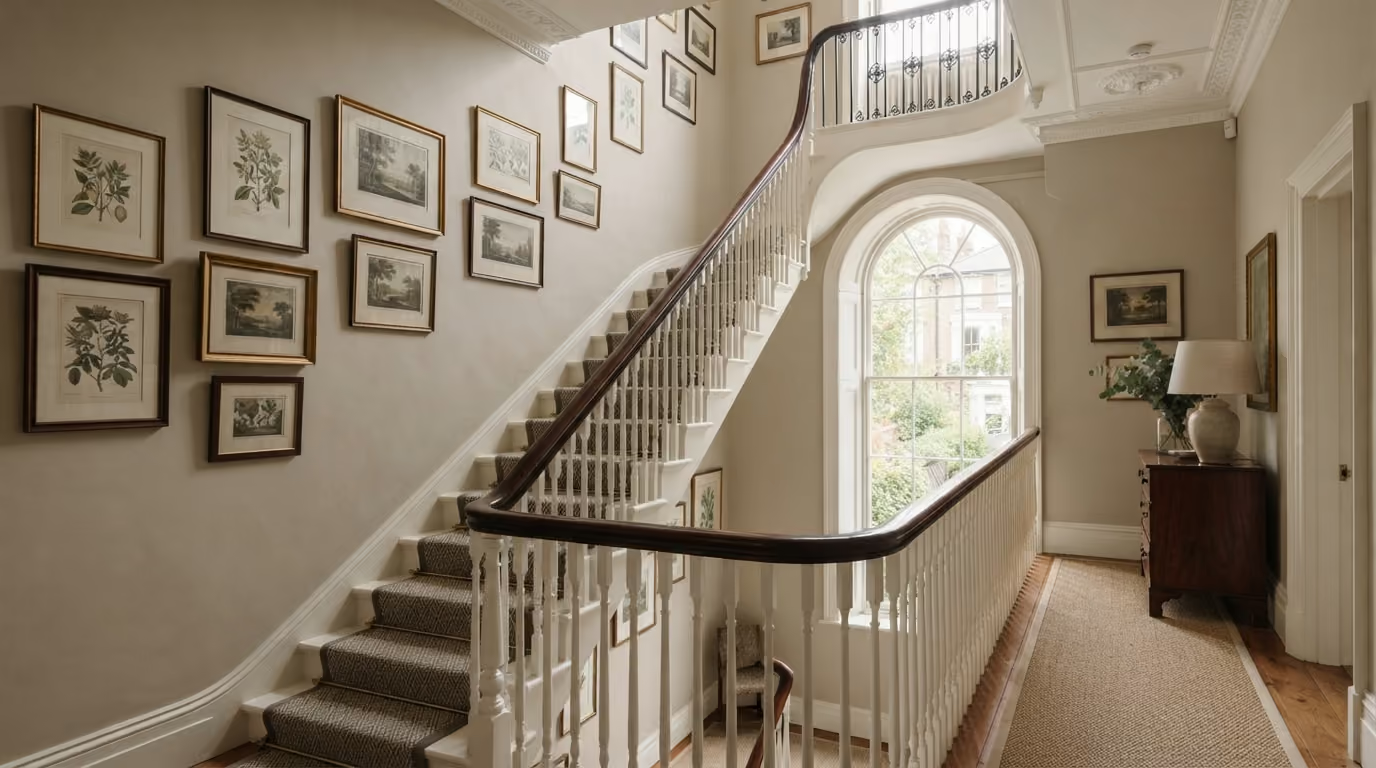
Brilliant white can make a stairwell feel clean, but it can also create a strong contrast against timber floors, antique furniture, warm lighting, and period plasterwork.
In many Kensington homes, softer neutrals sit more comfortably with the architecture.
Useful directions may include:
The undertone should be checked against the flooring, balustrade, adjoining rooms, and artificial lighting.
A colour that looks neutral on a sample card may become noticeably grey, pink, yellow, or green once it covers several metres of wall.
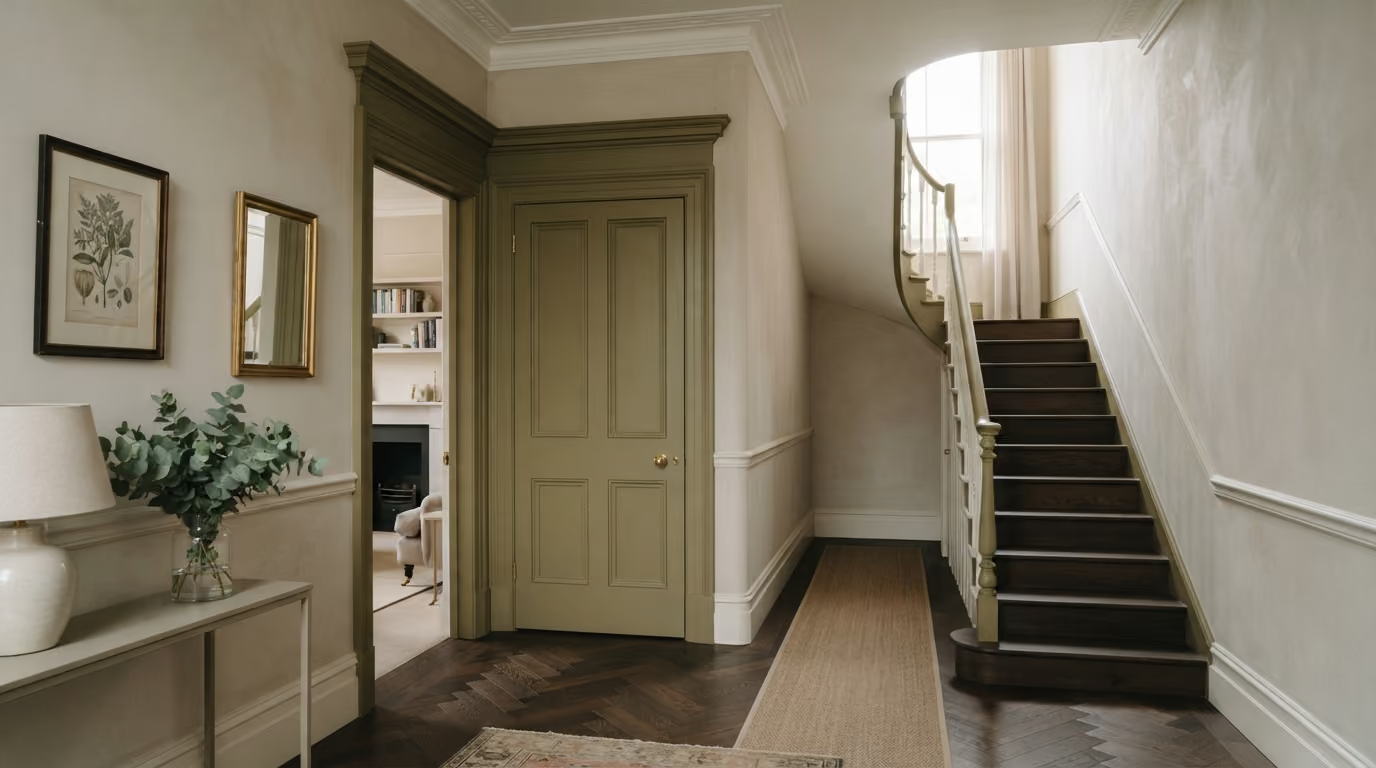
Dark staircase walls can look excellent in the right property. Deep olive, warm charcoal, tobacco, muted blue, and dark taupe can create a strong architectural effect.
They are most successful when:
Dark colours reveal dents, filler marks, and surface variations more readily when light moves across them. Preparation therefore becomes even more important.
The handrail is one of the strongest continuous lines in a staircase.
Leaving it as natural timber can introduce warmth and provide contrast against painted spindles. A dark painted handrail can create a sharper architectural outline. Painting everything one colour can make the balustrade feel more contemporary and visually quieter.
Before deciding, consider:
A good original timber handrail does not automatically need to be painted simply because the rest of the staircase is being redecorated.
Spindles are visually repetitive, which means small inconsistencies become noticeable.
Older painted spindles may contain:
Preparation needs to preserve the shape of the spindle rather than simply adding another thick layer of paint.
Detailed areas should be cleaned and sanded carefully so profiles remain defined.
Where the existing paint system is stable, complete stripping may not be necessary. Where coatings are loose, excessively thick, or poorly bonded, more extensive preparation may be required.
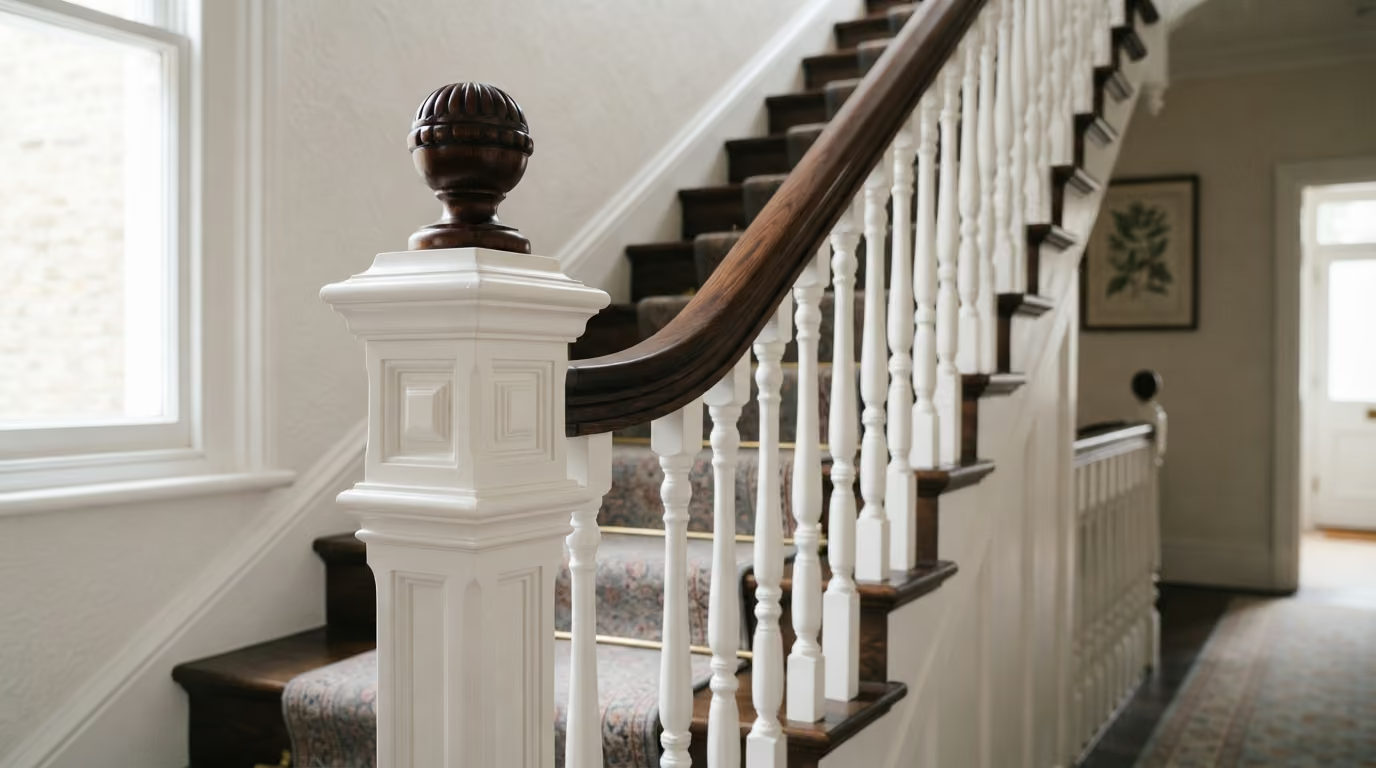
Newel posts often carry more visual weight than the spindles and handrail. Their larger profiles, caps, and mouldings make them natural architectural features.
They should be checked for:
A sharply prepared newel post can make the whole staircase feel better finished.
Staircase skirting is visually different from skirting in a square room because it rises diagonally beside the steps.
Any uneven edge becomes more obvious because the eye follows the line upward.
Preparation should include:
This is one of the details that separates a careful staircase repaint from a basic refresh.
A landing may contain several doors within a very small area. Their colour and sheen therefore have a strong effect on the overall appearance.
Traditional white or off white doors can provide consistency. Deeper painted doors can add contrast. Colour drenching the doors, architraves, and walls can create a more contemporary interpretation of a period interior.
The choice should consider:
If the doors also need refinishing, they should be included in the wider interior painting and decorating plan rather than treated as an afterthought.
Many Kensington staircases contain decorative cornices that continue across several floors.
These details often look best when the profiles remain crisp and free from heavy paint build up.
Before repainting, check:
The cornice colour does not need to be brilliant white. A softened white can reduce contrast against warm walls and make the architecture feel more integrated.
A staircase ceiling may sit significantly higher than the walls on the lower floor. This affects how colour is perceived.
A bright ceiling can increase the sense of height. A softer ceiling colour can make the architecture feel less severe. In some schemes, using a related wall and ceiling colour can create a more enveloping result.
Any ceiling colour should be checked from below, not only from the upper landing.
The longest viewing distance often reveals the real relationship between walls, cornices, and ceiling.
Period properties move slightly over time. Hairline cracking around stairs, landings, doors, and ceiling junctions is common.
Before repairing a crack, consider whether it appears:
Decorative filling can address stable minor cracks, but painting over an active problem will not prevent it returning.
Stairwells can sometimes show staining from old roof leaks, plumbing issues, or window problems on upper floors.
Before repainting:
Simply covering a stain with normal wall paint may allow it to reappear.
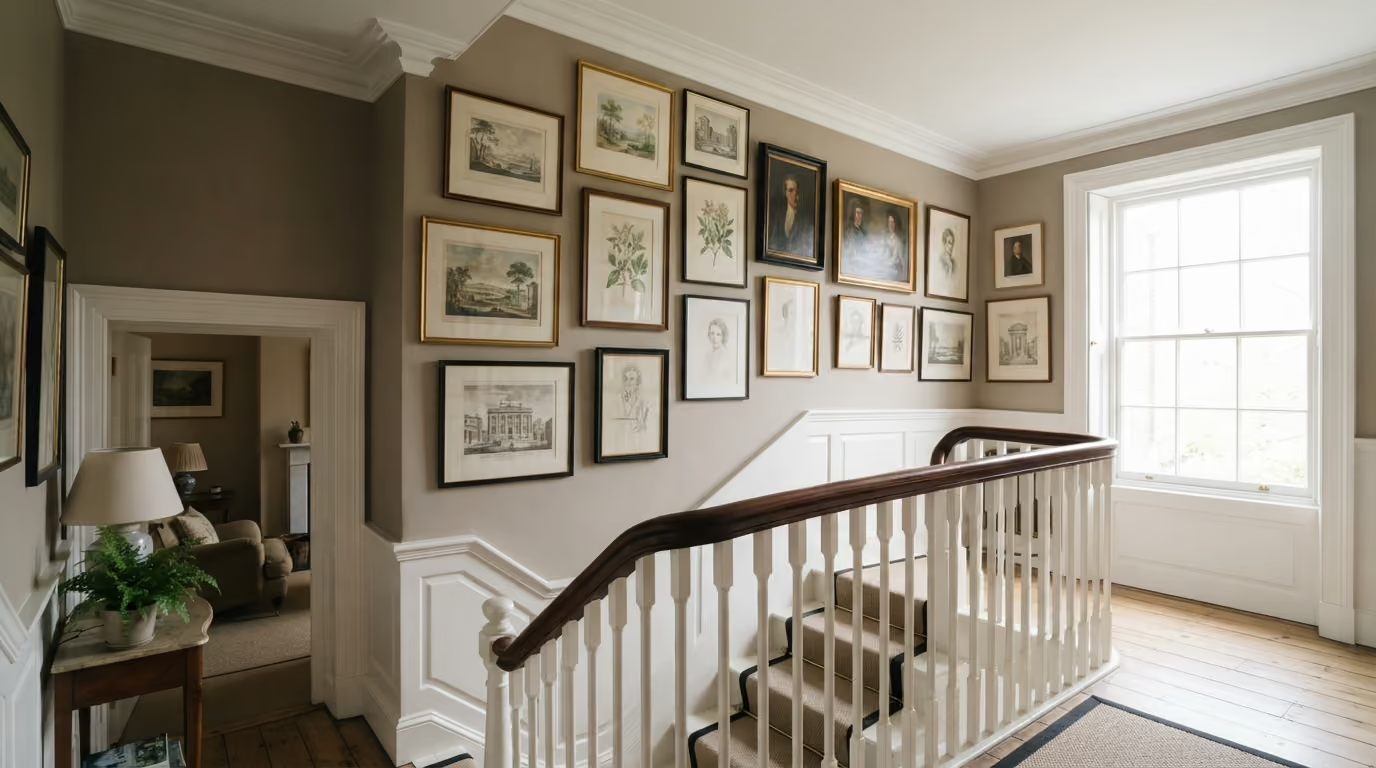
Staircase walls are popular locations for family photographs, art collections, prints, and gallery walls.
These displays can become a major feature, but repeated changes leave fixing holes across freshly decorated walls.
Before decorating, decide:
Existing holes that are no longer needed can then be repaired during preparation.
Staircases often rely on artificial light more than reception rooms because some landings receive little direct daylight.
Wall lights, pendants, picture lights, and ceiling fittings can all change the apparent colour of the walls.
A neutral paint may appear warmer beneath evening lighting. Dark colours may become much deeper. Soft whites can shift noticeably depending on the lamps used.
Samples should therefore be checked:
Testing only beside the brightest window gives an incomplete picture.
A staircase cannot simply be closed like a spare bedroom. It is usually the main route between floors.
The project therefore needs to consider how the household will move through the property while work is taking place.
A sensible sequence may involve:
The precise order may change depending on access, drying times, and the condition of the staircase.
Timber, stone, and carpeted stairs all require suitable protection during decorating.
The protection needs to remain secure while still allowing safe movement through the home.
Particular care is needed around:
A period staircase may contain original flooring or detailed joinery that is more difficult to repair than the surfaces being painted.
A staircase repaint succeeds when walls, ceilings, plasterwork, woodwork, lighting, and colour are considered together.
What paint finish is best for staircase walls? Matt or soft sheen are the main options to consider. The right choice depends on the wall condition, level of traffic, lighting, and desired appearance.
Should the whole staircase be one colour? It can be, and one colour often creates a calm sense of continuity. Different colours can also work if changes happen at logical architectural points.
Should staircase woodwork be white? Not necessarily. Soft off whites, deeper colours, and natural timber can all work depending on the property and wider interior scheme.
Can a dark colour work in a narrow staircase? Yes in some homes, but natural light, width, ceiling height, and artificial lighting should all be considered before committing to a deep colour.
Do old cracks need to be repaired before painting? Yes. Stable decorative cracks should be prepared properly, while cracks that appear active or unusual may need further investigation before decoration.
Should artwork be planned before repainting? Ideally, yes. Knowing which fixings remain allows unnecessary holes to be repaired during preparation.
We carry out interior painting and decorating across Prime Central London, including Kensington, Chelsea, Belgravia, Notting Hill, Knightsbridge, and Westminster. Our projects include staircases, entrance halls, landings, reception rooms, bedrooms, studies, period plasterwork, doors, and detailed interior woodwork.
Planning to repaint a period staircase in Kensington? Send photographs from the entrance hall, each landing, and the top of the stairwell, along with close views of cracks, woodwork, cornices, doors, and any areas where the existing finish is failing. We can assess the surfaces, discuss colour and finish options, and plan the work around the way the property is used. To begin, request a site visit and we will arrange a time that suits you.
Tell us a few details about your project and our team will review the enquiry and come back to you within one working day.