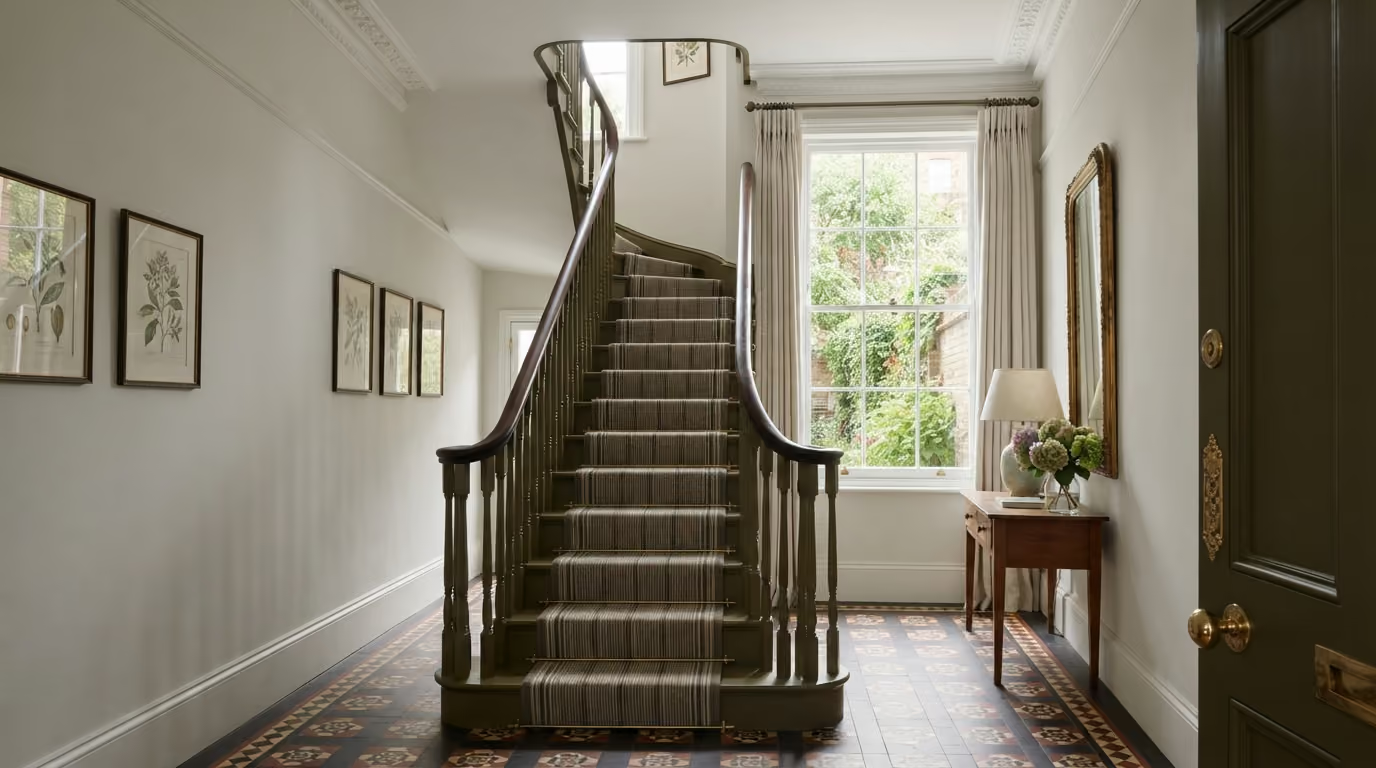
Spray finishing can give staircase spindles, newel posts, stringers, and other painted joinery a smooth, consistent finish. This guide explains when spraying makes sense, how older paint should be prepared, when natural timber can be retained, and how colour, lighting, access, masking, and surrounding wall finishes affect the result.
The practical answer: spray finishing can work very well on painted staircases and balustrades in a Kensington home, particularly where there are numerous spindles, detailed newel posts, panelled stringers, and other repeated joinery elements that benefit from a smooth, consistent finish. It is not automatically the right method for every part of the staircase, however. The condition of the existing paint, the amount of preparation required, whether the staircase remains in use, and the finish planned for handrails and treads all affect the approach. For professional preparation and fine finishing, see our interior painting and decorating service.
Staircases are among the most visible pieces of joinery in a period London home. In a Kensington townhouse, the staircase may connect several floors and be seen from the entrance hall, landings, reception spaces, and upper corridors.
It also contains far more individual surfaces than a simple wall or door.
A typical staircase may include:
When these elements are painted, inconsistencies become obvious because the same profiles repeat throughout the staircase. Heavy brush marks on one spindle, filler around another, or differences in sheen from one landing to the next can make the whole installation feel less refined.
This guide explains when spray finishing makes sense for staircases and balustrades, how older paint should be assessed, which sections can be sprayed, how natural timber can be retained, and what needs to be planned before the final finish begins.
A staircase contains many narrow and repetitive surfaces. This can make achieving a consistent hand painted finish time consuming, particularly where there are dozens of spindles.
Spraying can be useful because it can provide:
It can work especially well where a staircase has been newly installed or comprehensively refurbished and the client wants the painted joinery to have a very controlled finish.
The application method is only one part of the result, though. Spraying over poor preparation simply produces a smooth coating over an imperfect surface.
Many period staircases have been painted numerous times.
Layers of paint can accumulate around:
Before refinishing, look for:
The existing coating does not necessarily need to be stripped completely. Stable layers may be prepared and retained.
However, unstable paint or excessive build up should not simply receive another finish.
Spindles are often the first place where inconsistencies become obvious.
Each one is seen beside several almost identical elements. If one has a visible run, rough patch, filler line, or thick paint edge, the repetition makes the defect easier to notice.
Preparation may include:
A sprayed finish can then create consistency across the whole balustrade.
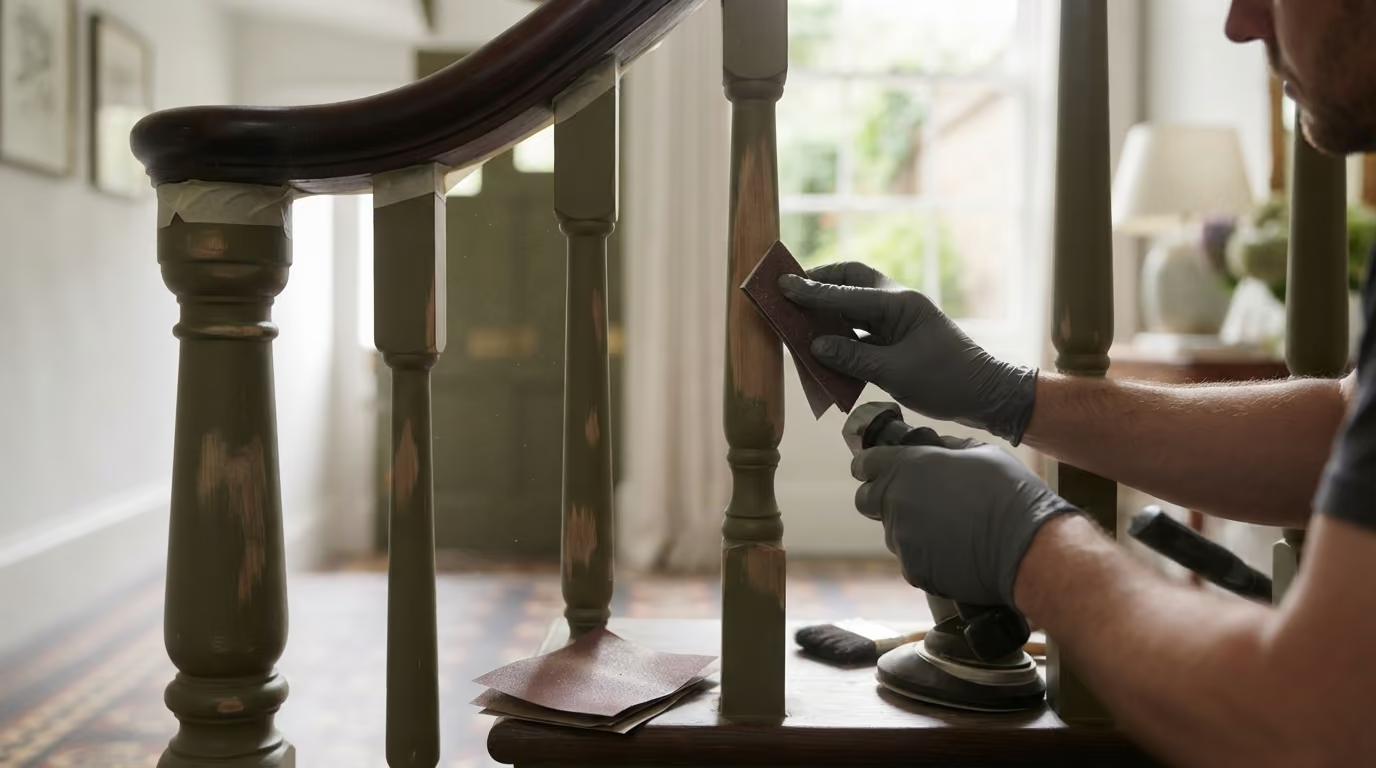
Newel posts are larger and often contain more decorative detail than the spindles.
They can include:
Because they are larger, dents and old filler can become more visible once a smooth finish is applied.
Strong side light from a stairwell window can exaggerate these imperfections.
Preparation should therefore be inspected under the actual lighting conditions of the staircase before the final coats are applied.
Not necessarily.
Many Kensington staircases combine painted spindles with a natural timber handrail.
This can work particularly well because the handrail receives constant contact and natural timber can provide warmth against painted joinery.
Possible approaches include:
If the existing handrail is good quality timber, painting it simply to make everything match may not be the best decision.
The material, condition, and overall interior scheme should be considered first.
A staircase does not need to be completely painted to feel coordinated.
Natural timber can provide contrast against smooth painted balustrades and period wall finishes.
For example, a darker timber handrail can sit comfortably with:
The contrast can also make the staircase feel less visually flat.
Yes, painted stringers can form part of the same fine finishing project.
These are broad surfaces compared with spindles, so defects such as old brush marks, dents, and filler ridges can be especially visible.
Preparation should address:
If the stringer meets painted wall panelling or skirting, the relationship between these surfaces should be planned so the finish feels continuous.
Painted risers are common, particularly when timber treads remain exposed.
They can receive marks from shoes and cleaning, so appearance is not the only consideration.
The coating system should suit the level of contact and maintenance expected.
Risers also sit close to the floor, which means dirt and dust control during preparation and painting is particularly important.
The walking surface of a staircase should not simply be treated like the painted joinery around it.
Treads experience direct foot traffic and require a finish appropriate to that use.
Depending on the staircase, they may be:
The balustrade and stringer finish should therefore be planned around the intended tread treatment rather than assuming the entire staircase receives one decorative system.
If a carpet runner is being installed, its width and fixing method should be known before final decoration.
This helps determine:
Installing new fixings after the staircase has been freshly finished can create unnecessary damage.
A staircase does not have to be painted white.
Deeper colours can give the joinery stronger architectural presence.
Possible directions include:
A darker balustrade can work particularly well against pale walls, natural timber flooring, and stone entrance hall surfaces.
However, dark colours are less forgiving of preparation defects.
Sanding marks, dents, filler edges, and inconsistent sheen may become more obvious under strong light.
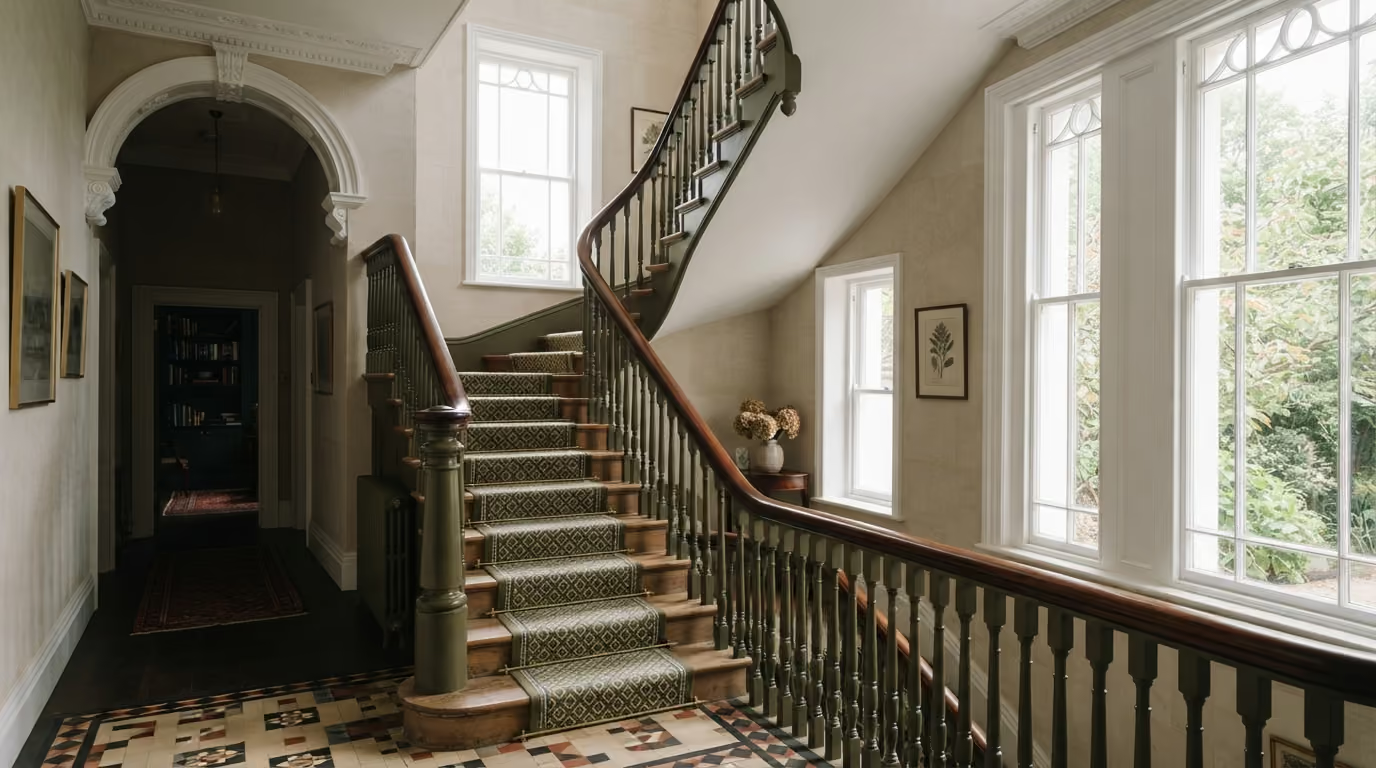
For clients who want the staircase to sit more quietly within the entrance hall, warm neutral colours can work very well.
These may include:
These colours can give the architecture definition without creating the stronger contrast of black or dark green.
They also tend to work well beside limestone, oak, traditional parquet, and neutral wall finishes.
A joinery colour can look completely different depending on the surrounding wall finish.
The staircase may sit beside:
Samples should therefore be viewed directly beside the actual or proposed wall finish.
A crisp white balustrade may feel too sharp beside warm limewash, while a stone or putty colour may integrate more naturally.
If the walls are also being redecorated, both finishes should be selected together.
Multi-storey stairwells can receive light from several directions.
A ground floor section may be relatively dark while an upper landing receives strong daylight.
The same paint colour can therefore look noticeably different across the staircase.
Samples should be checked:
This is especially important with deep colours and warm neutrals.
Staircases frequently use wall lights, pendant fittings, or decorative chandeliers.
These can send light across the painted joinery at sharp angles.
Directional light can reveal:
The prepared joinery should therefore be inspected under both natural and artificial light before final finishing.
On site spraying requires careful containment.
A staircase connects multiple areas of the property, which makes protection particularly important.
Surfaces that may need protection include:
The staircase may also need to be isolated from normal household movement while spraying and drying take place.
Masking and protection are therefore part of the finishing process, not a minor preparation detail.
This needs to be discussed before work begins.
In a townhouse, the main staircase may be the only practical route between floors.
If spraying is planned, access may need to be restricted during particular stages.
The programme should consider:
This can influence whether the whole staircase is sprayed at once or whether the work needs to be divided into stages.
Stairwells often contain wall lights, switches, alarms, thermostats, and other fittings close to the joinery.
Their positions should be finalised before spraying.
Moving fittings afterwards may leave holes or require repairs beside newly finished surfaces.
If new wall lights are being installed, the electrical work should be completed before final preparation and painting.
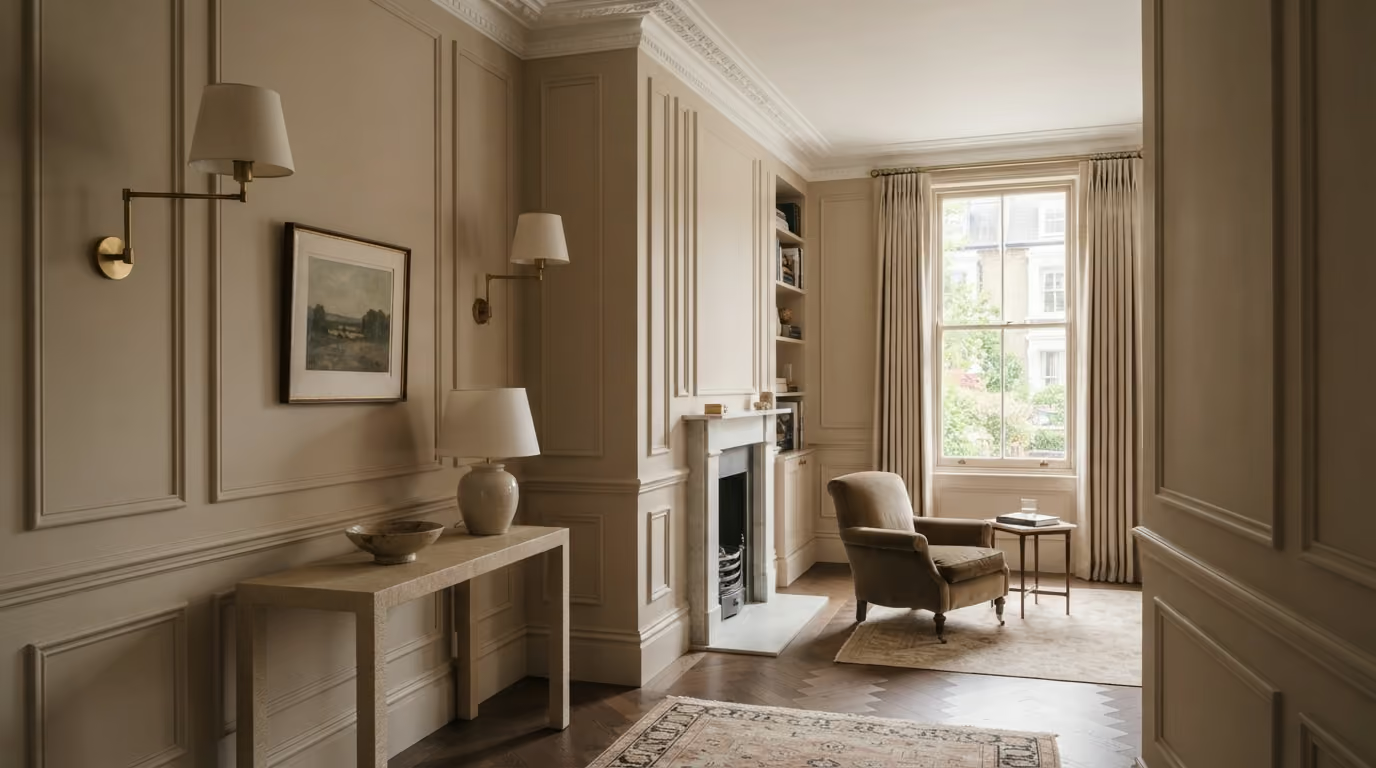
Some Kensington homes use painted panelling through the entrance hall and staircase.
This can create a very cohesive interior when the panelling, stringers, spindles, skirting, and doors are treated as one decorative scheme.
The panelling may:
If the panelling is also being spray finished, the entire area can be planned as one project rather than decorating each element independently.
Wallpaper is sometimes used above panelling or on the main stairwell wall.
Where wallpaper meets painted joinery, the edges become highly visible.
The sequence of work should therefore be coordinated carefully.
If wallcovering is part of the scheme, see our wallpaper service for specialist preparation and installation.
The joinery, wall preparation, and wallpaper installation should be planned together so one stage does not damage another.
A smooth spray finished staircase can sit beautifully beside the softer movement of a mineral wall.
For example:
The contrast comes from both colour and texture.
If Bauwerk limewash is being considered for the surrounding walls, see our Bauwerk limewash service.
Both methods can be appropriate.
Spraying may make more sense when:
Hand painting may be preferable when:
The method should follow the practical requirements of the project and the desired finish.
Often, yes, but spraying does not automatically remove old brush texture.
If the existing coating contains heavy marks or old runs, those need to be reduced during preparation.
The same applies to:
The substrate determines how smooth the new sprayed surface can ultimately appear.
Loose spindles, damaged newel posts, open joints, or cracked sections should be dealt with before decorative work begins.
Painting is not a substitute for joinery repair.
A loose spindle may crack around its base again even after a perfectly applied finish if the movement itself has not been resolved.
Any structural or joinery concerns should therefore be addressed before the final decorative preparation.
A well finished staircase should feel consistent from the entrance hall to the upper landing. The quality comes from coordinating the joinery repairs, preparation, colour, application method, wall finishes, flooring, and lighting rather than treating the balustrade as an isolated painted object.
Can staircase spindles be spray painted? Yes. Spindles can be particularly well suited to spraying because the method can create consistent coverage across a large number of repeated profiles.
Does old paint need to be stripped first? Not always. Stable existing coatings can often be prepared and retained, while loose paint and excessive build up need additional attention.
Can the handrail remain natural timber? Yes. Painted spindles combined with a natural timber handrail can create an elegant contrast and is often appropriate in period interiors.
Can a dark colour be used on a period staircase? Yes. Deep olive, charcoal, brown, blue, and other darker tones can give the staircase more architectural definition, provided the surface preparation is good.
Will spraying hide old brush marks? Not automatically. Heavy brush texture needs to be reduced during preparation if a smoother final result is expected.
Can the staircase still be used while it is being sprayed? Access may need to be restricted during parts of the project, so this should be planned before work begins.
Can wall panelling and the staircase be spray finished together? Yes. Where the entrance hall and staircase contain substantial painted joinery, coordinating them as one finishing project can create a more consistent result.
We carry out interior painting, decorating, and fine finish work across Prime Central London, including Kensington, Chelsea, Belgravia, Notting Hill, Knightsbridge, and Westminster. Projects include staircases, balustrades, spindles, newel posts, wall panelling, doors, fitted cabinetry, wardrobes, shelving, and other architectural joinery where detailed preparation and a refined painted finish are important.
Considering spray finishing for a staircase or balustrade in a Kensington home? Send photographs of the complete staircase along with close views of the spindles, newel posts, handrail, stringers, existing paint, damaged areas, flooring, and surrounding wall finishes. We can assess the condition of the joinery, discuss whether spraying or hand finishing is more appropriate, and plan the decoration around access, protection, and the wider interior. To begin, request a site visit and we will arrange a time that suits you.


Tell us a few details about your project and our team will review the enquiry and come back to you within one working day.