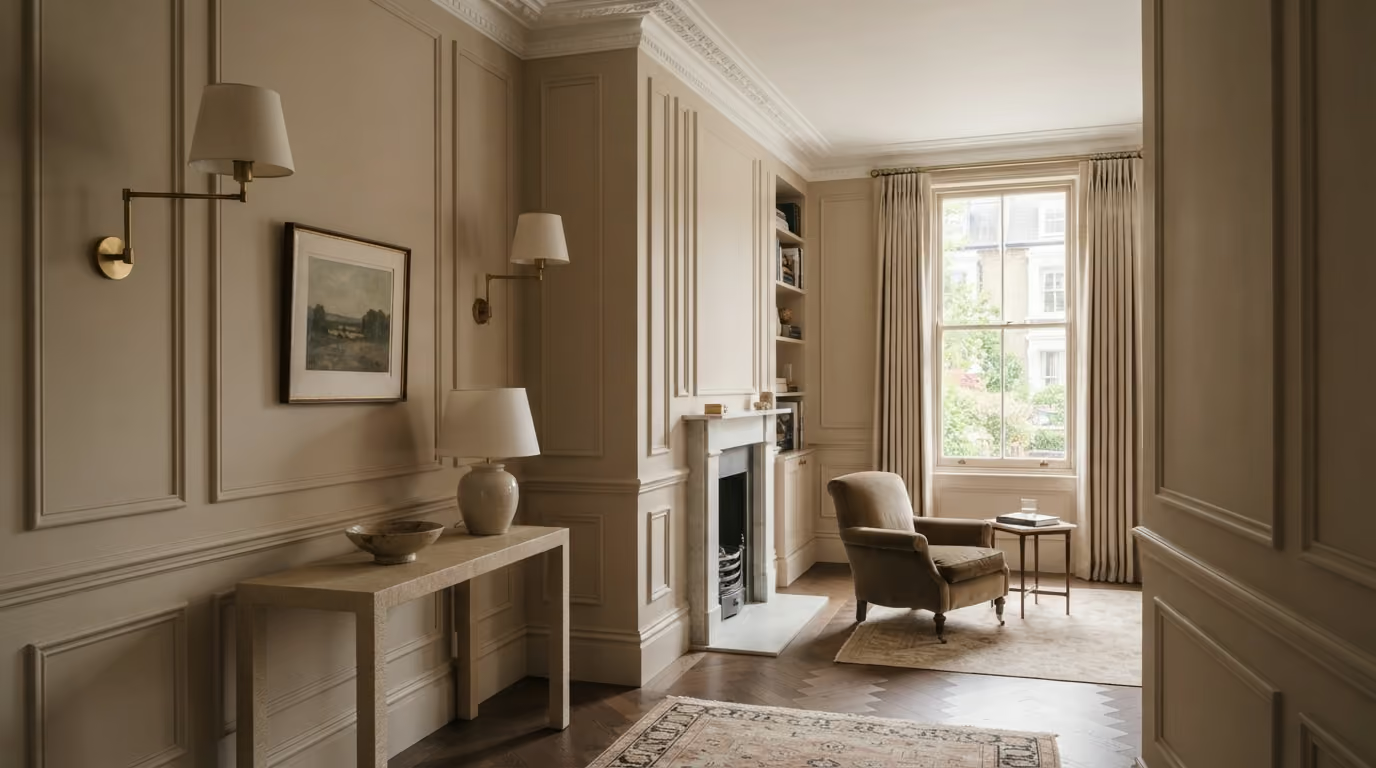
Spray finishing can give painted wall panelling a smooth, consistent appearance with crisp mouldings and minimal visible brush texture. This guide explains how preparation, MDF edges, lighting, colour, sheen, masking, and decorating sequence affect the finished result.
The practical answer: Spray finishing can be an excellent choice for painted wall panelling in a Belgravia home when the aim is a smooth, consistent surface with crisp mouldings and minimal visible brush texture. It works particularly well on newly installed panelling, large uninterrupted sections, and rooms where strong natural or artificial light would otherwise reveal inconsistencies in the finish. The result still depends heavily on preparation, masking, sanding, and the condition of the substrate. For professional preparation and finishing, see our interior painting and decorating service.
Wall panelling has become common in both traditional and contemporary Belgravia interiors. It may recreate period proportions in a reception room, add structure to a hallway, form a backdrop in a bedroom, or provide a more architectural finish in a dining room or study.
The design may look simple once installed, but painted panelling contains many details that can expose poor preparation. Repeated moulding profiles, narrow internal corners, broad flat panels, joints, filler lines, and edges all sit beside one another. If one section is rougher or glossier than the next, the difference can be surprisingly noticeable.
Spray finishing can help create a more controlled appearance across these different surfaces. It does not remove the need for careful preparation. In fact, the smoother the final finish, the more important the preparation becomes.
This guide explains when spray finishing makes sense for wall panelling, how the surface should be prepared, what happens around joints and mouldings, how colour and sheen affect the result, and when a hand painted finish may still be more appropriate.
Panelling usually combines broad flat areas with repetitive architectural details. This makes consistency particularly important.
Spray finishing can provide:
This can be particularly useful in formal Belgravia rooms where the panelling is a major part of the architecture rather than a small decorative feature.
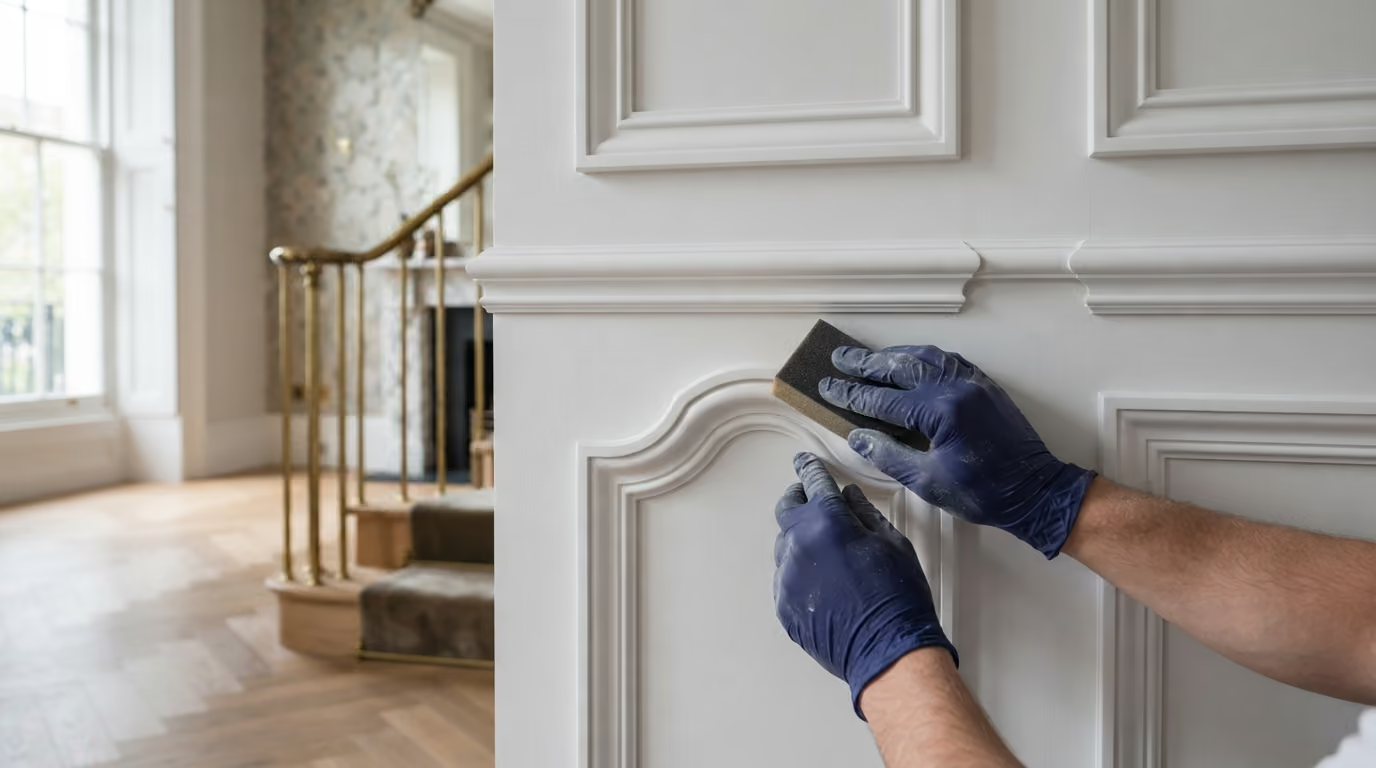
Freshly installed panelling can appear very clean from normal viewing distance. Close inspection often reveals much more preparation work.
Typical issues include:
These details need to be corrected before spraying begins.
A sprayed coating follows the surface underneath it. If a filler line is slightly raised, the final finish will not magically flatten it. If a joint is visible before painting, it may remain visible afterwards.
Many modern panelling systems are constructed from MDF. The broad faces can finish very smoothly, but cut edges behave differently.
Without suitable preparation, MDF edges may appear:
This is particularly noticeable around raised mouldings, dado rails, panel edges, and decorative profiles.
The edges need to be prepared before the final coating system is applied. The aim is for the flat face and the cut edge to read as one continuous finished element.
Belgravia properties often have tall windows and generous ceiling heights. This can create strong side light across panelled walls.
Side light is unforgiving.
It can reveal:
Preparation should therefore be checked in the actual room under the strongest natural light available.
If the panelling also has wall lights or picture lights, these should be tested before final finishing. Artificial light washing across the surface can reveal defects that are barely visible during the day.
The decorating sequence depends on the room, but wall and panelling finishes should be planned together.
If spraying is taking place on site, surrounding surfaces need to be protected carefully. It may therefore be more efficient to complete certain preparation stages before the final wall decoration.
A typical project may involve:
The exact order changes depending on whether the walls are painted, wallpapered, or limewashed.
Painted panelling below wallpaper can work particularly well in dining rooms, entrance halls, studies, and bedrooms.
The two finishes should be coordinated before either is completed.
The panelling colour may:
The top edge of the panelling becomes particularly important because it forms the visual transition between the sprayed finish and the wallcovering.
If wallpaper is also being installed, see our wallpaper service for specialist wall preparation and installation.
Painted panelling can also sit beautifully beneath Bauwerk limewash.
The finishes create an interesting contrast. The sprayed panelling is smooth and controlled, while the limewash above has natural mineral movement.
This approach can work well when:
Using related colours can make the difference come mainly from surface character and sheen.
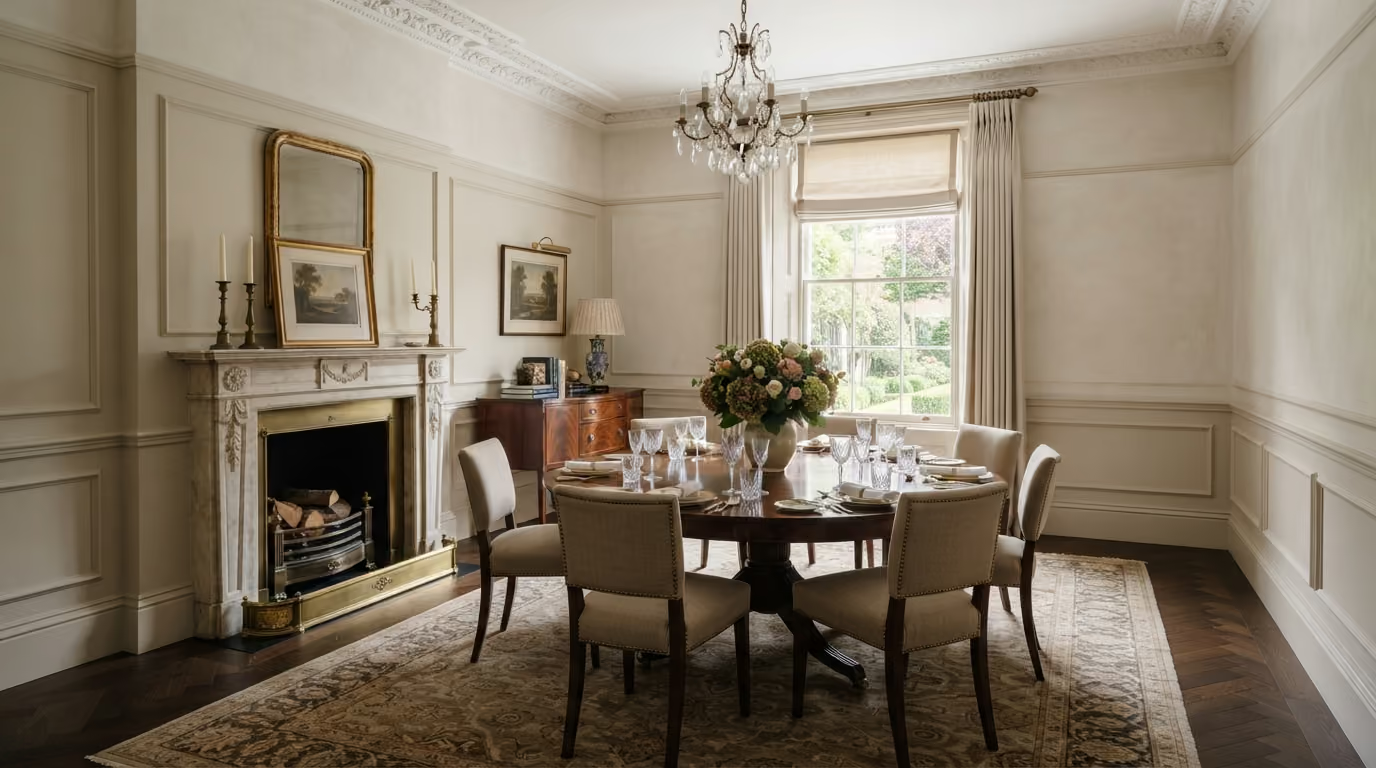
There is no single correct colour. The panelling should relate to the architecture, natural light, flooring, furniture, doors, and surrounding wall finish.
Common directions include:
The larger the panelled area, the more important it is to test the colour at scale.
A small dark sample can look sophisticated on a card but feel much stronger when it covers an entire room up to dado height.
Deep colours can look especially effective on spray finished panelling because the smooth surface gives the colour a controlled appearance.
They can also reveal surface defects.
Dark finishes should be checked carefully for:
Strong daylight can make these imperfections more obvious.
This is why dark panelling often requires more preparation than a homeowner expects before the first final coat is applied.
It can, and matching the doors, architraves, and panelling creates strong continuity.
This is particularly effective when the room contains several doors because it prevents each opening from becoming a separate visual element.
However, the doors do not always need to match.
Other approaches include:
The decision depends on how much contrast the room can comfortably carry.
Skirting often forms the bottom edge of a panelled wall and should not feel like an unrelated strip added afterwards.
In many rooms, painting the skirting in the same colour as the panelling creates the most coherent result.
This can also make the panel proportions feel taller and more architectural.
Where skirting uses a contrasting colour, the relationship needs to be intentional. A bright white skirting beneath deep panelling can create a very strong horizontal line.
The sheen level changes the character of the panelling significantly.
A lower sheen can feel softer and more contemporary. A slightly stronger sheen may give the joinery more definition and make it easier to distinguish from the walls above.
The correct finish depends on:
Very glossy finishes require exceptionally good preparation because reflections exaggerate small imperfections.
Painted wall panelling is particularly useful in entrance halls and stair areas because the lower wall receives more contact.
However, these areas also face:
The coating system and sheen should therefore be selected with the room's actual use in mind rather than purely for appearance.
Hallway lighting also tends to create strong shadows across mouldings, which makes good preparation particularly important.
Dining rooms usually experience less direct wall contact, allowing the panelling to function more as an architectural feature.
Deeper colours, stronger contrast, and more detailed mouldings can work well in these spaces.
The panelling should still relate to:
The room is often viewed under evening light, so colour samples should always be tested after dark as well as during the day.
Radiators can interrupt panel layouts and make finishing more complicated.
If possible, radiator positions should be confirmed before final decoration.
Consider:
Changing radiator positions after the panelling has been sprayed can leave holes and repairs in highly visible areas.
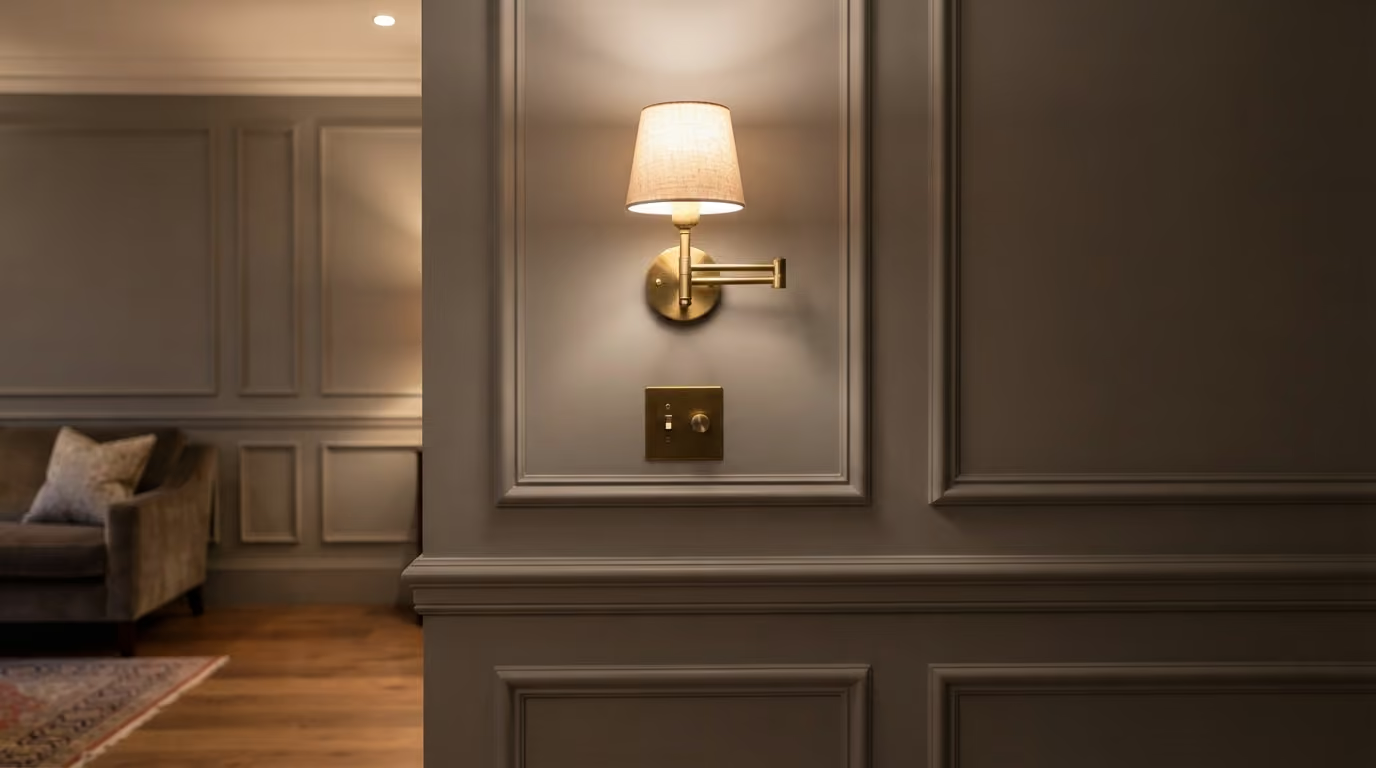
Wall lights, sockets, switches, thermostats, and control panels may all sit directly within the panelling.
Their positions should be confirmed before final finishing.
This allows:
Installing new fittings after spraying creates an unnecessary risk of scratches, drilling damage, and visible filler repairs.
Spraying inside a finished home requires careful containment.
Protection may be needed for:
This work is part of the finishing process, not an optional extra.
A beautifully sprayed panel is not a successful result if overspray has reached nearby flooring or architectural details.
Existing panelling can often be refinished, but the previous coating needs to be assessed first.
Older panelling may contain:
A new sprayed coating will not correct these automatically.
Stable previous finishes can often be prepared and retained. Loose or poorly bonded areas need additional work before the new finish is applied.
Not by itself.
Heavy existing brush texture may remain visible beneath a sprayed finish unless it is reduced during preparation.
The same applies to:
Preparation creates the smooth substrate. Spraying creates the smooth coating over that substrate.
Both methods can produce attractive results when carried out properly.
Spraying may be preferable when:
Hand painting may make more sense when:
The decision should be based on the room, desired finish, access, and condition of the panelling.
The quality of spray finished panelling is determined long before the final coat. Accurate installation, preparation, sanding, protection, and sequencing all contribute to the finished result.
Can wall panelling be spray painted inside the home? Yes, when the room can be isolated and surrounding surfaces are protected carefully.
Is spraying smoother than brush painting? Spraying can produce a very smooth and consistent finish, but the substrate needs to be prepared correctly first.
Can MDF panelling be sprayed? Yes. MDF can finish very well, although cut edges and joints require careful preparation.
Can existing painted panelling be resprayed? Often, yes. The existing coating must be stable and properly prepared before the new finish is applied.
Should the skirting match the wall panelling? It often works well in the same colour, but contrasting skirting can also be used when the relationship is planned deliberately.
Can dark colours be sprayed onto wall panelling? Yes. Deep colours can look particularly refined on smooth panelling, but they tend to reveal surface defects more clearly.
We carry out interior painting, decorating, and fine finish work across Prime Central London, including Belgravia, Chelsea, Kensington, Notting Hill, Knightsbridge, and Westminster. Projects include wall panelling, fitted cabinetry, wardrobes, doors, shelving, media units, alcove cabinets, and other architectural joinery where careful preparation and a refined finish are important.
Considering spray finishing for wall panelling in a Belgravia home? Send photographs of the room, including the full panel layout, mouldings, doors, skirting, windows, lighting, radiators, and the wall finish planned above. We can assess the surface, discuss suitable preparation and finishing options, and plan the work around the rest of the interior. To begin, request a site visit and we will arrange a time that suits you.

Tell us a few details about your project and our team will review the enquiry and come back to you within one working day.