
Spray finishing can give fitted alcove cabinets a smooth, consistent appearance with crisp edges and minimal visible brush texture. This guide explains when spraying makes sense, how the joinery should be prepared, and how colour, sheen, lighting, and hardware should be planned.
The practical answer: Spray finishing can be an excellent choice for fitted alcove cabinets in Chelsea homes when the goal is a smooth, consistent finish with crisp edges and minimal visible brush texture. It is particularly effective on large flat doors, drawer fronts, shelving edges, and detailed joinery where a uniform appearance matters. The result still depends heavily on preparation, suitable coatings, careful masking, and the condition of the existing joinery. For professional preparation and finishing, see our interior painting and decorating service.
Alcove cabinets are common in Chelsea drawing rooms, reception rooms, bedrooms, and studies. They may sit either side of a fireplace, run beneath shelving, conceal televisions and equipment, or provide storage without dominating the room.
Because this joinery is often positioned at eye level and surrounded by carefully finished walls, cornices, fireplaces, and flooring, small imperfections become noticeable. Brush marks across a cabinet door, uneven sheen around mouldings, or poorly filled fixing holes can make otherwise well designed joinery feel unfinished.
Spray finishing offers a different level of control. When the joinery is prepared correctly, the coating can be applied evenly across doors, drawer fronts, trims, and visible edges, creating a cleaner and more furniture like appearance.
This guide explains when spray finishing makes sense for Chelsea alcove cabinets, how the process differs from brush painting, what needs to be prepared before spraying, and how colour, sheen, hardware, and surrounding decoration should be planned together.
Fitted alcove cabinets usually combine several surfaces in a relatively small area. There may be broad flat doors, narrow trims, internal shelves, mouldings, recessed panels, and small gaps around the surrounding walls.
This makes consistency important.
Spray finishing can be particularly useful because it can provide:
The technique does not replace preparation. In fact, a very smooth sprayed finish can make poor preparation more obvious because dents, sanding marks, and uneven filler are no longer hidden by brush texture.
Newly installed cabinets may look ready for paint, but they often still require significant preparation. Screw holes, pin holes, joints, small gaps, and sanding marks need to be checked before any finishing begins.
Existing joinery presents different challenges. It may have several previous coats of paint, chips around handles, damaged edges, greasy areas, or old filler repairs.
Before spraying, the condition of the cabinet should be assessed carefully.
Preparation may involve:
The final surface is only as good as the preparation underneath it.
Often, removing doors and drawer fronts can produce a cleaner and more controlled result. Individual components can be prepared and finished separately while the fixed cabinet carcass is treated in position.
This approach may make it easier to:
The best method depends on the cabinet construction. Some doors are straightforward to remove, while older or bespoke joinery may require more care so hinges, alignments, and original fittings are not disturbed unnecessarily.
Hardware positions should be recorded before dismantling, particularly where doors have been adjusted carefully to sit evenly within fitted openings.
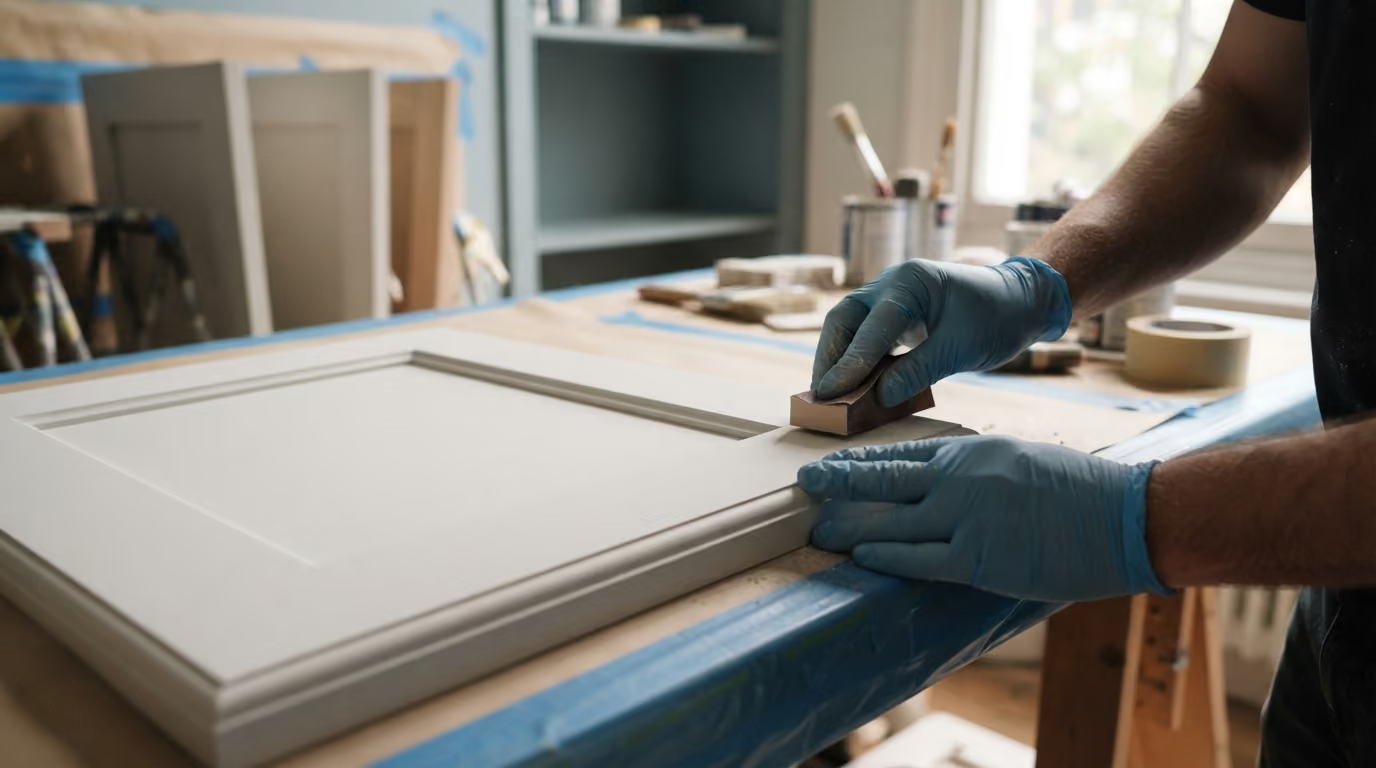
One of the most common misunderstandings about spraying is that the application method will somehow smooth the substrate by itself. It will not.
A sprayed coating follows the surface beneath it.
If the cabinet contains:
those defects may remain visible after spraying unless they are corrected during preparation.
Careful sanding between preparation stages is what creates the base for a smooth final appearance.
Many fitted alcove cabinets are constructed partly or entirely from MDF. Flat MDF faces can finish beautifully, but cut edges absorb coatings differently and may remain rough if they are not prepared properly.
Edges around doors, shelves, and decorative details should therefore be checked before the finishing stage.
Poorly prepared MDF edges can appear:
These details matter particularly on open shelving, where shelf edges sit directly in the viewer's line of sight.
Many Chelsea alcove cabinets sit either side of a fireplace. This creates a strong visual relationship between the joinery, mantel, wall colour, and chimney breast.
The cabinet colour should therefore be selected as part of the room rather than in isolation.
Possible approaches include:
There is no single correct approach. The proportions of the room, amount of natural light, flooring, furniture, and fireplace material all affect the decision.

Not always. Alcove joinery often combines lower cabinets with open shelving above. Using one colour throughout creates a strong architectural unit, while separating the colours can make the shelving feel lighter.
A single colour may work well when:
A lighter shelving colour may make sense when the lower cabinets are very dark or the alcoves receive limited natural light.
What matters most is that the decision feels deliberate. Random colour changes between doors, frames, and shelving can make bespoke joinery look fragmented.
The sheen level affects both appearance and practicality. A very high sheen can highlight every small surface irregularity, while an extremely flat finish may not provide the appearance or durability expected from fitted joinery.
The right finish depends on:
Consistency is important. Cabinets, internal doors, skirting, and other painted joinery do not necessarily need to use exactly the same sheen, but they should relate comfortably to each other.
Deep greens, navy tones, charcoal, brown based neutrals, and near black colours can look particularly effective on alcove cabinets. They also tend to reveal imperfections more easily under strong side light.
Dark spray finished joinery should be checked carefully for:
Lighting matters too. A cabinet beside a large sash window may receive strong daylight across its doors for part of the day. That light can reveal defects that are barely visible under normal room lighting.
Samples should therefore be viewed in the actual alcove before the colour and finish are confirmed.
When spraying takes place inside an occupied or finished property, controlling the work area is essential. Paint should only reach the surfaces being finished.
Depending on the room, protection may be needed for:
The surrounding area needs to be isolated carefully. This is one reason spraying should be planned within the wider decorating sequence rather than added casually at the end of a project.
The order of work affects the final quality.
Ideally, major building work, electrical changes, joinery installation, and other dusty work should be complete before final spray finishing begins.
A typical sequence may involve:
The precise sequence changes from project to project, particularly where walls are also being redecorated.
Alcove shelving often includes integrated lighting. Small downlights, concealed strips, or picture lights can transform the joinery in the evening, but electrical work should be completed before final decoration.
Lighting can also reveal surface quality.
A concealed light that washes directly across a shelf or cabinet side may make small imperfections far more visible than general ceiling lighting.
Before spraying:
This avoids cutting or drilling freshly finished joinery later.
Changing cabinet handles after finishing can create unnecessary repair work if the new hardware uses different fixing centres.
Before spraying, decide whether the cabinets will use:
Unused holes can then be repaired properly during preparation.
Hardware also influences colour. Brass, bronze, nickel, black metal, and chrome can all change how a cabinet colour feels once the room is complete.
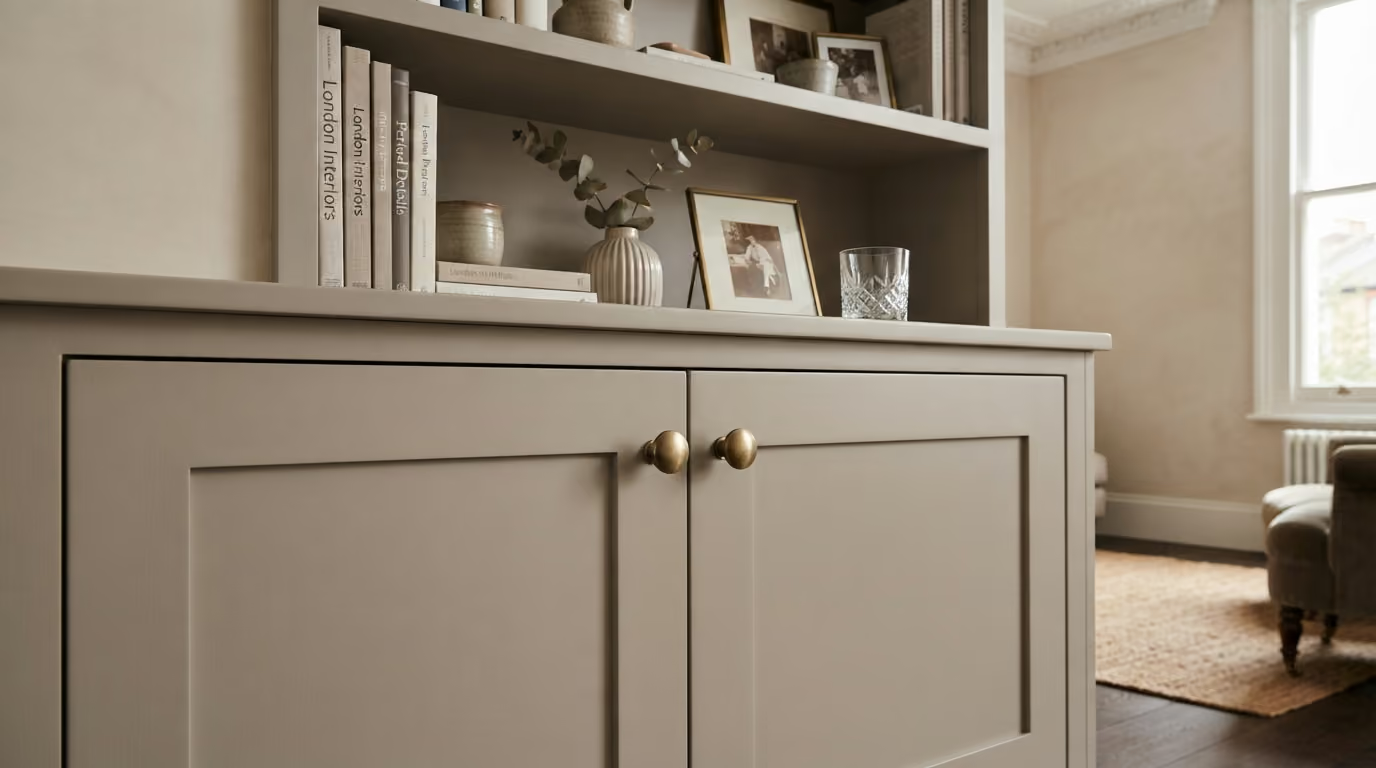
Often, yes, provided the existing coating is stable and the substrate is suitable. The old finish still needs to be assessed carefully.
Problems such as peeling paint, poor adhesion, heavy brush texture, damaged MDF, or moisture related defects need to be addressed before applying a new system.
Simply spraying over an unstable coating will not correct the underlying problem.
Existing cabinets may require more preparation than new joinery, but refinishing them can still be worthwhile when the construction and proportions remain good.
Both methods have valid uses. The choice depends on the desired finish, the joinery, access, and the surrounding environment.
Spraying is particularly useful when:
Brush painting may make more sense when:
The best method should be chosen for the actual project rather than assuming spraying is automatically better in every situation.
Most problems with spray finished joinery begin before the final coating is applied. Good planning and preparation make the greatest difference.
Can alcove cabinets be spray painted inside the home? Yes, when the work area can be isolated and surrounding surfaces are protected properly. Some components may also be removed and finished separately.
Does spraying give a smoother finish than brushing? Spraying can produce a very smooth and consistent appearance, particularly across large flat doors and panels, but only when the substrate has been prepared correctly.
Can old painted alcove cabinets be sprayed? Often, yes. Existing coatings need to be checked for stability and prepared before the new finish is applied.
Should cabinet doors be removed? In many cases this can make preparation and finishing easier, but it depends on the construction and condition of the joinery.
Can dark colours be spray finished? Yes. Dark colours can look excellent on fitted cabinets, although they often make surface defects more noticeable and therefore require particularly careful preparation.
Should the shelves and lower cabinets be the same colour? They can be, but they do not have to be. The choice depends on the room, lighting, fireplace, wall colour, and desired visual weight of the joinery.
We carry out interior painting, decorating, and fine finish work across Prime Central London, including Chelsea, Kensington, Belgravia, Notting Hill, Knightsbridge, and Westminster. Projects include fitted alcove cabinets, wardrobes, shelving, media units, interior doors, kitchens, and bespoke joinery where careful preparation and a refined finish are important.
Considering spray finishing for alcove cabinets in a Chelsea home? Send photographs of the full room and close views of the cabinet doors, shelves, existing paint, handles, fireplace, and any damaged areas. We can assess the joinery, discuss suitable preparation and finishing options, and plan the work around the rest of the room. To begin, request a site visit and we will arrange a time that suits you.

Tell us a few details about your project and our team will review the enquiry and come back to you within one working day.