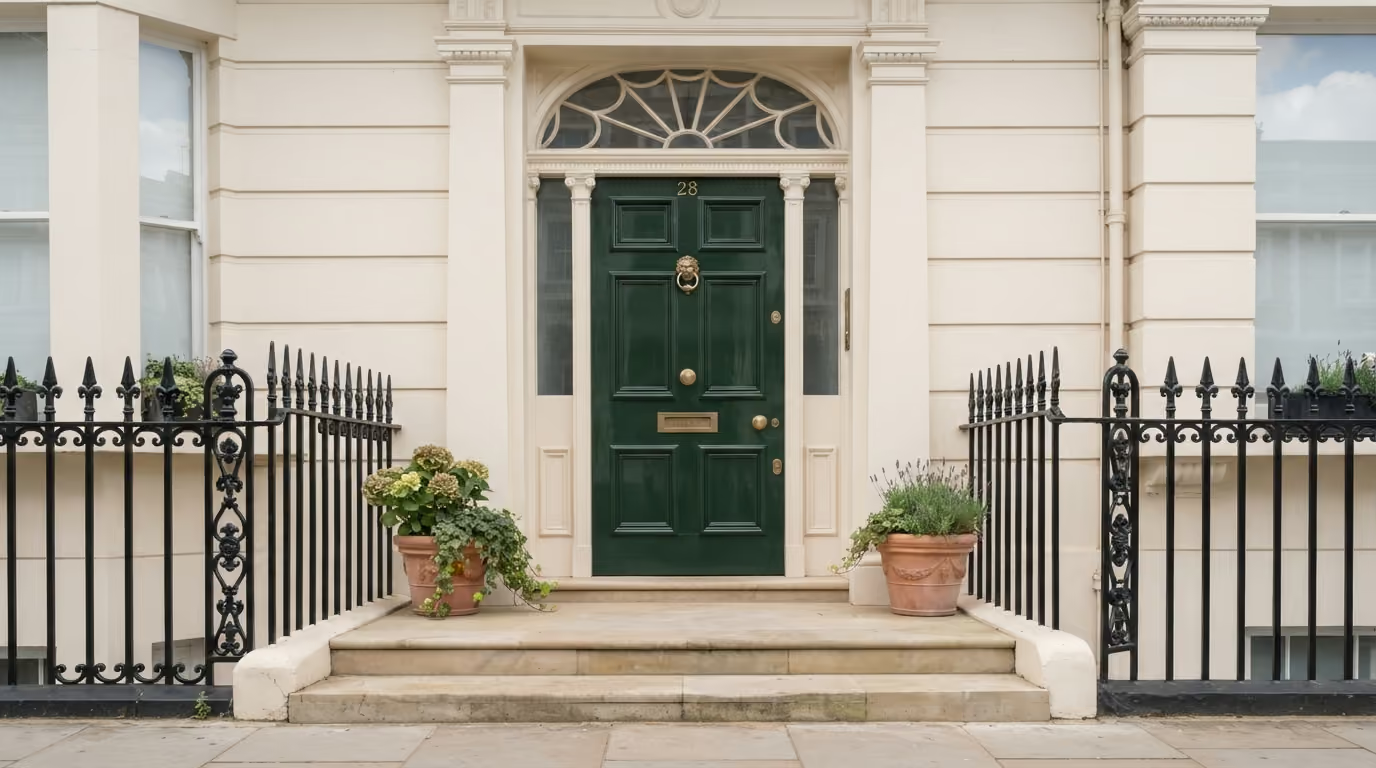
Repainting a traditional front door can restore the character and elegance of a Notting Hill period home while protecting its original timber. This guide explains how to prepare old paint, repair damaged wood, preserve decorative mouldings, choose the right colour and sheen, and coordinate the finished door with period hardware, stucco surrounds, and exterior railings.
The practical answer: Repainting a traditional front door in a Notting Hill period home can transform the entrance while preserving the property's original architectural character. However, the quality of the result depends on much more than the colour. Old paint, timber condition, exposed joints, decorative mouldings, glazing, door furniture, and weather protection must all be considered before the new finish is applied. A properly prepared front door should look refined, retain the definition of its original details, operate smoothly, and have a suitable exterior coating system. For professional preparation, timber repairs, and finishing, see our exterior and heritage painting service.
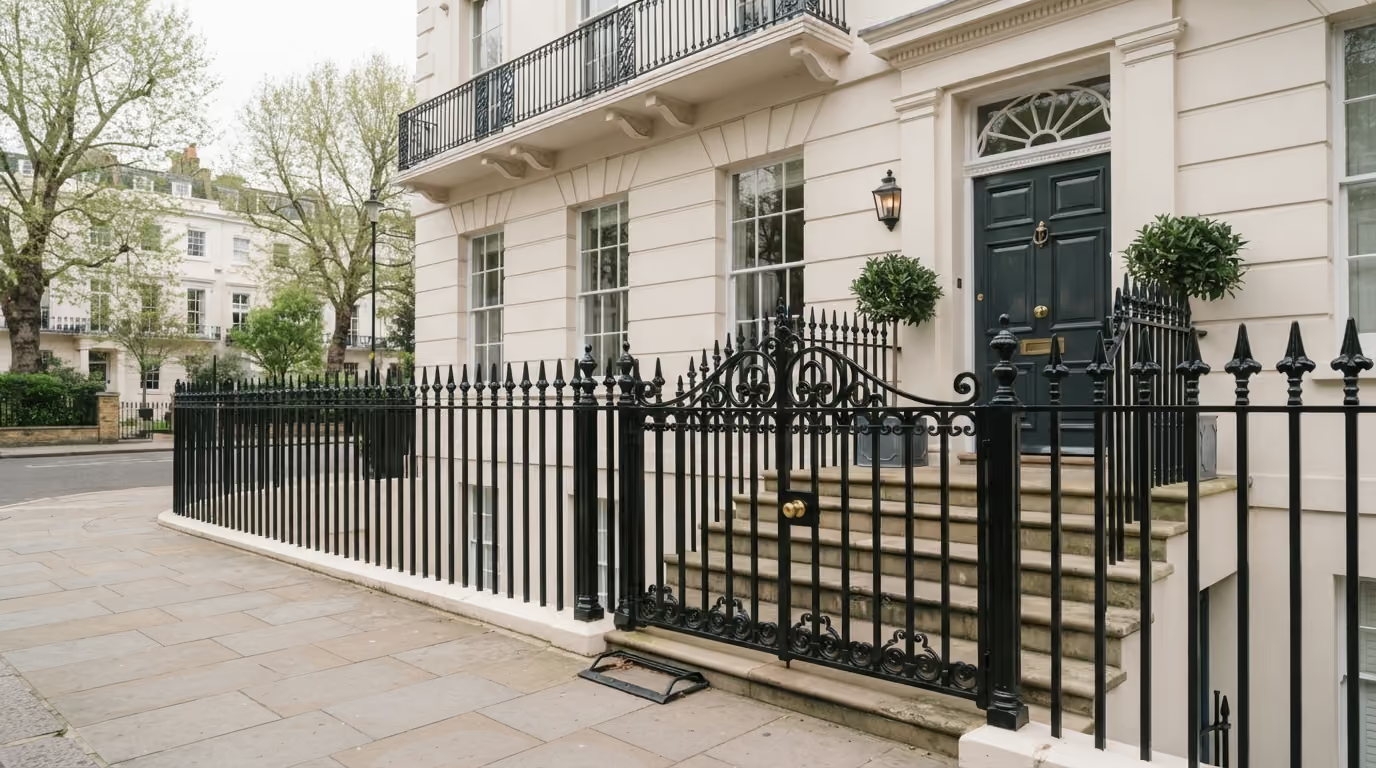
Traditional front doors are among the most distinctive features of Notting Hill's period architecture. Along streets of Victorian terraces and elegant townhouses, painted timber doors sit within decorative surrounds, often accompanied by fanlights, original ironmongery, glazed panels, and carefully detailed entrance steps.
In many properties, the entrance is the first opportunity to appreciate the quality of the original craftsmanship.
A beautifully painted door can complement the architecture without requiring major changes to the facade. Equally, a poorly prepared finish can make an otherwise attractive entrance look tired.
Years of repainting may have softened the original mouldings, concealed small timber defects, and left thick paint around hinges, locks, and glazing.
Weather exposure creates further challenges. Front doors can receive direct sunlight, driving rain, condensation, and substantial changes in temperature.
This guide explains how to repaint traditional front doors in Notting Hill, including preparation, timber repairs, old paint removal, colour selection, sheen, door furniture, glazing, weather protection, and the practical details that make a difference to the finished result.
A period townhouse facade is usually composed of a relatively small number of prominent architectural elements.
These may include:
The front door sits at the point where several of these materials meet.
Its colour, finish, proportions, and hardware influence how the entire entrance appears.
In Notting Hill, where neighbouring houses may have distinctive door colours, a carefully chosen finish can give the property its own character while remaining respectful of the terrace.
The goal should not simply be to choose the strongest colour available.
It should be to select a finish that works with the architecture, surrounding materials, and condition of the original joinery.
Before choosing a colour or paint system, the door should be inspected.
Look at the complete assembly rather than only the front-facing panels.
Important areas include:
Check whether the door opens and closes correctly.
It should not scrape excessively against the frame, require unusual force to lock, or show signs of binding when the weather changes.
Any existing mechanical or alignment problem should be identified before another paint system is applied.
Many traditional doors have been repainted repeatedly over their lifetime.
Some may contain numerous layers of paint applied over several decades.
This can affect the appearance of decorative mouldings and recessed panels.
Common problems include:
Applying another coat over these problems can make the detailing progressively less defined.
Preparation should consider whether the existing paint can be retained or whether selected areas require more substantial removal.
A successful repaint should reveal the quality of the door's construction rather than conceal it beneath unnecessarily thick coatings.
Not automatically.
Where the existing coating is firmly bonded, relatively smooth, and compatible with the proposed finish, complete stripping may be unnecessary.
Local preparation can sometimes address minor defects while retaining sound previous coatings.
More extensive removal may be appropriate where:
The preparation should be determined by the condition of the individual door.
Complete stripping can be a substantial task on highly detailed period joinery, and inappropriate removal techniques may damage original timber or mouldings.
Older front doors may contain historic lead-based paint beneath more recent coatings.
This possibility should be considered before scraping, sanding, or stripping begins.
Disturbing lead-containing finishes without suitable precautions can create hazardous dust and debris.
Preparation should reflect the age and condition of the coatings, the methods being considered, and the need to protect occupants and neighbouring areas.
Uncontrolled sanding or aggressive paint removal is particularly unsuitable where valuable original joinery needs to be preserved.
The purpose of preparation is to create a stable surface while retaining the door's architectural details wherever practical.
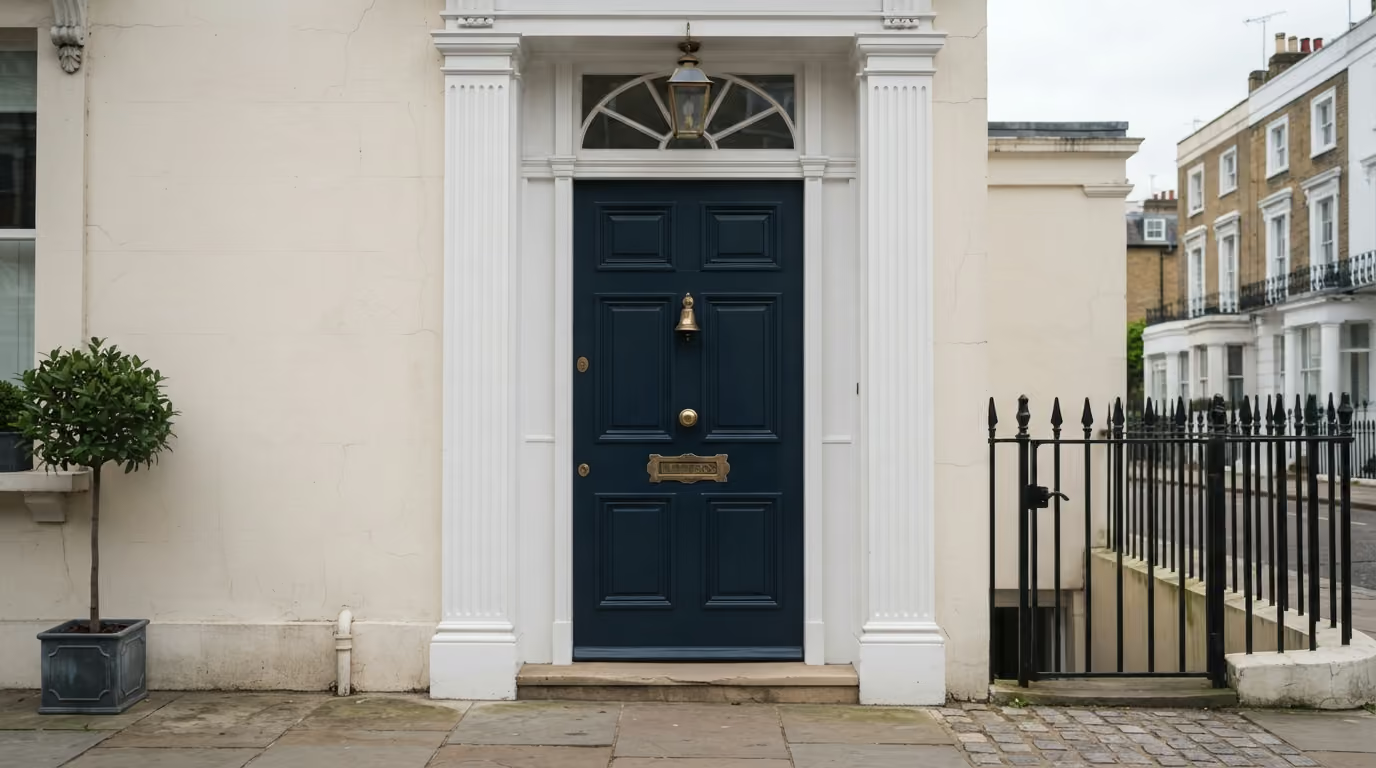
The lower section of a front door is particularly exposed to moisture.
Rainwater may collect around the threshold or affect the bottom rail and surrounding joints.
Over time, deteriorated coatings can allow moisture to reach vulnerable timber.
Signs of possible problems include:
These defects should be assessed before decorative work begins.
A new exterior coating cannot compensate for timber that remains wet, structurally unsound, or affected by an unresolved source of moisture.
Often, yes.
Localised deterioration does not automatically mean that a traditional front door needs replacing.
Where sufficient sound timber remains, specialist repairs may be appropriate.
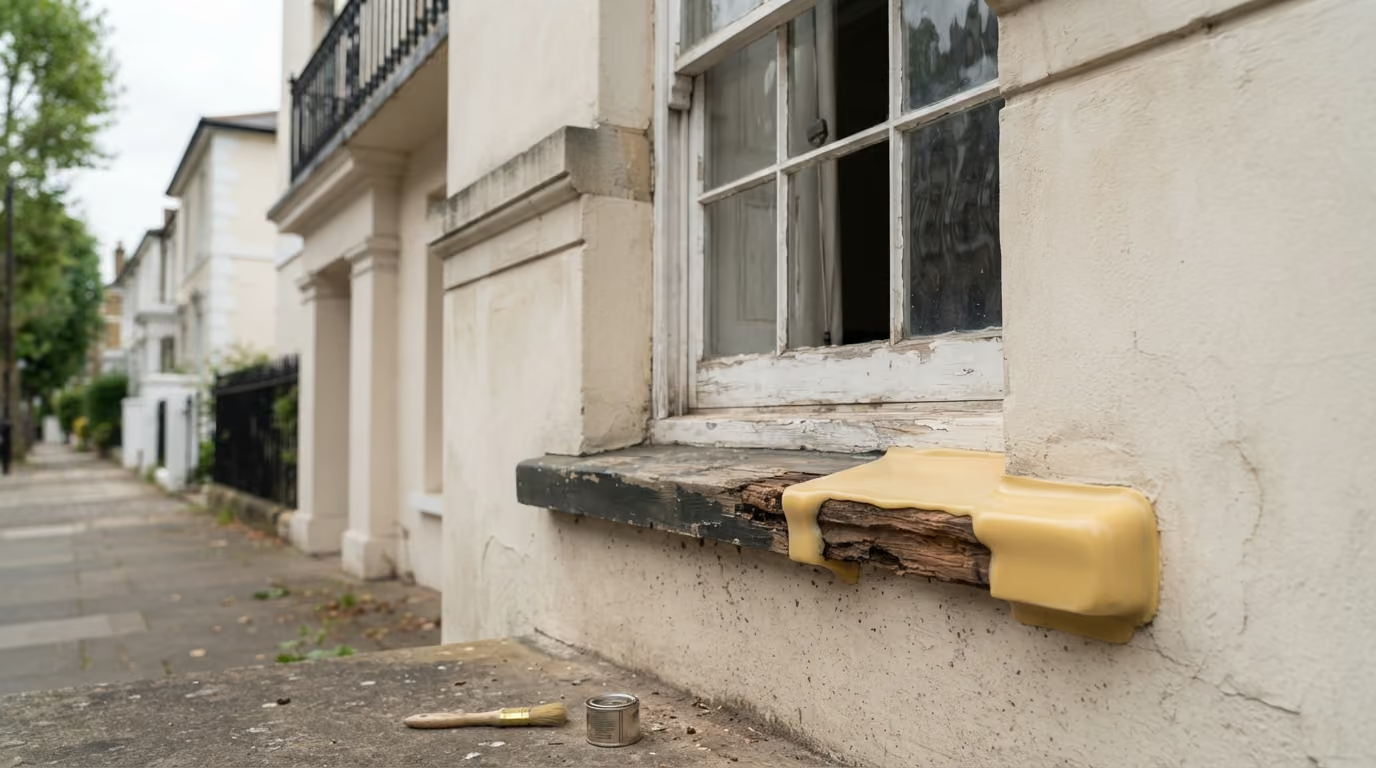
Bellefair's certified Repair Care timber repair work can provide a solution for suitable localised defects using professional resin-based repair systems.
This is different from applying ordinary decorating filler over damaged wood.
A specialist repair involves assessing and removing unsuitable material, preparing the remaining timber, and rebuilding the affected area with a system appropriate for the defect.
Possible locations include:
The suitability of any repair depends on the extent of deterioration, the door's construction, and the remaining sound material.
Where damage is extensive, a traditional joinery repair or replacement of a particular component may be more appropriate.
A traditional timber front door may have been made specifically for the proportions of its entrance.
Its panel arrangement, moulding profiles, thickness, and relationship with the frame can be difficult to reproduce accurately using a standard replacement product.
Retaining sound original joinery preserves these characteristics.
Before replacing a door, consider whether the problems are limited to:
These problems may be repairable without replacing the entire assembly.
In listed properties, replacement or alteration of historic doors may require consent, making careful assessment particularly important.
Traditional panelled doors are made from several timber components that respond to changes in moisture and temperature.
Some panels are designed to sit within the surrounding framework with a degree of movement.
Applying rigid filler indiscriminately across every visible joint can cause problems when the timber moves.
Not every fine line between components represents a defect requiring complete filling.
Preparation should distinguish between:
The repair method should suit the actual construction rather than attempting to make every joint disappear permanently.
A front door may gradually become difficult to operate because of hinge wear, changes in timber dimensions, frame movement, or alterations to the threshold.
If the door already rubs against the frame, another coating can make the problem worse.
Before repainting, check:
Any necessary adjustments should be completed before final preparation and painting.
The decorative finish should not be expected to correct a mechanical problem.
Traditional front doors often include attractive metal fittings.
These may include:
These details can contribute significantly to the character of the entrance.
Where appropriate, removable fittings can be taken off before preparation and refinishing, allowing the surrounding timber to be treated more accurately.
However, lock and security components should not be dismantled without considering how they operate and whether specialist assistance is needed.
Painting around every fitting in place can leave raised edges and prevent the surface from receiving consistent preparation.
If new door furniture is planned, its dimensions and fixing positions should be confirmed early.
Replacing a letterbox or knocker may reveal:
These areas should be repaired before the final finish.
Installing new hardware after painting may require additional drilling that risks damaging the completed surface.
The finish of the metalwork should be considered alongside the proposed door colour.
Different hardware finishes can change the appearance of the same painted door.
For example:
The choice should feel appropriate to the door's age and architecture.
Original fittings that remain functional and suitable may be worth retaining rather than replacing solely to follow a particular decorative trend.
Some Notting Hill front doors contain glazed upper panels, while others sit beneath a separate fanlight.
Original glass may include decorative or textured details that contribute to the entrance.
Before painting, inspect:
Defective glazing details should be addressed before the final decorative coating.
Care is needed when working around original or historic glass.
Inappropriate scraping, heat, or abrasive tools can damage the glazing or its surrounding details.
Often, using one colour for the door and frame creates a coherent entrance.
This is particularly effective where the door sits within a substantial painted timber surround.
However, contrasting colours can also work.
A dark door within a pale frame may create a more defined architectural composition.
Another approach is to paint the door and its immediate frame in one colour while keeping the wider stucco surround consistent with the facade.
The decision should be based on the entrance as a whole.
It is worth considering:
Choosing the door colour without considering these elements can produce a finish that feels disconnected from the building.
Notting Hill is associated with colourful period facades, but a successful front door colour does not need to be unusually bright.
Many traditional architectural colours work beautifully against painted stucco and brick.
Possible choices include:
Each creates a different relationship with the surrounding architecture.
A dark green door may provide a restrained contrast against pale stucco.
A rich burgundy can create warmth beside traditional brickwork.
A carefully selected neutral may be appropriate where the entrance already contains prominent stone and ironwork details.
The colour should be tested on the actual property before final approval.
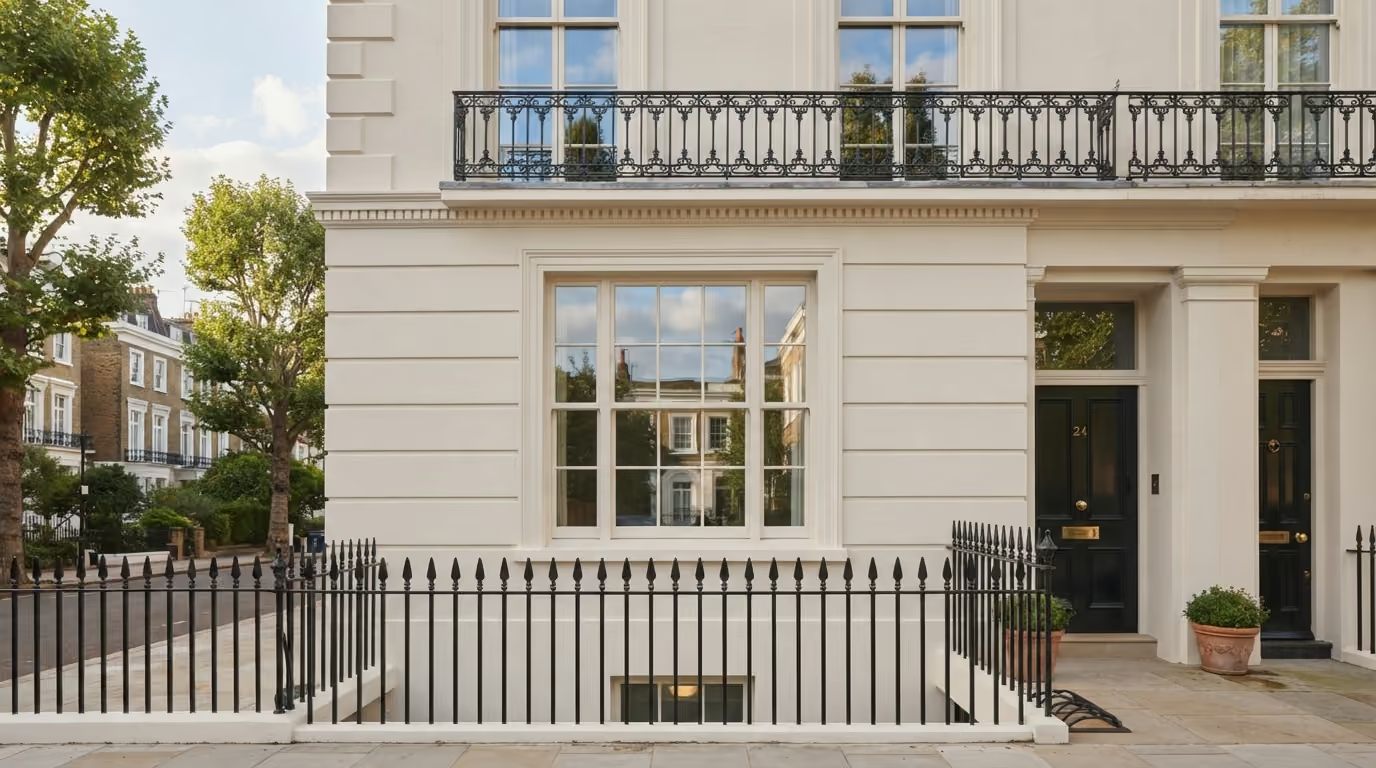
A black front door can create a formal and timeless appearance.
It often works well with:
However, black finishes are not all identical.
Some have cool blue undertones, while others are warmer or contain subtle brown or green influences.
The difference can become noticeable beside cream stucco and warm stone.
Gloss level also changes how the colour appears.
A highly reflective black door can look considerably more formal than the same shade in a softer finish.
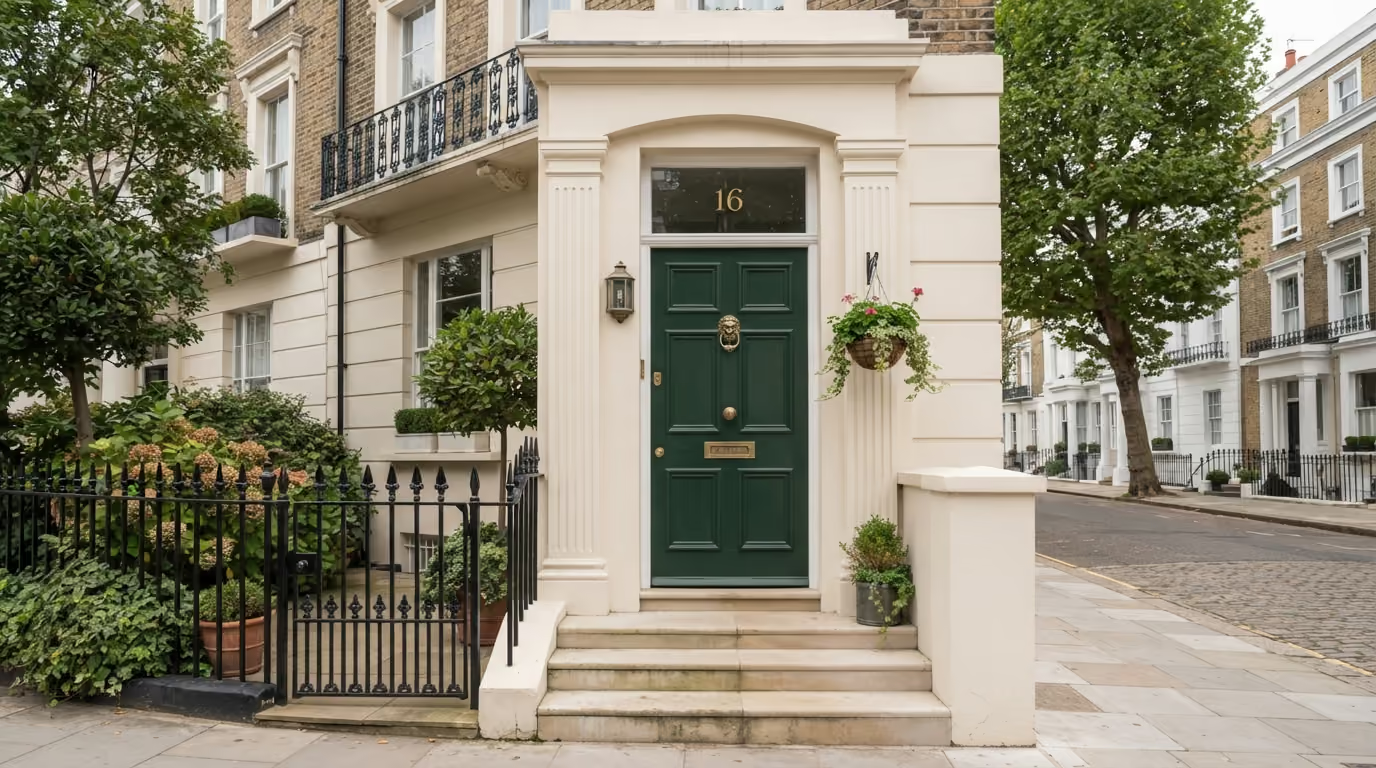
Deep green is another attractive choice for traditional front doors.
It can create a softer impression than black while retaining a strong architectural presence.
Olive, forest, and nearly black greens each produce a different result.
A warmer olive may complement aged brass and traditional brickwork.
A cooler forest green can work beautifully against pale stone and painted stucco.
However, these colours should be tested under the natural light received by the entrance.
A door shaded by a porch may appear substantially darker than the same colour on a fully exposed facade.
A colourful front door can be appropriate in Notting Hill, but the choice should respect the architecture and any planning controls affecting the property.
Neighbouring buildings, historic paint schemes, and the character of the street may influence what is suitable.
For listed buildings, certain changes may require consent.
Properties within conservation areas may also be subject to relevant local guidance and controls.
It is sensible to check the position before making a significant change to the exterior appearance.
A colour that looks attractive in isolation should also feel appropriate when viewed from the street.
The sheen level has a major influence on the finished appearance.
A traditional gloss finish can create a polished and formal entrance, especially on doors with substantial mouldings and classic metalwork.
A satin finish offers a softer reflection.
The decision should consider:
Highly reflective finishes can show even small preparation defects.
Surface preparation is particularly demanding where the homeowner wants a smooth, mirror-like appearance.
A deep gloss finish can look beautiful, but it is unforgiving.
Strong daylight may reveal:
A dark colour combined with substantial reflection can make these defects more noticeable.
The quality of the final finish therefore depends heavily on the stages completed before the last coat.
Applying a premium paint over inadequate preparation will not create a premium result.
Spray finishing may be appropriate for certain front door projects where the construction, preparation, coating system, and working conditions allow it.
It can create a smooth and consistent appearance across large panels and decorative details.
However, on-site spraying requires careful protection of the surrounding entrance, glazing, hardware, masonry, and other surfaces.
In some situations, a traditional hand-applied finish may be more suitable.
The method should be selected based on:
Both approaches can produce excellent results when the preparation and application are appropriate.
A front door requires a coating system suitable for exterior timber.
The exact preparation and products depend on:
Primers, undercoats, and finishing coats should be selected as a compatible system.
Where bare timber is exposed, the relevant surface preparation and priming requirements should be followed.
Special consideration may be needed for resinous or tannin-rich timber, existing knots, and previously stained areas.
The finish should be chosen for its suitability and performance, not only for the colour available on a sample card.
A south-facing or otherwise strongly sunlit entrance can expose a door to considerable solar heating.
Darker colours may absorb more solar energy than lighter finishes.
Depending on the door's construction, this can contribute to higher surface temperatures and changes in timber dimensions.
The selected coating system should therefore be suitable for the exposure.
It is also important to check whether the door already experiences seasonal sticking or movement.
Colour alone does not determine performance. Construction, moisture control, and the condition of the timber remain important.
The main purpose of exterior painting is not purely decorative.
The coating helps protect suitable timber surfaces from weather exposure.
However, paint cannot compensate for defective construction details or ongoing moisture ingress.
Before repainting, inspect:
Where water repeatedly enters the same area, the underlying problem should be addressed.
Otherwise, the new coating may deteriorate prematurely.
The most visible part of a front door is the exterior face, but less visible edges also matter.
Depending on the construction, vulnerable areas may include the top and bottom edges.
These surfaces should be assessed as part of the complete coating system.
Neglected edges can allow uneven moisture exposure and contribute to deterioration.
However, they should not simply receive arbitrary amounts of paint without considering clearances, existing seals, and the door manufacturer's or specialist joiner's requirements.
Many older doors have been fitted with later weather seals, draught strips, or threshold adjustments.
These additions can improve comfort but may affect the available space around the door.
Before painting, check:
Paint should not block drainage provisions, interfere with seals, or make removable components difficult to maintain.
The finished door should operate correctly in addition to looking attractive.
A beautifully painted front door can still look unfinished if the surrounding frame and architectural details are neglected.
In a Notting Hill townhouse, the entrance may contain:
These elements should be inspected during the same project.
Cracks, failed paint, moisture damage, or accumulated dirt on the surrounding structure can detract from the completed door.
The preparation and decorative systems may differ between timber, masonry, and metalwork.
They should be treated according to their individual materials.
Cast iron railings are another important part of many Notting Hill entrances.
They may be painted black, dark green, or another traditional colour.
The front door does not need to match the railings exactly.
However, the two finishes should feel connected.
For example:
The colour relationship should be considered alongside the facade and entrance steps.
If the railings also need attention, their preparation and repainting can be coordinated with the wider exterior works.
The stone beneath a front door can influence how its colour appears.
Traditional limestone, sandstone, and other materials may introduce warm or cool undertones.
A deep green door beside warm stone may look quite different from the same door beside cooler grey paving.
The contrast between the door, surround, and steps should be assessed under natural daylight.
It is worth remembering that natural stone may contain staining and variation of its own.
Choosing the colour from a photograph alone may not accurately represent the finished entrance.
Not necessarily.
The exterior and interior faces of a front door have different decorative roles.
The outside should relate to the facade and entrance architecture.
The inside may form part of a traditional hallway with wall panelling, wallpaper, a staircase, or carefully selected paint colours.
Using different colours can be entirely appropriate.
For example, a dark green exterior door may have a warm ivory interior face that coordinates with the hallway joinery.
However, the door edges and transitions need to be planned carefully so the two colours meet neatly.
For coordinated hallway and joinery decoration, see our interior painting and decorating service.
Where the two faces use different colours, the appearance of the door when open should be considered.
Visible edges can become part of the room's decorative composition.
The treatment should account for:
The aim is to create a clean transition rather than leaving an awkward line between two finishes.
Exterior door painting should be scheduled around suitable weather and application conditions.
Rain, humidity, surface temperature, and drying time can affect the work.
Direct sunlight may also influence how some coatings behave during application.
Conditions should meet the selected product's technical requirements.
It is particularly important that the door can remain secure and functional throughout the decorating process.
The project may require coordination with occupants to allow suitable drying periods without repeatedly closing freshly coated surfaces.
A coating may become touch dry before it has developed its full hardness.
Closing a door against the frame too early can cause painted surfaces to stick together or become marked.
This is particularly important where clearances are narrow.
The decorating programme should allow the coating to dry and cure in line with the manufacturer's instructions.
Hardware, weather seals, and door operation should be checked at the appropriate stages.
The finishing schedule must balance coating performance with the property's security and practical needs.
Period entrances may contain expensive or delicate surrounding materials.
These can include:
Proper protection should be planned before sanding, filling, paint removal, or final application begins.
Where the door is spray finished, additional containment and precautions may be required.
The surrounding architecture should remain in good condition throughout the project.
If the whole townhouse exterior is being repainted, the front door should be included in the wider programme.
This provides an opportunity to coordinate:
However, different materials require different preparation and coating systems.
A masonry finish selected for the facade is not automatically suitable for timber doors.
The full exterior should be planned as one architectural scheme while each material receives appropriate treatment.
There is no single repainting interval suitable for every property.
The condition of the finish depends on:
A sheltered entrance may experience different wear from a door directly exposed to wind-driven rain and strong sunlight.
Regular inspection is more useful than waiting for extensive peeling before taking action.
Homeowners should periodically look for:
Addressing small defects early can help prevent more extensive deterioration.
However, repeated local touch-ups can become visible over time, especially on high-gloss doors.
Where the surrounding finish has weathered or contains several defects, repainting a complete surface may provide a more consistent result.
The cost is influenced by the condition and complexity of the door rather than simply its dimensions.
Factors include:
A relatively simple door in sound condition may require considerably less work than a highly detailed original door with numerous previous coatings and localised timber damage.
A meaningful quotation should reflect the actual preparation and finishing requirements.
A beautifully repainted period door should retain the proportions, mouldings, and craftsmanship that make it distinctive. The colour and sheen are important, but the quality of preparation and the protection of the original timber determine whether the finished work is appropriate for the property.
Can an old Victorian front door be repainted? Yes. Many traditional timber front doors can be prepared, repaired, and repainted while retaining their original architectural details.
Does all the old paint need to be stripped? Not always. Sound, compatible coatings may be retained and prepared. More extensive removal may be necessary where paint is loose, excessively thick, or obscuring decorative details.
Can rotten timber in a front door be repaired? Localised deterioration may be suitable for specialist timber repair where sufficient sound material remains. Extensive damage may require traditional joinery work or replacement of affected components.
Is gloss or satin better for a traditional front door? Both can work. Gloss creates a more reflective, formal appearance, while satin provides a softer effect. The correct choice depends on the door, colour, preparation, exposure, and coating specification.
Can a traditional front door be spray painted? Yes, where the door and working conditions are suitable. Spray application requires careful preparation, protection, and an appropriate exterior coating system.
What colours suit Notting Hill period doors? Deep green, warm black, navy, burgundy, muted blue-grey, and selected traditional neutrals can all work. The colour should be assessed against the facade, entrance steps, railings, and relevant heritage requirements.
Should the front door and frame match? They can, but contrasting colours are also possible. The best approach depends on the entrance architecture and surrounding materials.
Can the outside of a door be a different colour from the inside? Yes. The exterior can relate to the facade while the interior face coordinates with the hallway. The edges and transitions should be carefully planned.
Why does paint peel near the bottom of a front door? Moisture exposure, damaged joints, poor previous preparation, or unsuitable coatings may contribute. The underlying cause should be identified before repainting.
Can a listed front door be repainted a different colour? Changes affecting the character of a listed building may require consent. The position should be checked before making significant alterations.
We carry out exterior and heritage painting across Prime Central London, including Notting Hill, Kensington, Chelsea, Belgravia, Knightsbridge, and Westminster. Our work includes traditional front doors, timber entrance frames, sash windows, exterior joinery, decorative stucco, cast iron railings, and certified Repair Care timber repairs. We work with period properties where careful preparation, suitable materials, and respect for original architectural details are central to the finished result.
Planning to repaint a traditional front door in your Notting Hill home? Send photographs of the complete entrance, including the door panels, frame, lower rail, threshold, glazing, hardware, surrounding stucco, and any areas of peeling paint or timber damage. If you are considering a colour change, include the shades you have in mind and photographs showing the wider facade. We can assess the visible condition, discuss preparation and repair requirements, and help plan a finish that complements the architecture while providing suitable protection for the timber. To get started, request a site visit and we will arrange a time that suits you.
Tell us a few details about your project and our team will review the enquiry and come back to you within one working day.