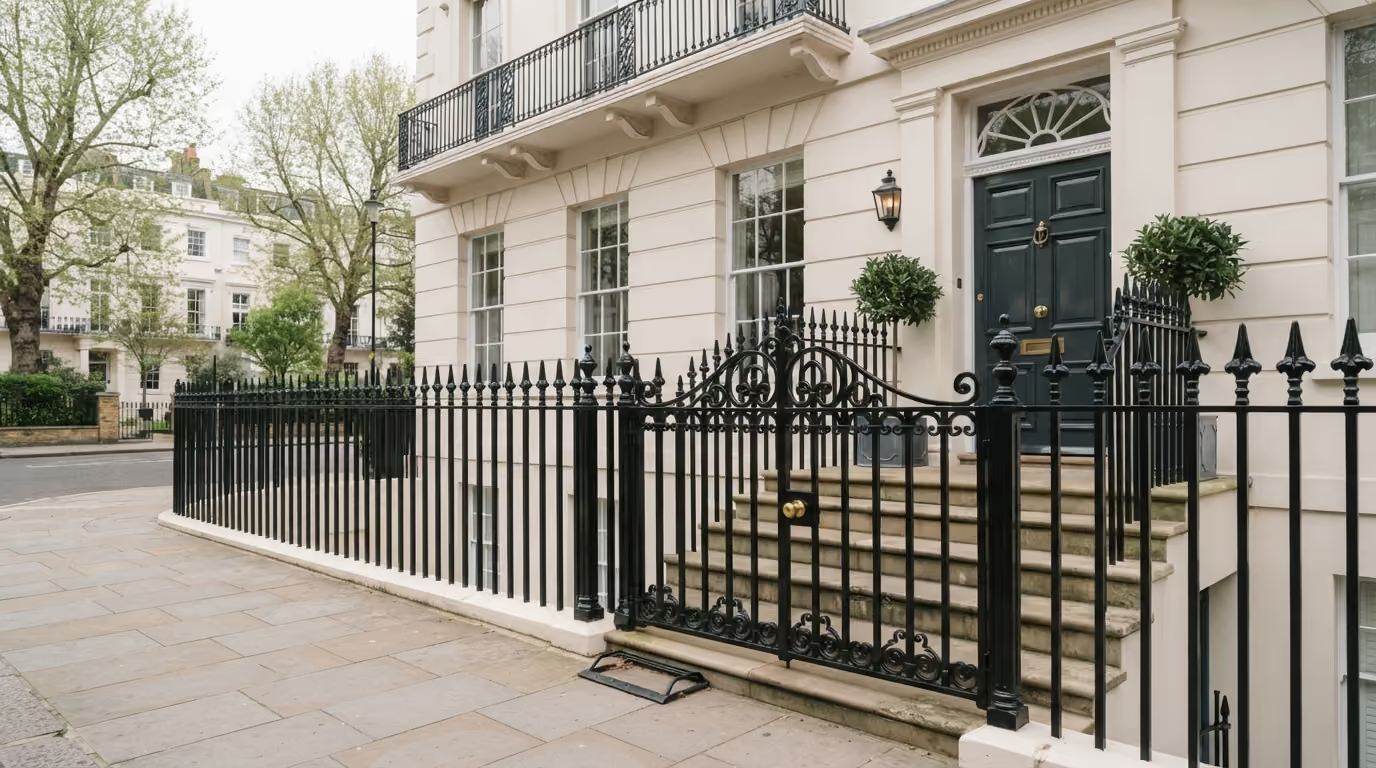
Exterior railings and gates need more than a fresh topcoat when rust, peeling paint, or failing joints begin to appear. This guide explains what causes corrosion, how metalwork should be prepared, when old coatings can remain, and how colour, sheen, weather, gates, stonework, and ongoing maintenance affect the finished result.
The practical answer: exterior railings and gates in a Belgravia home should be repainted before corrosion has had time to spread beneath the existing coating. Small rust spots, flaking paint, open joints, and damage near ground level are easier to deal with when they are still localised. The quality of the finished result depends far more on removing unstable coatings, treating affected metal correctly, and preparing the surface than on simply applying a fresh black topcoat. For professional preparation and finishing, see our exterior and heritage painting service.
Painted railings are an important part of the exterior character of many Belgravia properties. They may frame front lightwells, boundary walls, basement entrances, steps, balconies, or traditional gates.
Because they sit outside throughout the year, they also receive constant exposure to rain, pollution, sunlight, condensation, and physical contact.
Unlike a painted wall, metalwork contains edges, joints, welds, decorative details, horizontal surfaces, and narrow gaps where water can remain. These are often the first places where coating failure begins.
This guide explains when exterior railings should be repainted, how rust develops beneath paint, what preparation is required, why ground level sections often fail first, how colour and sheen influence the finished appearance, and what homeowners should check before an exterior decorating project begins.
The first visible sign may be only a small brown mark beneath otherwise sound paint.
Other warning signs include:
Once moisture reaches exposed metal, corrosion can begin underneath the surrounding paint.
This means the visibly rusty area may be smaller than the section of coating that has already lost adhesion.
Applying another coat may temporarily hide the colour of corrosion, but it does not create a sound substrate.
Where the coating is failing, preparation needs to remove unstable material and expose the true condition of the metal beneath.
The appropriate process will depend on:
The objective is to create a stable surface for the new coating rather than sealing loose material underneath it.
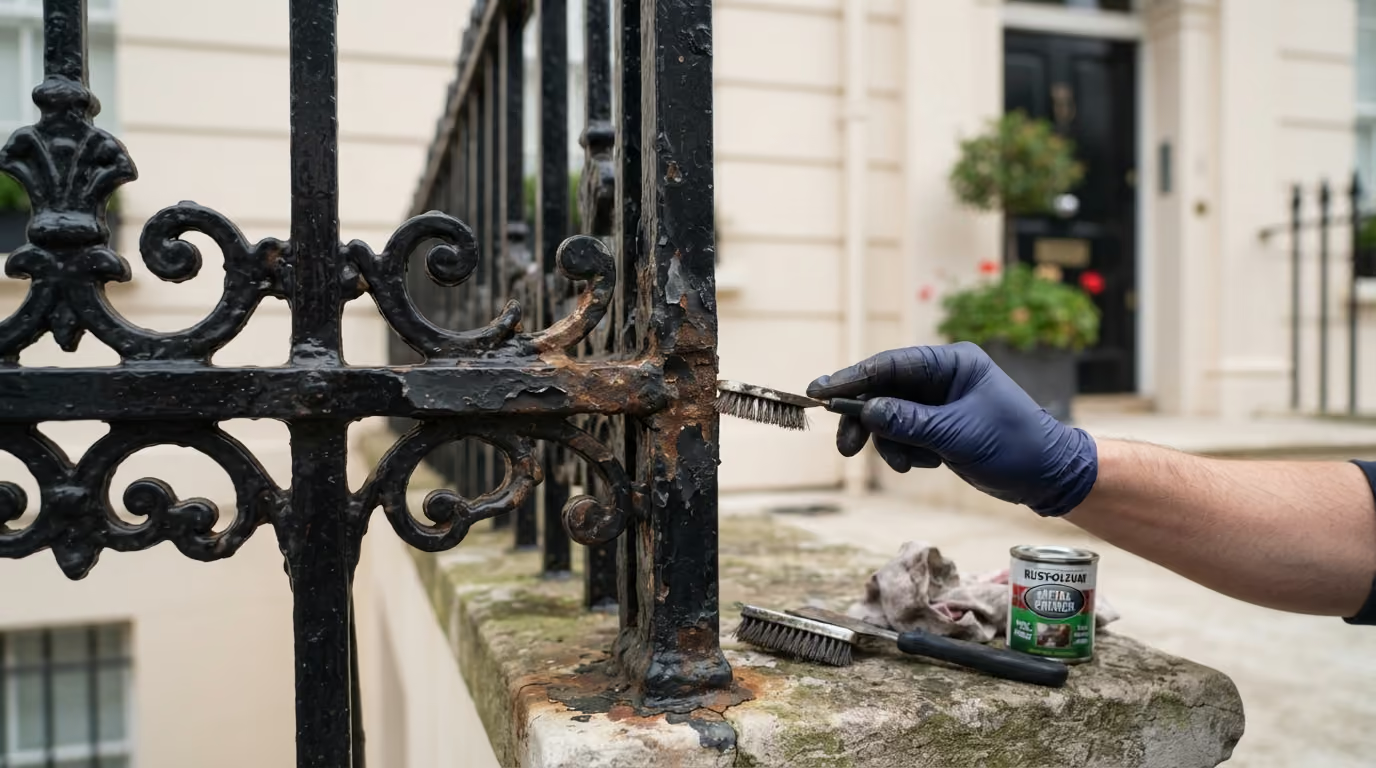
The lower sections of exterior metalwork usually experience harsher conditions.
They may be exposed to:
The point where a railing enters stone, concrete, or another support also deserves close inspection because different materials meet at a location that is regularly exposed to water.
If deterioration repeatedly begins in the same lower sections, simply touching up the visible paint may not be enough.
Water leaves a vertical bar relatively quickly. Horizontal rails, decorative ledges, gate tops, and flat sections can stay wet for longer.
These areas may show:
The condition of these sections should be checked during preparation rather than assuming every part of the railing has weathered equally.
Traditional exterior metalwork can contain many connections between components.
These may include:
Movement, trapped water, and difficult access during previous painting can make these areas vulnerable.
Repeated rust around one joint should therefore be investigated rather than repeatedly hidden with another local coat.
Railings may have been repainted many times over several decades.
Older coatings can accumulate around decorative details until the profiles become less defined.
You may notice:
Not every previous coating needs to be removed if it remains sound.
However, loose layers and excessive build up should be addressed where they compromise adhesion or the appearance of the detailing.
A well bonded existing coating can often remain as part of the prepared surface.
More extensive removal may be appropriate where:
The condition of the specific railings should determine the preparation rather than applying the same method to every project.
A gate is handled, opened, closed, locked, and occasionally knocked by bags, bins, bicycles, or deliveries.
Wear is often concentrated around:
These areas should be inspected before painting.
If a gate is dragging, misaligned, or striking the post each time it closes, the mechanical issue should be addressed first. Otherwise the new paint can become damaged quickly.
Open and close the gate several times.
Look for:
Decoration should be the final stage after these practical issues are resolved.
Painting a misaligned gate may improve its appearance for a short time, but the same points of contact will begin damaging the fresh coating again.
Belgravia properties frequently have basement lightwells protected by railings.
These areas can remain cooler and receive less direct sun than the main front elevation.
Moisture may therefore take longer to dry.
The internal faces of railings can also be harder to inspect from street level.
When access is available, check:
A railing that looks sound from the pavement may show more deterioration from the other side.
Black metalwork is strongly associated with London period architecture and often remains the most appropriate choice.
However, railings and gates can also be finished in other dark architectural colours where the property and wider scheme support them.
Possible directions may include:
The colour should be considered beside the front door, stucco, masonry, windows, stone, and neighbouring architectural context.
Two colours that both appear black on a sample card can behave differently outdoors.
A cooler black may take on a blue quality in certain daylight, while a warmer black may sit more comfortably beside cream or warm stone facades.
Large samples are useful when a property contains:
The railing colour does not need to match another exterior element exactly, but the undertones should not feel accidental.
Exterior metalwork can look very different depending on the sheen of the final coating.
A stronger sheen reflects more light and can make decorative profiles feel sharper.
A lower sheen creates a more restrained appearance and can reduce the visual contrast between different parts of the metalwork.
The decision should take into account:
Higher sheen can also reveal preparation defects more clearly, particularly across broader gates and flat metal panels.
Ornamental metalwork can contain narrow recesses that are difficult to prepare thoroughly.
These details may collect:
The preparation should preserve the original form rather than covering increasingly heavy paint build up with each maintenance cycle.
Metal railings frequently meet stone steps, coping, plinths, or basement walls.
Paint preparation needs to protect these neighbouring materials.
This becomes particularly important where the stone is pale because black paint splashes, sanding residue, and rust staining can be very noticeable.
Protection may be required for:
Protecting the surrounding property is part of the exterior decorating process.
If brown marks are appearing on the masonry beneath a railing, this can indicate water carrying corrosion products away from the metal.
The visible stain is not the main problem.
The metalwork above should first be inspected to identify the source.
Cleaning a stain without dealing with the failing coating may simply allow the discolouration to return.
The entrance is normally seen as one composition.
Railings, gate, front door, steps, stonework, and external lighting all contribute to the first impression.
If several elements are being refurbished together, colour samples should be reviewed side by side.
A deep gloss front door beside railings with a significantly different black can look more noticeable than expected in daylight.
There is no rule requiring both elements to use the same colour.
A coloured front door can work beautifully beside dark neutral railings.
Possible combinations include:
The entrance should be considered as a complete palette.
Entrance lights, lanterns, and basement lighting can change how black and dark colours appear after sunset.
Warm lighting may soften black metalwork, while cooler exterior lighting can exaggerate blue undertones.
Where new exterior lighting is planned, electrical work and fitting positions should ideally be resolved before the final decorating stage.
Railings may connect to masonry using brackets, bolts, or other fixings.
If a connection is loose or moving, the problem should not simply be covered with paint.
Movement can break the new coating around the fixing and allow moisture to enter again.
Any practical repair should therefore happen before final preparation and painting.
Upper floor balcony railings may be less visible during everyday maintenance because they are not inspected from close range as often as entrance railings.
They still face significant weather exposure.
Check:
Access requirements should be considered early if the metalwork cannot be reached safely from the balcony itself.
If scaffolding or other access is already being arranged for facade decoration, it can be sensible to inspect metalwork at the same time.
This may include:
Not every section will necessarily need repainting, but closer inspection may identify early coating failure before corrosion becomes more extensive.
The railings need suitable conditions for preparation and coating.
Rain is an obvious concern, but drying conditions also matter.
The metal should not simply be painted because there is a short gap between showers.
The programme needs to take account of:
A flexible exterior programme is preferable to forcing work into unsuitable conditions.
There is no fixed number of years that applies to every property.
The repainting cycle depends on:
Regular inspection is more useful than relying entirely on a calendar.
Small areas of coating failure are much easier to address before widespread corrosion develops.
They are worth investigating early.
A tiny area of exposed metal may remain a localised maintenance issue if the surrounding coating is still sound.
If left for several seasons, water can travel beneath the edges of the damaged coating and increase the affected area.
Early maintenance can therefore reduce the amount of preparation required during the next complete repaint.
Spring can be a useful time to inspect exterior metalwork after prolonged periods of rain and colder weather.
Look closely at:
The aim is to identify changes before the next full exterior decorating project becomes urgent.
The most successful repaint is one where the decorative finish is the final stage of a proper maintenance process. Stable metal, careful preparation, repaired joints, suitable conditions, and good protection of the surrounding architecture all matter before the final colour is applied.
Can you paint directly over rust on exterior railings? Loose coatings and corrosion need appropriate preparation first. Painting directly over unstable rust does not create a sound base for the new finish.
Do old railings need to be stripped completely? Not always. Sound existing coatings can often remain, while loose or unstable sections need to be removed and prepared.
Why do railings rust near the ground first? Lower sections are exposed to splash water, dirt, slower drying, and vulnerable connections with paving or masonry.
Do railings have to be black? No. Black is traditional and often appropriate, but charcoal, deep green, and other dark architectural colours can also work depending on the property.
Should gates be repaired before painting? Yes. Alignment, hinges, latches, and other mechanical issues should be resolved before the final decorative finish.
Can rust stains on stone be cleaned? They may be treatable, but the source of the staining should first be identified so continuing corrosion does not cause the marks to return.
How often should exterior railings be repainted? There is no universal interval. Condition, exposure, previous preparation, physical wear, and coating performance should determine when maintenance is required.
We carry out exterior and heritage painting across Prime Central London, including Belgravia, Chelsea, Kensington, Notting Hill, Knightsbridge, and Westminster. Our work includes exterior railings, gates, metalwork, timber windows and doors, stucco facades, traditional architectural details, and the preparation required before repainting.
Noticing rust, peeling paint, or tired metalwork outside a Belgravia property? Send photographs of the complete railings or gate together with close views of rust spots, joints, lower sections, fixings, peeling paint, and any staining on the surrounding stone or stucco. We can assess the visible condition, identify areas that may need closer inspection, and plan the preparation and repainting as part of the wider exterior work. To begin, request a site visit and we will arrange a time that suits you.
Tell us a few details about your project and our team will review the enquiry and come back to you within one working day.