

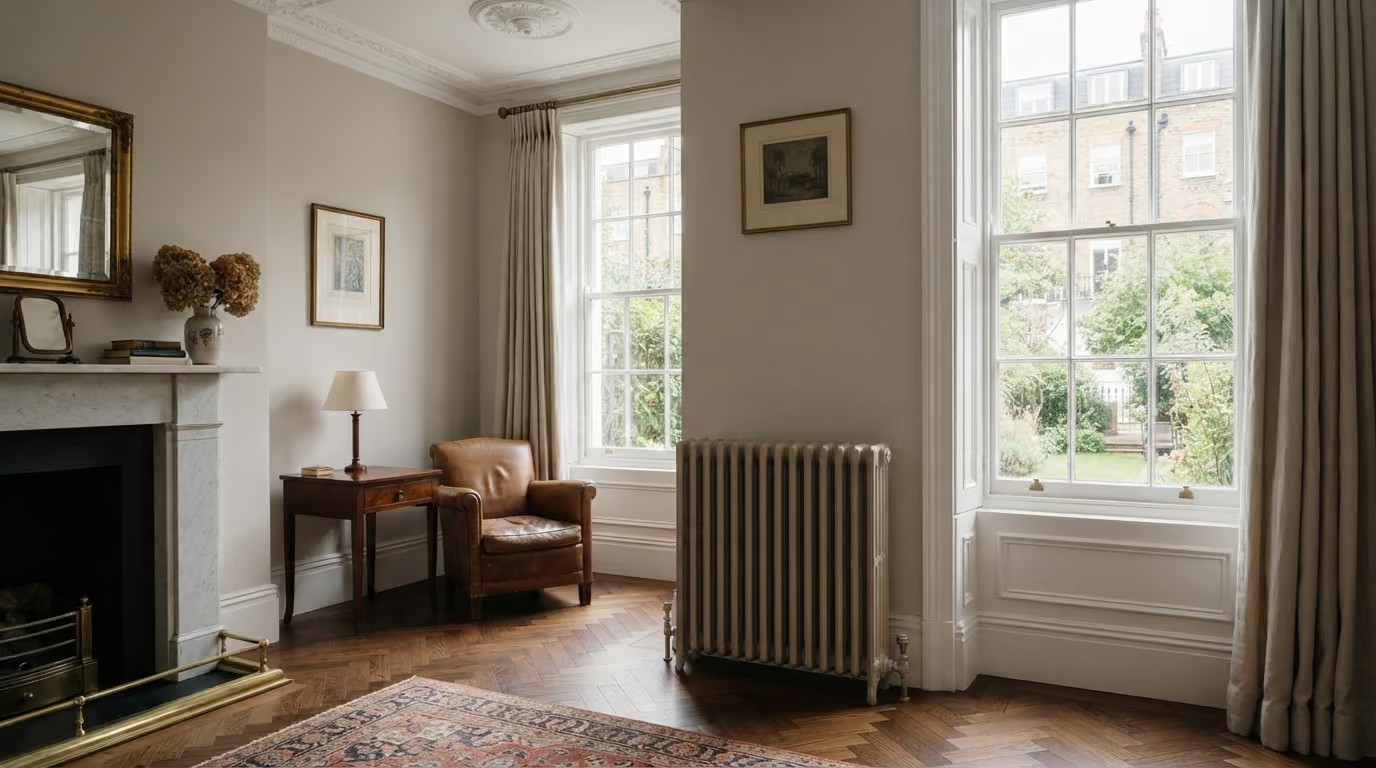
Traditional cast iron radiators can be beautifully restored while preserving their original character and decorative details. This guide explains how to prepare old coatings, address rust, select suitable radiator paint, and coordinate colour and sheen with the surrounding walls, joinery, and period architecture.
The practical answer: Repainting traditional cast iron radiators in a Belgravia period home can restore their appearance without losing the character of the original heating system. However, radiators need a different approach from ordinary painted joinery. Old coatings, surface corrosion, decorative details, heat exposure, and the condition of the radiator itself must all be considered before painting begins. The correct preparation and a suitable coating system are just as important as choosing the right colour. For coordinated interior preparation and finishing, see our interior painting and decorating service.
Traditional radiators can be surprisingly prominent features in a period London interior. In a Belgravia townhouse, a cast iron column radiator may sit beneath a tall sash window, beside a marble fireplace, within a bay window, or against a carefully decorated wall.
Unlike modern radiators designed to be relatively discreet, traditional cast iron models often have substantial proportions and, in some cases, decorative detailing.
They can contribute to the room's architectural character, particularly when their colour and finish have been chosen to complement the surrounding walls, skirting, flooring, and window joinery.
However, many older radiators have accumulated several generations of paint. Over time, the finish may become chipped, uneven, discoloured, or excessively thick around decorative details.
In other homes, the radiators may function perfectly well but no longer suit the colour scheme following a refurbishment.
This guide explains when traditional radiators can be repainted, how to assess existing coatings, what to do about rust and old paint, how colour and sheen affect their appearance, and how to coordinate the work with the wider decoration of a Belgravia period home.
The first decision is whether the existing radiator is worth retaining.
A radiator that looks tired may still be in good working condition. Chipped paint or an outdated colour does not automatically mean the radiator needs replacing.
Before making that decision, consider:
Where the heating system is sound, repainting may be an attractive way to retain an existing architectural feature.
If there are leaks, defective valves, or concerns about the radiator's operation, those problems should be assessed by a suitable heating professional before decorative work begins.
Cast iron radiators are often more visually detailed than modern panel radiators.
They may contain:
These elements create light and shadow across the radiator, particularly when it sits near a window.
Heavy paint application can gradually obscure small decorative details and leave excessive build-up in narrow spaces.
A refined repaint should protect the surface and create consistent coverage without making the radiator look unnecessarily thickly coated.
Some period radiators have been repainted repeatedly over several decades.
Each layer may have been applied without removing previous runs, drips, or unstable coatings.
As a result, the surface may contain:
Applying another coat without addressing these defects can make the finish look heavier.
The preparation should be based on the condition of the existing paint rather than assuming every radiator needs to be stripped completely.
Sound coatings may be suitable for preparation and repainting, subject to compatibility with the new system. Unstable or excessively thick paint may require more extensive work.
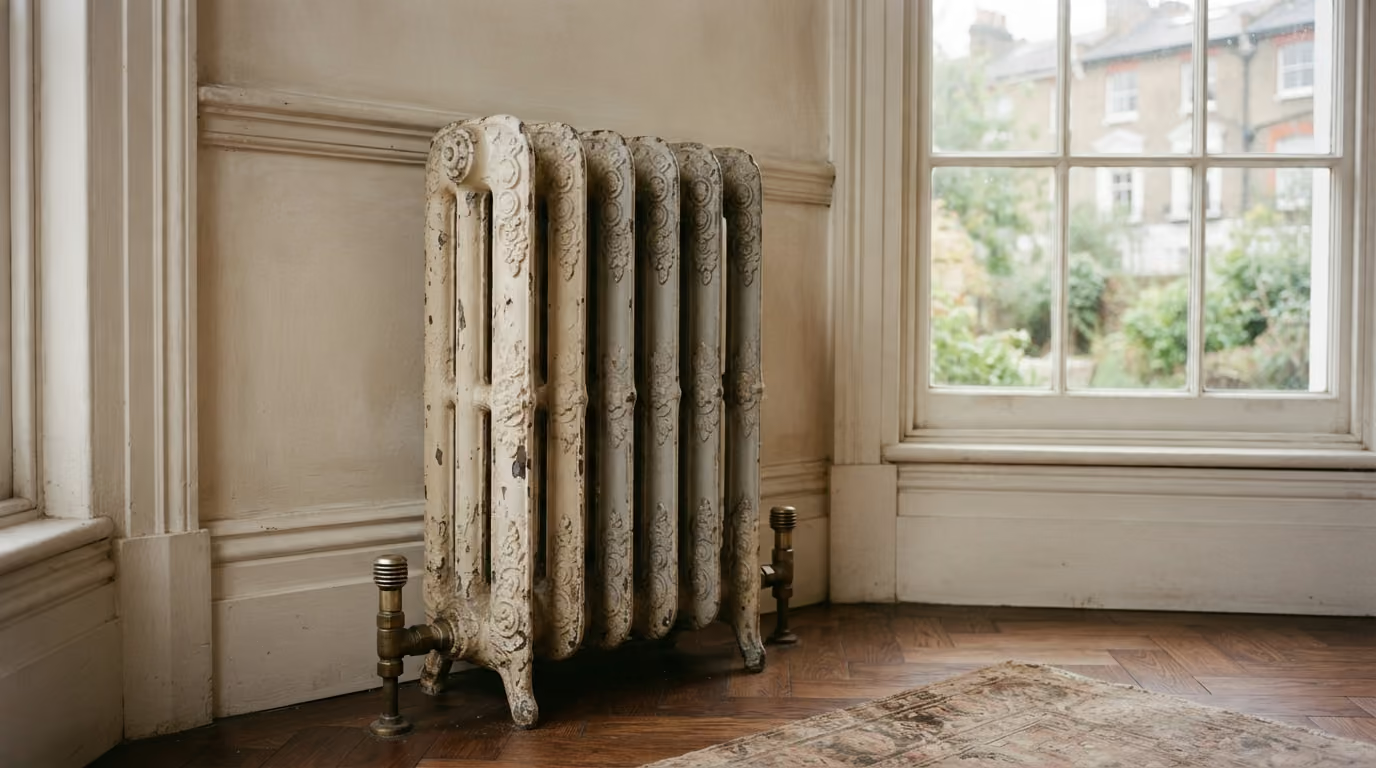
In an older property, the age and composition of previous coatings should be considered before paint removal begins.
Historic paint may contain lead, particularly where decorative layers have accumulated over many years.
Sanding, scraping, or stripping these coatings without appropriate assessment and controls can create hazardous dust or debris.
This matters especially in occupied Belgravia homes where the radiator may sit within a furnished bedroom, reception room, or study.
The preparation method should be selected with the existing coatings, surrounding interior, and safety requirements in mind.
Extensive removal or restoration should not be treated as an ordinary sanding task.
Small areas of surface corrosion can sometimes be found where older coatings have chipped or where moisture has affected the radiator.
Common areas include:
Before repainting, it is important to establish whether the corrosion is superficial or associated with a more significant problem.
Rust near a leaking connection is not simply a decorating issue. The leak needs attention before any cosmetic repair.
Where the radiator is mechanically sound, suitable preparation can address surface corrosion as part of the coating system.
Painting over loose rust or flaking paint does not create a reliable base.
Traditional radiators should not be painted while they are operating or still hot.
The heating needs to be switched off and the radiator allowed to cool fully before surface preparation and application.
A hot radiator can interfere with the coating's application, drying, and finish.
The decorative programme should follow the manufacturer's temperature and curing requirements before the radiator is returned to normal use.
This may affect scheduling during colder months when the heating system would ordinarily be running.
Ordinary wall paint should not automatically be treated as suitable for a working radiator.
The coating needs to be compatible with:
Different radiator paints and compatible metal coating systems have different specifications.
The correct product should therefore be selected for the actual radiator rather than choosing solely by colour.
Heat resistance is one consideration, but adhesion, compatibility, and the ability to produce a refined finish also matter.
Both methods can be appropriate depending on the radiator and the practical requirements of the room.
Spraying can help achieve more uniform coverage across intricate castings and closely spaced columns when the radiator can be prepared and accessed properly.
However, spraying inside an occupied property requires careful containment and protection.
Hand painting may be suitable for certain radiators, particularly where:
The appropriate technique depends on the coating system, the decorative details, and whether the radiator will be refinished in place or removed for separate restoration.
Removing a radiator can provide better access to surfaces that are difficult to reach while it is installed.
This may be useful when:
However, cast iron radiators can be extremely heavy.
Disconnecting and moving them also involves the heating system, pipe connections, water, and potentially old fittings.
Any disconnection or reinstallation should be planned with a suitable heating professional.
The radiator should not be removed unnecessarily simply because a new colour is being applied.
When a radiator is refinished in place, the surrounding surfaces need careful protection.
These may include:
The space behind the radiator can be particularly challenging to access.
Protection and preparation should be planned before work begins, especially where delicate wallcoverings or newly finished floors are present.
Where spraying is appropriate, suitable containment, ventilation, and product-specific safety measures must form part of the work.
White is a familiar choice, but it is not the only option.
In a Belgravia period home, radiator colour can be used to make the heating system either more discreet or more prominent.
Possible directions include:
The best choice depends on the architecture, wall finish, flooring, and furniture.
A substantial cast iron radiator painted in a deep architectural colour can become an attractive feature.
Using a colour close to the wall, by contrast, can make the radiator feel less visually dominant.
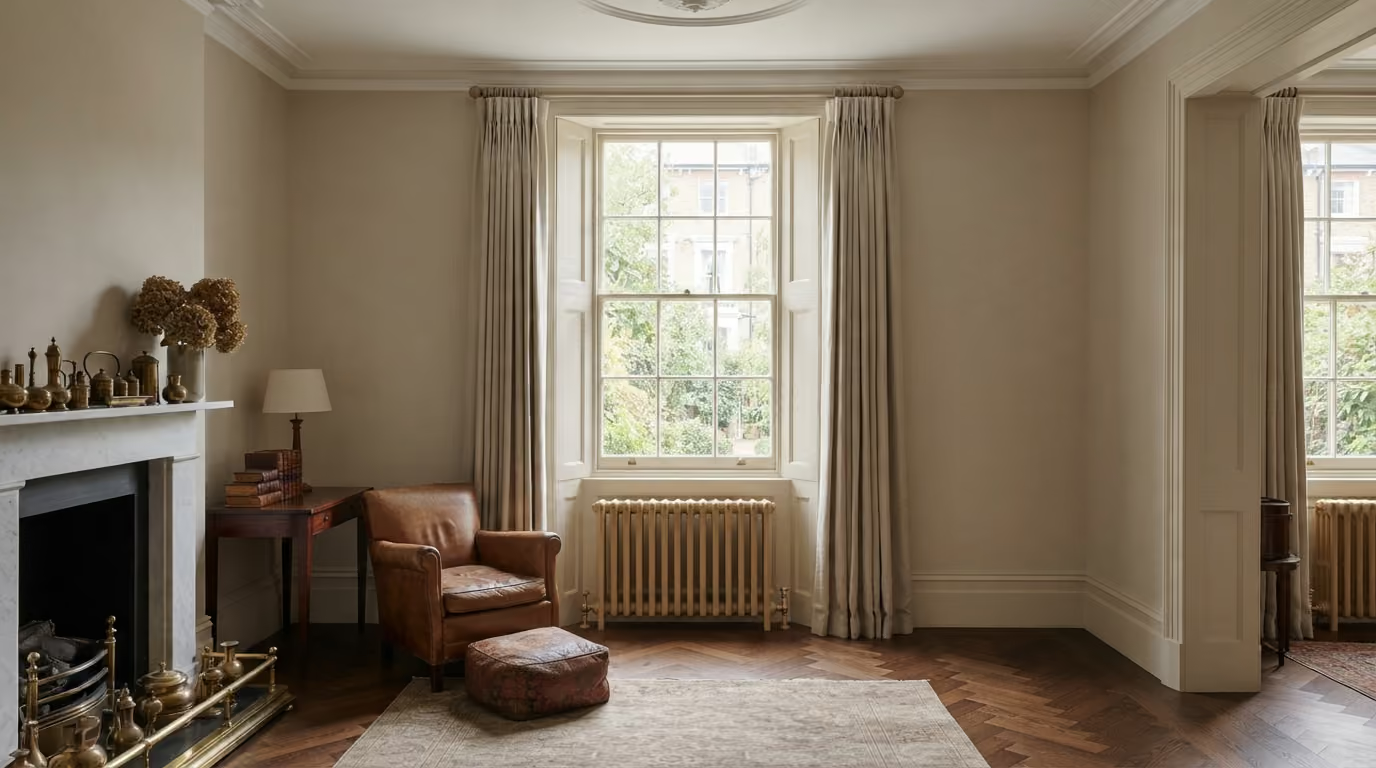
Matching the radiator to the wall colour is often a good approach when the aim is a calm interior.
It can be particularly effective in bedrooms, studies, and reception rooms where the radiator should not draw attention away from furniture or artwork.
However, the same colour may look different on the two surfaces because the coating systems and sheen levels are not necessarily identical.
A matt wall and a slightly more reflective painted radiator will respond differently to light.
This can create a subtle distinction without introducing an entirely new colour.
Samples should be compared using finishes that are suitable for their intended surfaces.
Another approach is to coordinate the radiator with the architectural woodwork rather than the walls.
For example, a room with warm ivory skirting and architraves may use a related radiator colour.
This can make the radiator feel more connected to the room's permanent architectural elements.
It is particularly useful where the walls are decorated with wallpaper or another finish that cannot be matched directly using a suitable radiator coating.
The radiator colour can instead be selected from the surrounding joinery palette.
Deep colours can make traditional cast iron radiators feel like deliberate pieces of period furniture rather than utilitarian equipment.
Dark olive, warm charcoal, bronze-inspired neutrals, and deep brown can work particularly well beside pale walls.
The decorative castings may become more noticeable as light creates shadows across the columns.
However, darker coatings can also show dust, surface defects, and uneven preparation under certain lighting conditions.
They should not be chosen as a shortcut for hiding an aged or poorly prepared radiator.
The underlying finish still needs appropriate attention.
Some traditional radiators are finished in bronze, copper-inspired, pewter, or other metallic colours.
These finishes can make ornate cast iron details more prominent.
They may suit studies, libraries, formal dining rooms, or other interiors containing warm metals and traditional furniture.
However, metallic finishes tend to be visually stronger than neutral painted colours.
Before choosing one, consider:
A highly reflective radiator can compete with a marble fireplace, decorative mirror, or other architectural feature if the room already contains several visually prominent materials.
The sheen of the coating influences how clearly the radiator's form is defined.
A lower sheen may give a more restrained and understated appearance.
A stronger sheen creates more reflection and can emphasise the rounded columns and decorative castings.
However, it can also reveal:
The choice should take into account the condition of the radiator and the desired effect within the room.
Traditional radiators are frequently positioned beneath tall sash windows.
This creates a strong relationship between the radiator and the painted window joinery.
The colour scheme should consider:
A radiator painted brilliant white may feel much sharper than expected beside warm ivory shutters or a stone-coloured wall.
A softer neutral can sometimes create a more harmonious result.
Where condensation or water damage is visible around the window or adjacent wall, the cause should be investigated before painting the radiator or surrounding surfaces.
Some Belgravia interiors use specialist wallpaper or textile wallcoverings behind radiators.
Before installation, the selected wallcovering's suitability for the location should be checked against the manufacturer's guidance.
The heat exposure, available space, and access for installation and maintenance all matter.
If the radiator is being removed as part of a renovation, it may be possible to prepare and decorate the entire wall more consistently before the heating professional reinstalls it.
Any wallpaper installation should be coordinated with the radiator work so that finished surfaces are not unnecessarily disturbed.
For professional wall preparation and installation, see our wallpaper service.
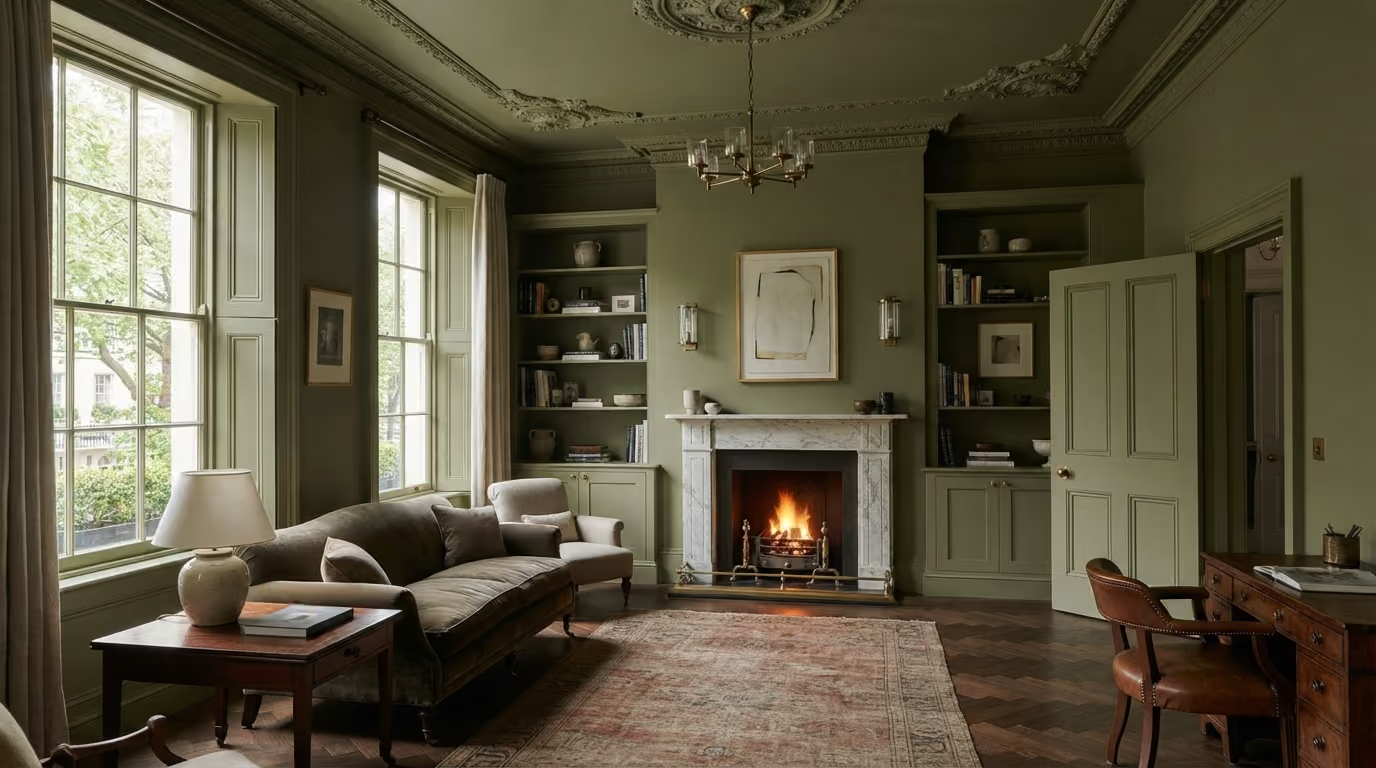
Bauwerk limewash can provide a beautiful background for traditional painted radiators.
The soft mineral character of the wall contrasts with the more defined, uniform surface of the radiator.
Possible combinations include:
However, the decorating sequence needs careful planning.
Radiator removal, pipework changes, and wall repairs should be completed before the final limewash application where possible.
Local repairs to a mineral wall can be more noticeable than ordinary paint touch-ups.
For specialist mineral wall finishes, see our Bauwerk limewash service.
Some homes use decorative timber or MDF radiator covers rather than leaving the radiator visible.
These covers are joinery, not part of the radiator's metal body.
They may contain:
The preparation and coating system should suit the actual material and its expected exposure to heat.
The cover should also allow the radiator to function as intended.
Painting over ventilation openings or making removable panels difficult to access can create practical problems.
Often, yes.
A well-designed radiator cover can become part of the room's architectural joinery when it shares the same colour as the skirting, wall panelling, or fitted cabinetry.
This works particularly well in reception rooms where the cover sits beneath a window or between two sections of traditional panelling.
However, a cover can also use a deeper colour when it is intended to appear more like furniture.
The decision should consider its height, shape, position, and whether the grille creates a strong visual pattern.
A decorative radiator cover needs to allow sufficient airflow for the heating system.
Poorly designed or obstructed openings can reduce the radiator's ability to heat the room effectively.
Before refinishing a cover, check:
A cover should not be redesigned or painted in a way that interferes with its practical function.
Traditional radiator valves can be decorative features in their own right.
Some are finished in brass, bronze, chrome, or other metals chosen to complement the room.
Painting these fittings without considering their operation or original finish may be unnecessary.
Thermostatic controls, moving parts, and serviceable connections should remain functional and accessible.
Any changes to pipework or valves should be planned with the heating system rather than treated as an ordinary decorative detail.
A radiator should not be selected in isolation from the surrounding interior.
The colour may look attractive on a sample but feel disconnected once viewed against:
In many cases, choosing a colour already present in the room creates a more refined result than introducing an entirely new shade for the radiator.
This does not mean the radiator must disappear. A well-proportioned cast iron radiator can be an attractive architectural element when its colour and finish have been chosen deliberately.
Radiator work should be coordinated with the surrounding decoration.
If the radiator is being removed, repaired, or replaced, that work should be planned before the walls and flooring are completely finished.
A sensible programme may include:
The exact sequence will vary depending on the scope of work.
What matters is avoiding unnecessary damage to finished walls, floors, and joinery.
A well-repainted traditional radiator should look like a considered part of the room, with its original form and detailing remaining clearly visible. The preparation and technical suitability of the coating are just as important as the final colour.
Can old cast iron radiators be repainted? Yes. Many sound cast iron radiators can be repainted after appropriate assessment and preparation, using a coating system suitable for radiator temperatures and the existing surface.
Do old radiator coatings need to be stripped completely? Not always. Stable, compatible coatings may be prepared and retained. Loose paint, significant corrosion, or excessive build-up may require more extensive preparation.
Can radiators be spray painted? Yes, when the radiator is suitable for the chosen application method and the correct preparation, coating, protection, and safety measures are used.
Can I use ordinary wall paint on a radiator? A wall coating should not be assumed suitable. The product needs to be approved for the radiator's material and expected operating conditions.
Should radiators match the walls? They can. Matching or related colours can make the radiator feel more integrated, but contrasting finishes can also work where the radiator is an attractive architectural feature.
What colours suit traditional cast iron radiators? Warm off whites, stone, putty, olive, charcoal, deep brown, and selected metallic finishes can all work depending on the room and the suitability of the coating system.
Should rust be removed before repainting? Corrosion and its cause should be assessed first. Loose rust and failing coatings require appropriate preparation before the new system is applied.
Can a radiator be painted while it is warm? No. The radiator should be fully cooled and the application should follow the coating manufacturer's temperature and curing instructions.
We carry out interior painting and decorating across Prime Central London, including Belgravia, Chelsea, Kensington, Notting Hill, Knightsbridge, and Westminster. Our work includes period reception rooms, bedrooms, studies, dining rooms, traditional painted joinery, wall panelling, radiator covers, doors, skirting, and coordinated decorative finishes within period interiors.
Considering repainting traditional radiators or radiator covers in a Belgravia home? Send photographs of the complete room along with close views of the existing paint, radiator details, valves, any corrosion, and the surrounding walls, skirting, windows, and flooring. We can discuss the decorative requirements, identify where specialist heating or restoration work may need to happen first, and help coordinate a suitable colour and finish with the wider interior. To begin, request a site visit and we will arrange a time that suits you.
Tell us a few details about your project and our team will review the enquiry and come back to you within one working day.


