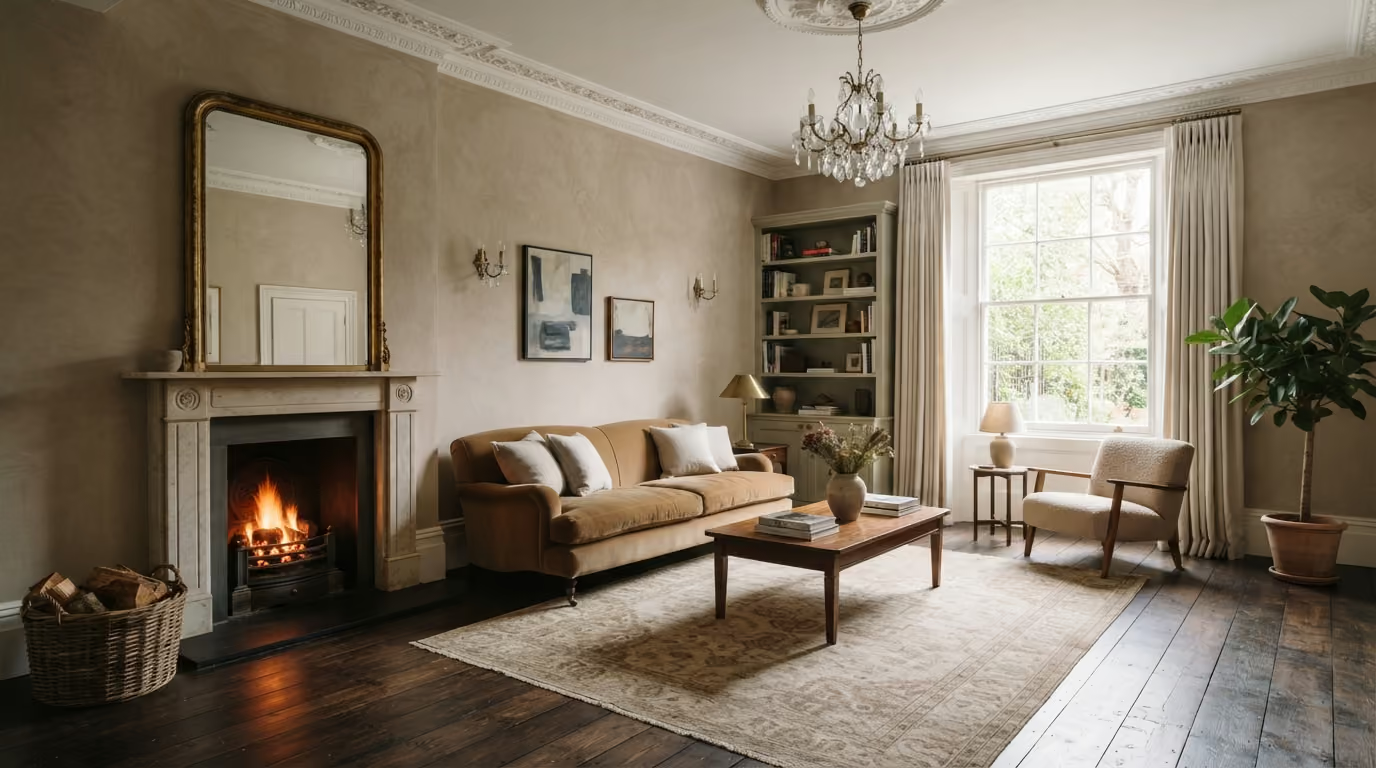
Existing painted walls can often be prepared for Bauwerk limewash, but the condition of the surface matters. This guide explains what to check before application, including loose paint, glossy coatings, filler repairs, cracks, old wallpaper, new plaster, damp staining, and uneven substrates.
The practical answer: Bauwerk limewash can often be introduced into a Kensington home that already has painted walls, but the existing surface needs to be assessed and prepared correctly first. Limewash should not simply be brushed over loose paint, glossy coatings, unstable filler, old wallpaper adhesive, or a wall with unresolved moisture problems. The condition of the substrate determines the preparation needed before the mineral finish is applied. For specialist assessment and application, see our Bauwerk limewash service.
This question comes up frequently during renovation because most London interiors are not starting with bare new plaster. A reception room may have been painted several times, a bedroom may contain years of small repairs, or a hallway may have a mixture of old emulsion, filler, and areas where pictures or fitted furniture have been removed.
The wall can look perfectly acceptable from across the room while still being a poor base for a new specialist finish.
Bauwerk limewash has a very different appearance from conventional flat wall paint. Its natural tonal movement makes the surface feel softer and less uniform, but that does not mean poor preparation disappears. Uneven repairs, unstable coatings, and differences in the substrate can still affect the finished wall.
This guide explains what should be checked before applying Bauwerk limewash over previously painted walls, including old emulsion, glossy paint, filler, cracks, new plaster, old wallpaper, lining paper, damp staining, and patch repairs.
Whether the existing paint can remain depends on its condition and the preparation system required for the new finish.
The first questions are:
A sound painted wall may provide a workable starting point after suitable preparation. A wall with unstable coatings needs more attention before any decorative system is considered.
Older walls can contain several generations of decoration.
You may have:
The newest coat may look stable while a weaker layer underneath has already started separating from the wall.
This can sometimes be identified around sockets, previous fixing holes, chipped areas, or sections where paint has started lifting.
The aim is not necessarily to remove every historic coating. It is to establish whether the surface that remains is sufficiently stable for the preparation required.
Limewash is not a method for holding loose paint onto a wall.
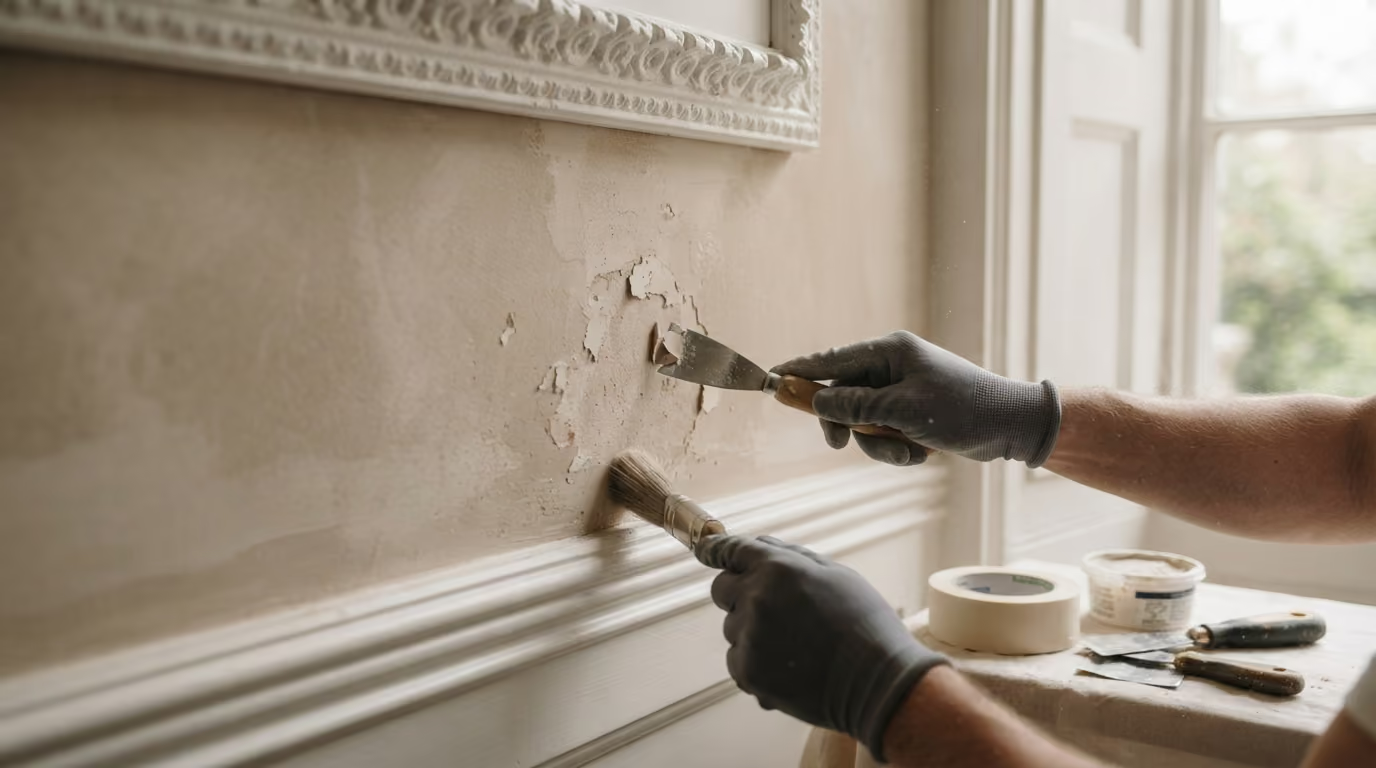
If the existing coating is flaking, blistering, or peeling, those areas need to be investigated before decoration continues.
Common warning signs include:
Simply coating over these defects risks transferring the weakness into the new finish.
A shiny surface behaves differently from a matt one.
Older properties sometimes contain walls that were previously finished in a stronger sheen, particularly in hallways, kitchens, bathrooms, or highly used rooms.
A glossy or very smooth coating should not simply be treated as though it were an absorbent mineral surface.
The surface may need:
The exact process depends on the existing coating and the finish being applied.
Following the appropriate preparation system is more important than trying to save a stage by painting directly onto an unsuitable surface.
Most lived in homes contain filled areas.
Previous picture hooks, shelving, electrical changes, cracks, and furniture fixings may all have been repaired over time.
These repairs sometimes absorb or reflect coatings differently from the surrounding wall.
Before limewash is applied, check for:
The surface does not need to look mechanically perfect like a sprayed cabinet, but it should be stable and appropriately prepared.
Period Kensington homes commonly develop fine cracks in plaster.
Some are minor and stable. Others return repeatedly because there is movement at a junction or because a previous repair did not address the underlying issue.
Before filling a crack, consider:
The objective is not to hide every line immediately. It is to understand whether the surface is stable enough to decorate.
This is common during larger refurbishments.
One wall might contain:
If these different surfaces are treated inconsistently, the final wall may show more variation than intended.
Bauwerk limewash is supposed to have tonal movement, but that movement should come from the decorative finish rather than accidental differences in wall preparation.
A consistent prepared base helps the final variation feel deliberate.
New plaster can be an excellent starting point for a mineral style wall finish, but it needs to be sufficiently dry and correctly prepared before decoration.
The amount of drying time depends on factors such as:
A fixed number of days should not replace checking the actual condition of the surface.
Once the plaster is ready, the correct preparation for the Bauwerk system can be applied before the decorative coats.
A large plaster repair or newly skimmed section may look pale and dry on the surface before it is ready internally.
Rushing the decorating stage can cause problems later.
This is particularly relevant when renovation deadlines are tight and several trades are working in the property at the same time.
Allowing the substrate to reach the correct condition is part of the decorating process.
Wallpaper should normally be removed so the underlying wall can be assessed properly.
Once it comes off, you may discover:
The wall can then be cleaned and prepared according to its actual condition.
Applying a premium finish without properly dealing with old wallpaper residue can compromise the quality of the result.
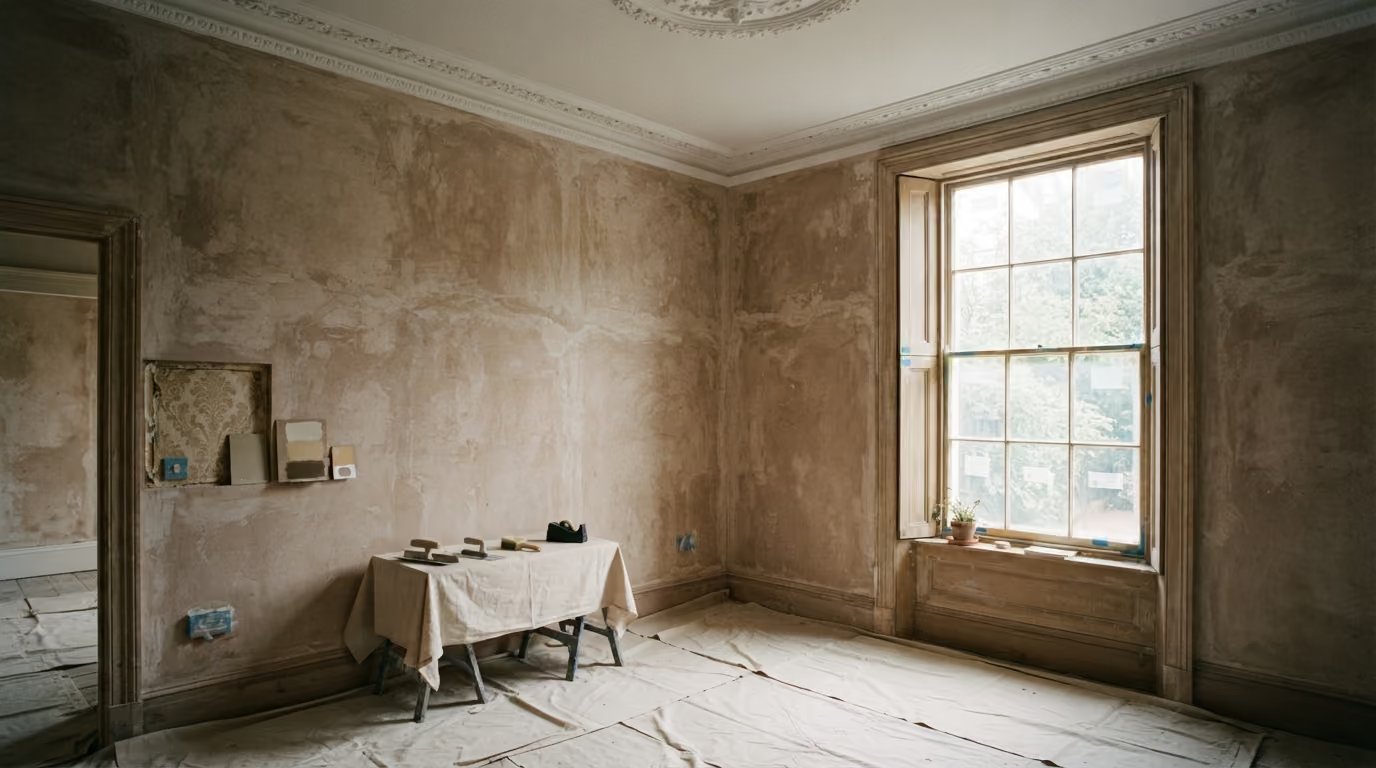
Lining paper may have been used previously to improve the appearance of uneven walls or bridge minor surface imperfections.
Its condition needs to be assessed before deciding what happens next.
Look for:
A wall can appear smooth because lining paper is concealing the actual substrate.
If there is doubt about the stability of the existing system, exposing and assessing the wall may be preferable to building another specialist finish over it.
If an old wall contains a brown mark, tide line, or patch of repeated discolouration, the cause should be checked before applying limewash.
Possible sources include:
The important distinction is whether the problem is historic or still active.
Decorative work should not be used to conceal unresolved moisture.
If the cause is still present, that should be addressed first.
The natural variation of limewash can soften how a wall feels visually, but it should not be confused with a textured coating designed to conceal poor plasterwork.
Strong daylight can still reveal:
If a very refined result is expected, the wall needs to reach an appropriate standard before the decorative finish begins.
Many Kensington townhouses have tall windows that send light almost parallel across sections of wall.
This side light exaggerates surface variation.
A wall that looks smooth under ceiling lighting may reveal substantial imperfections at three o'clock in the afternoon.
Preparation should therefore be inspected under the room's strongest natural lighting conditions where possible.
Picture lights and wall washers should also be considered because they can produce a similar effect.
No.
Skimming an entire room is not automatically necessary simply because limewash is being used.
If the existing walls are stable and reasonably even, local preparation may be sufficient.
A broader plastering intervention may make sense when:
The condition of the individual room should determine the scope.
The wall and joinery programme should be planned together.
Doors, skirting, window frames, architraves, panelling, and fitted cabinetry all create edges against the limewashed wall.
Preparation of both surfaces should be completed before the final decorative stages.
If joinery needs repairing or refinishing, this can be coordinated through our interior painting and decorating service.
The aim is to avoid sanding, filling, or major joinery work beside a newly completed limewash surface.
Changing switches, sockets, wall lights, thermostats, or cable positions after the limewash is complete can create difficult local repairs.
Before decoration, confirm:
Old unused holes should also be repaired before the final preparation system is applied.
New wardrobes, shelving, alcove cabinets, and fitted furniture can all damage surrounding walls during installation.
Installation may involve:
Whenever possible, these stages should be completed before the final limewash.
This reduces the risk of trying to recreate the natural wall finish around later repair patches.
Local repairs to specialist decorative finishes can be more visible than they would be on a conventional flat painted wall.
Limewash has natural variation created through its application and the relationship between coats.
A small isolated patch may therefore remain noticeable.
This is another reason to complete drilling, furniture installation, electrical work, and major fixing before the final decoration.
Where damage does happen later, the repair approach should be assessed individually rather than assuming a small brush touch up will disappear completely.
Before preparing the walls, decide whether existing artwork positions will remain.
If a room is being redesigned, it may make sense to remove redundant fixings and repair the holes.
If valuable artwork will return to exactly the same locations, some fixing positions may be deliberately retained.
This is particularly useful in reception rooms and studies where large paintings require specialist fixings.
Making these decisions before limewash can prevent unnecessary drilling into the finished surface.
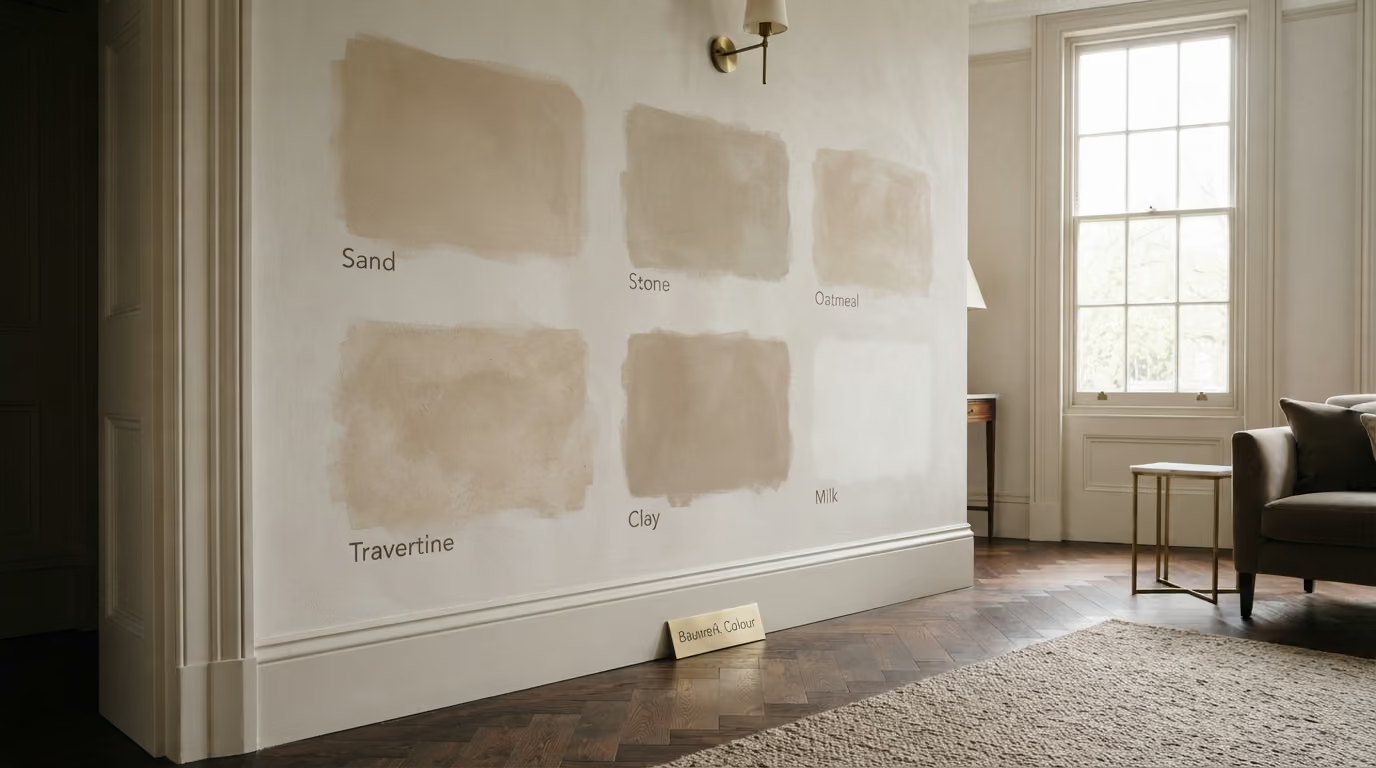
A limewash colour can look different depending on:
Testing the colour in the actual room provides much more useful information than choosing solely from a small sample.
View it in the morning, afternoon, and evening.
One of the reasons homeowners choose Bauwerk limewash is its natural tonal movement.
A finished surface may show subtle variations between lighter and deeper areas depending on the colour, lighting, substrate preparation, and application.
This should not be confused with defects caused by poor preparation.
There is a difference between intentional mineral variation and:
Good preparation allows the character of the limewash itself to become the dominant variation.
The most important principle is simple: the decorative finish should only begin once the wall beneath it is stable and the disruptive work in the room is complete.
Can Bauwerk limewash be applied over existing paint? It can often be introduced onto previously painted walls after the existing coating has been assessed and the surface prepared appropriately for the limewash system.
Do painted walls need to be stripped completely? Not necessarily. Stable existing coatings may be retained, while loose or unsuitable areas require additional preparation.
Can limewash hide bad plaster? No. Limewash has natural tonal movement, but significant plaster defects, raised repairs, and uneven surfaces can still remain visible.
Can Bauwerk limewash go over glossy paint? Glossy or low absorbency surfaces generally require additional preparation before a mineral decorative finish is applied.
Can it be applied after wallpaper is removed? Yes, provided the old wallpaper, adhesive, and any damaged substrate are dealt with and the wall is prepared correctly.
Does every room need to be skimmed before limewash? No. Full skimming is normally a condition based decision rather than an automatic requirement.
Can limewash be touched up after furniture is installed? Repairs are possible, but localised touch ups may remain more visible than on a conventional flat wall, so disruptive work is best completed beforehand.
We carry out Bauwerk limewash and specialist interior decoration across Prime Central London, including Kensington, Chelsea, Belgravia, Notting Hill, Knightsbridge, and Westminster. Projects include reception rooms, bedrooms, entrance halls, studies, dining rooms, staircases, and other interiors where substrate preparation is essential to achieving a refined mineral finish.
Considering Bauwerk limewash for previously painted walls in a Kensington home? Send photographs of the room along with close views of the existing paint, cracks, old repairs, areas where wallpaper has been removed, and any staining or damaged plaster. We can assess the visible condition, determine what preparation is likely to be required, and plan suitable samples before the final finish is applied. To begin, request a site visit and we will arrange a time that suits you.

Tell us a few details about your project and our team will review the enquiry and come back to you within one working day.