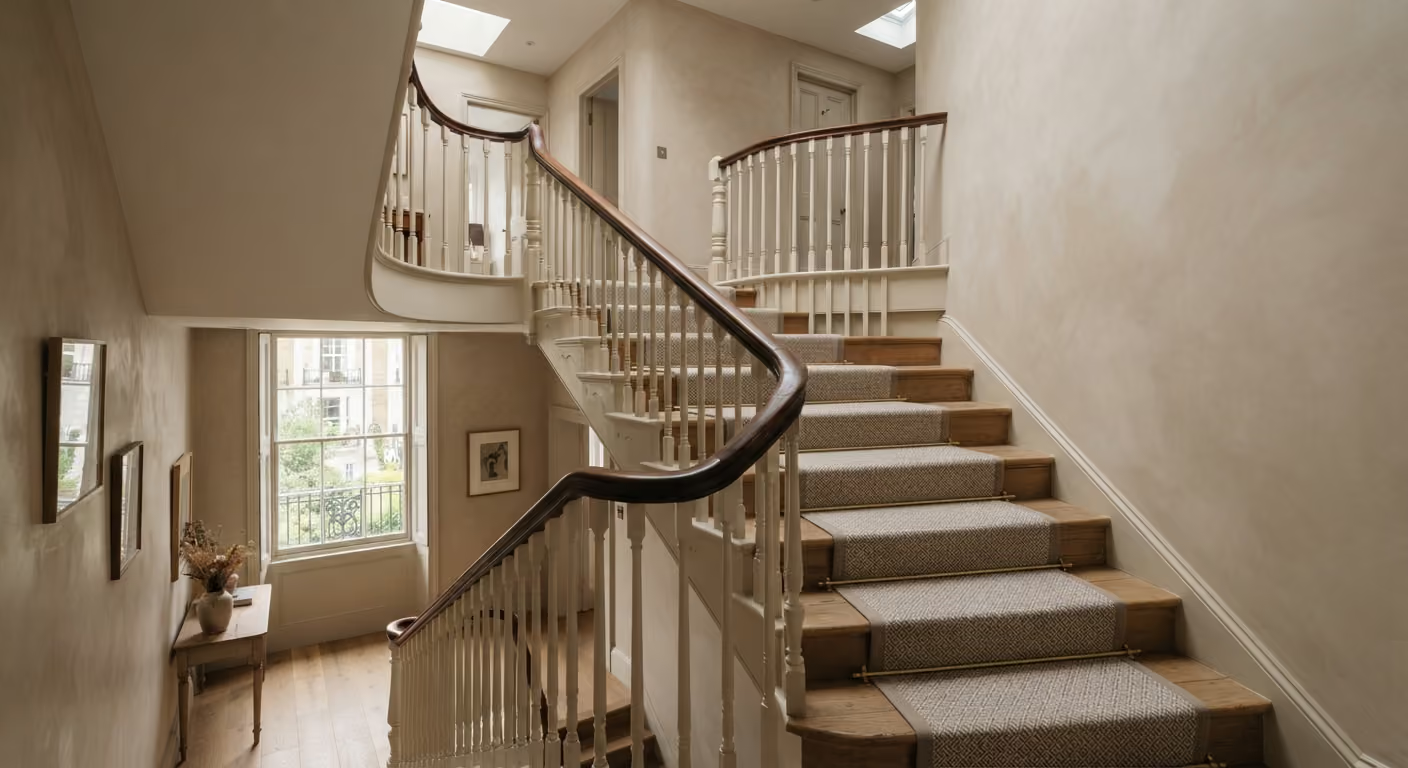
Bauwerk limewash can bring depth and natural tonal movement to staircase and landing walls, but these busy circulation spaces need careful planning. This guide explains how changing light, wall contact, painted panelling, staircase joinery, artwork, flooring, runners, and wall preparation affect the finished result.
The practical answer: Bauwerk limewash can work beautifully on staircase and landing walls in a Notting Hill home, particularly where tall walls, changing daylight, and period architecture benefit from a softer mineral finish. The main consideration is practicality. Staircases are circulation spaces, so lower walls can receive more contact from hands, luggage, furniture, and everyday movement than a bedroom or formal reception room. The condition of the existing walls, colour choice, lighting, joinery, and how the household uses the staircase should all be considered before deciding where limewash makes sense. For specialist preparation and application, see our Bauwerk limewash service.
Stairwells are particularly interesting spaces for limewash because the same wall can pass through several different lighting conditions.
At ground floor level, it may receive relatively little natural light. Halfway up the staircase, light can arrive from a tall sash window. On the upper landing, the same colour may sit beneath a rooflight or brighter window and appear noticeably lighter.
A conventional flat paint colour can change too, but the natural tonal movement of limewash makes these transitions more visible and often more interesting.
This guide explains how Bauwerk limewash can be used on staircase and landing walls in a Notting Hill home, including colour choice, durability, lower wall protection, wall preparation, cracks, lighting, painted joinery, artwork, handrails, and how to decide whether the entire stairwell or only selected sections should receive the mineral finish.
A staircase often contains large uninterrupted wall areas that are difficult to decorate with furniture.
Instead, much of the visual interest comes from:
Limewash gives these large wall surfaces more depth without requiring a strong pattern or dramatic colour.
The subtle variation can make a tall stairwell feel less flat while still allowing the architecture to remain the main feature.
This is one of the most important things to understand before choosing a limewash colour for a staircase.
A townhouse stairwell rarely has consistent light from top to bottom.
The colour may appear:
This variation can be beautiful, but it means a sample tested only at ground floor level is not enough.
The same colour should be assessed at several points through the stairwell.
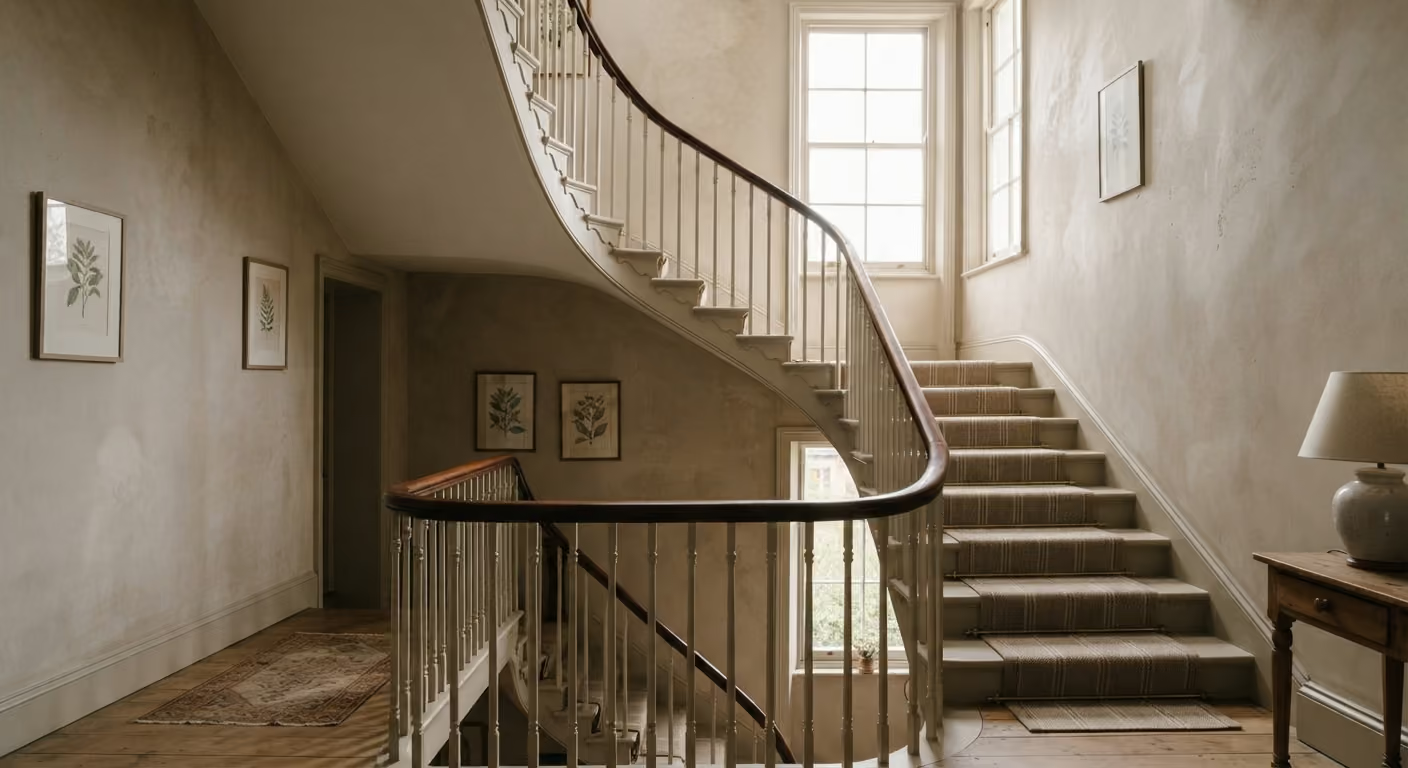
For a multi level staircase, samples are most useful when placed in different lighting conditions.
Consider testing the proposed colour:
The objective is not for the limewash to look identical everywhere.
Natural variation is part of the reason for choosing the finish.
The important question is whether the colour remains attractive throughout the building as the light changes.
Many Notting Hill townhouses have sections of staircase that receive limited direct daylight.
In these areas, very cool pale colours can sometimes feel greyer than expected.
Warmer directions may include:
These colours can sit comfortably beside timber, stone flooring, painted joinery, brass, bronze, and traditional plasterwork.
The exact shade should still be tested because even two warm neutrals can behave very differently in the same stairwell.
A stairwell does not automatically need pale walls.
Deeper limewash colours can create a more architectural and enveloping effect, especially in a generous townhouse with good ceiling height.
Possible directions include:
A deeper wall can work particularly well with pale staircase joinery or a natural timber handrail.
However, the colour needs to be assessed at the darkest point of the staircase, not only under bright showroom lighting or beside an upper window.
This is the main practical issue with limewash in circulation spaces.
Staircases and landings can be touched by:
A formal drawing room wall may remain untouched for years. A lower stairwell wall can receive contact every day.
This does not automatically rule out limewash, but it should influence how the space is designed.
One practical approach is to use painted panelling on the lower part of the wall with limewash above.
This can provide:
This combination can be particularly effective in period properties where panelling already suits the architecture.
The panelling height should relate to the staircase proportions, handrail, windows, doors, and landings rather than being chosen arbitrarily.
A subtle combination can be more elegant than a dramatic two tone scheme.
For example:
The difference can come from surface character as much as colour.
The painted joinery is smoother and more uniform, while the limewash above has natural movement.
Limewash should not be selected independently from the balustrade, stringer, newel posts, skirting, and handrail.
A staircase may include:
These surfaces all sit directly beside the walls.
A wall colour that appears beautifully neutral on its own may bring out an unexpected undertone in the painted joinery.
Samples should therefore be viewed beside the actual staircase colours.
A timber handrail provides warmth and definition against a mineral wall.
This combination can work especially well when the wall colour includes warm stone, clay, olive, or taupe undertones.
Natural timber also gives the staircase a material contrast:
The result can feel layered without requiring many different colours.
If the spindles, stringers, skirting, or newel posts are being repainted, that work should be coordinated with the limewash programme.
Old staircase joinery may need:
These stages can create dust and minor wall damage.
It is better to complete the disruptive preparation before the final limewash application.
For painted staircase and joinery work, see our interior painting and decorating service.
Most period stairwells are not starting with a new uniform plaster surface.
The walls may contain:
The condition of these surfaces determines the preparation required before limewash.
The decorative finish should not be expected to stabilise loose paint or conceal poor repairs.
Fine cracks are common where different parts of a staircase and building meet.
They may appear:
Before filling, it is worth considering whether the crack is stable or whether it has returned repeatedly after previous repairs.
Limewash should only be applied once the substrate is considered suitable for decoration.
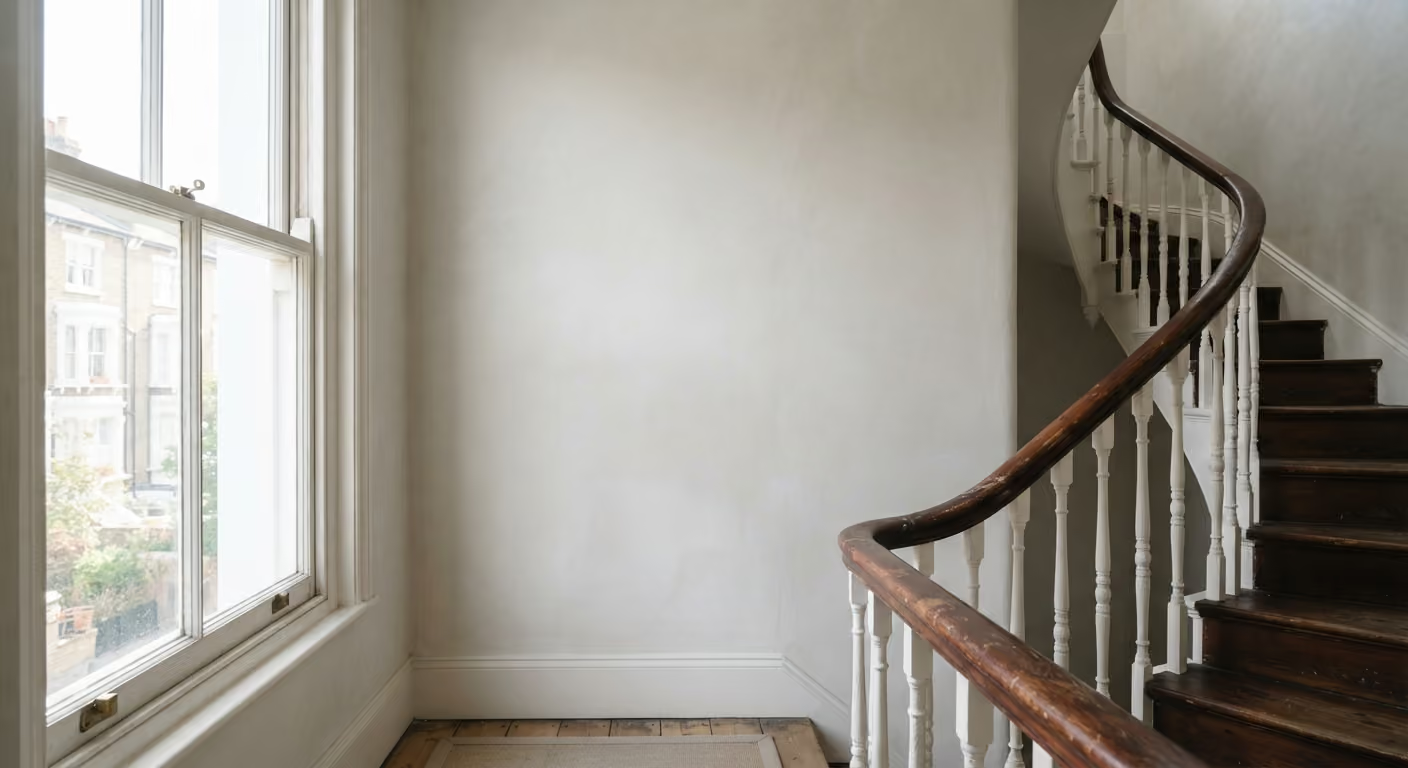
A tall landing window can send light almost parallel across the wall.
This type of lighting is very revealing.
It can expose:
Limewash has natural tonal variation, but it should not be used as a way of hiding a poorly prepared wall.
The surface still needs to reach an appropriate standard before the decorative application begins.
Staircases often use wall lights because ceiling fittings alone may not illuminate every landing evenly.
Directional lighting can emphasise the natural movement in limewash.
This can be very effective, particularly in the evening.
However, lighting can also expose defects in the wall beneath.
Wall light positions should therefore be finalised before the limewash is completed.
Moving electrical fittings after a specialist finish is complete can create unnecessary repairs.
Before limewashing a stairwell, confirm the positions of:
Any redundant holes or electrical chases should be repaired as part of the wall preparation.
Staircases and landings are often used for collections of artwork, photography, or framed prints.
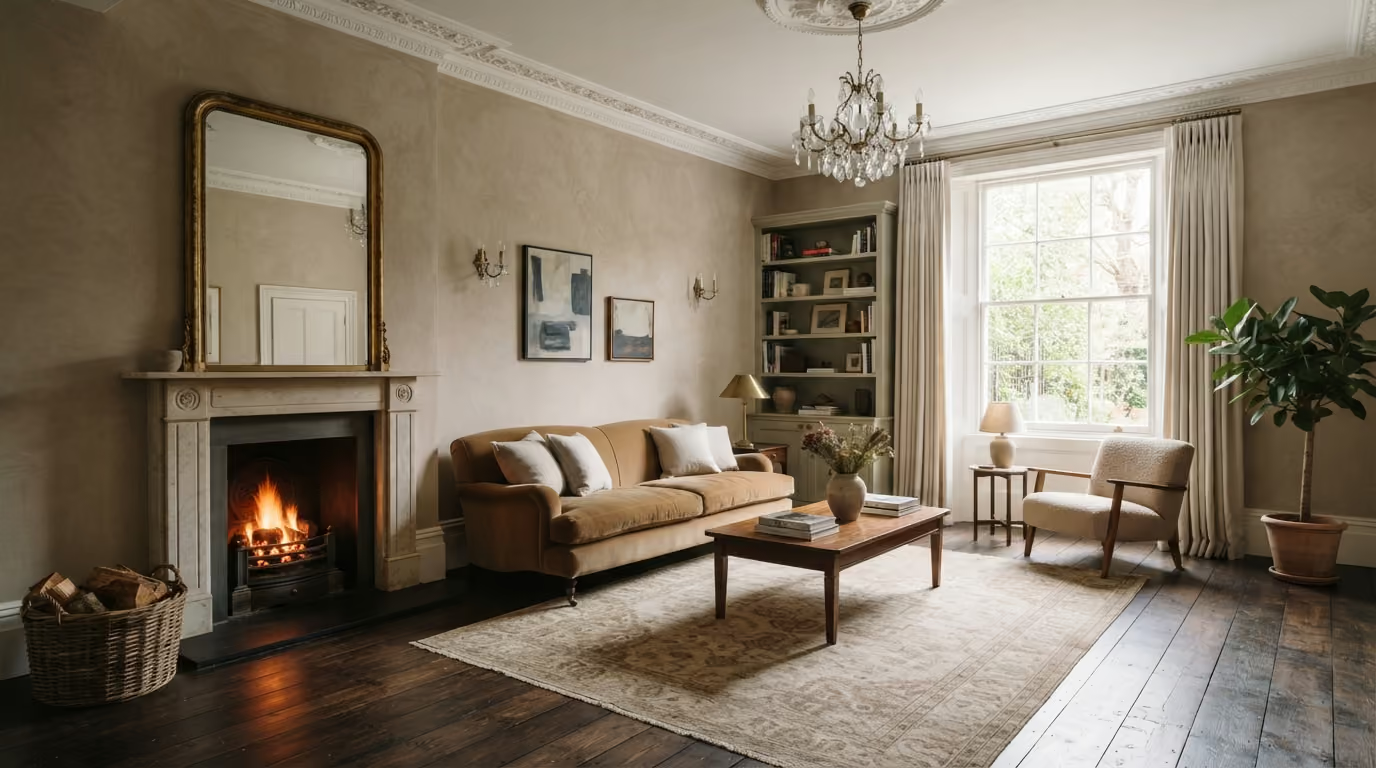
A mineral wall can provide a softer background than a perfectly uniform painted surface.
Consider the relationship between the limewash and:
A warm mineral wall can work particularly well with dark timber, black, bronze, or antique brass frames.
If large artworks already have confirmed positions, it may be useful to plan their fixings before the final limewash.
Drilling after completion can create local damage that is harder to disguise on a naturally varied surface than on a conventional flat wall.
This does not mean every future picture position must be decided in advance, but substantial or specialist fixings are worth considering early.
Yes.
In fact, the variation of limewash can make a gallery arrangement feel less rigid.
The wall still provides enough visual calm for the artwork to remain dominant, particularly when the limewash colour is restrained.
If the collection contains many colourful works, a warm neutral wall is often easier to coordinate than a strong decorative colour.
In a townhouse, the staircase wall is often visible immediately after entering the property.
This means the stairwell colour should relate to the entrance hall rather than beginning as a completely separate scheme.
If the entrance contains:
the limewash should sit comfortably with these elements from the first viewpoint.
A runner introduces a significant strip of colour and pattern through the entire staircase.
Its relationship with the wall is therefore important.
If the runner contains several colours, a quieter limewash may provide balance.
If the runner is plain and restrained, the walls can potentially carry a deeper or more characterful mineral colour.
Samples should be viewed beside the actual runner where possible.
Stone, timber, and carpet all influence how a neutral colour is perceived.
For example, a warm stone floor may make a beige limewash feel cooler by comparison, while dark timber can make the same wall appear lighter.
The staircase should be treated as one palette containing:
Continuing the colour onto the landings can create a calm visual connection between floors.
This often works particularly well where the landing itself is relatively narrow.
Instead of introducing a new colour at every level, the staircase becomes a continuous architectural spine through the house.
Individual rooms can then have their own decorative schemes beyond the doors.
A continuous colour is not compulsory.
In a larger house, there may be a natural architectural point where the stairwell treatment changes.
For example, upper bedroom floors may use a lighter mineral colour while the entrance and reception level use something deeper.
Any transition should occur at a logical junction rather than halfway across an uninterrupted wall.
Usually, the staircase wall and ceiling are considered separately, particularly where the ceiling contains decorative cornices or a rooflight.
A pale painted ceiling can give the stairwell a clearer upper boundary.
In some schemes, a related tone can create a more enveloping effect.
The decision depends on:
If the staircase contains detailed cornices, the transition between limewash and plasterwork should be crisp.
Old paint build up on the cornice may also need attention before the final wall finish is completed.
Using limewash on the walls does not mean the surrounding painted details should be treated casually. The contrast between the mineral wall and cleaner architectural joinery makes those edges more visible.
Local repairs are possible, but they may not disappear in exactly the same way as a touch up on conventional flat paint.
The wall has natural variation created through the application of the finish.
A small new patch can therefore remain visible depending on:
This is particularly relevant in staircases because furniture and luggage are occasionally carried close to the walls.
Protecting the finished surface during moves and renovation work is worth planning.
A large sofa, wardrobe, or bed can be difficult to manoeuvre through a townhouse staircase.
If major furniture deliveries are already scheduled as part of a renovation, it may make sense to complete them before the final limewash or to provide careful protection to the walls.
This simple sequencing decision can avoid damage shortly after the staircase has been finished.
There are homes where conventional paint may be more practical.
This may be the case where:
In other homes, combining painted lower walls or panelling with limewash above can provide a useful compromise.
The correct decision depends on how the space is actually used.
A successful limewashed stairwell should feel connected from floor to floor while still responding naturally to changing light. The finish works best when the walls, balustrade, timber, flooring, lighting, artwork, and practical use of the staircase are considered together.
Is Bauwerk limewash suitable for staircase walls? Yes, it can work very well on staircases and landings, particularly where large wall areas and changing light benefit from a mineral finish. The amount of everyday contact should also be considered.
Is limewash too delicate for a busy staircase? It depends on how the staircase is used. In higher contact areas, painted lower walls or panelling with limewash above may be a practical option.
Can the same limewash colour be used on every floor? Yes. A continuous colour can connect the staircase through the house, although it should be tested at different levels because the light can change substantially.
Can Bauwerk limewash be used beside painted panelling? Yes. Smooth painted panelling below limewash can create an attractive contrast and provide a more practical lower wall.
Can artwork be hung on limewashed walls? Yes. Where substantial fixings are already known, planning them before the final finish can reduce unnecessary local repairs later.
Does limewash hide cracks and uneven plaster? No. The walls still need appropriate preparation. Natural tonal variation should not be confused with defects in the substrate.
Can limewash be repaired if the staircase wall gets damaged? Repairs are possible, but isolated touch ups may remain visible depending on the colour, lighting, and character of the existing finish.
We carry out Bauwerk limewash and specialist interior decoration across Prime Central London, including Notting Hill, Kensington, Chelsea, Belgravia, Knightsbridge, and Westminster. Our work includes staircases, landings, entrance halls, reception rooms, bedrooms, studies, dining rooms, and other interiors where careful preparation and thoughtful colour selection are essential to a refined mineral finish.
Considering Bauwerk limewash for a staircase or landing in a Notting Hill home? Send photographs from each level of the staircase, including the entrance hall, windows, balustrade, handrail, flooring, runner, wall lights, and any existing cracks or previous repairs. We can assess the surfaces, discuss suitable colour directions and practical options for higher contact areas, and plan samples in the different lighting conditions throughout the stairwell. To begin, request a site visit and we will arrange a time that suits you.
Tell us a few details about your project and our team will review the enquiry and come back to you within one working day.