.avif)
Wondering how often your Notting Hill or Kensington stucco facade needs a repaint? This guide explains typical repaint cycles, the signs to watch for, and how to plan work that protects both the look of your home and the historic fabric behind the paint.
Short answer: Most stucco facades in Notting Hill and Kensington benefit from a careful repaint every seven to ten years, with light inspections more often. Homes on busier roads, exposed corners, or near trees can need attention sooner. The real guide is what you see on the surface. When hairline cracks, chalking, algae, or flaking start to show, it is time to plan a repaint with a breathable system. For an overview of how we approach this work, visit our exterior and heritage painting page.
Stucco is a big part of what makes Notting Hill and Kensington streets feel so calm and consistent. When the paint system is healthy, the facade looks soft, the details read clearly, and moisture can move in and out of the wall. When the coating fails, the building starts to look tired and the fabric underneath is put under stress. This guide explains how often most stucco needs a repaint, how your street and orientation change the cycle, and what to look for when you walk outside and decide whether to book work now or wait.
Every house and terrace is slightly different, but a calm guide for Prime Central London stucco looks like this.
These ranges assume a breathable, mineral friendly system, proper prep, and sensible maintenance. Cheap, dense coatings can fail much sooner and make the next repaint more complex. If your building is listed or sits in a conservation area, the choice of system matters even more. The aim is always to protect the stucco, not just to change the colour.
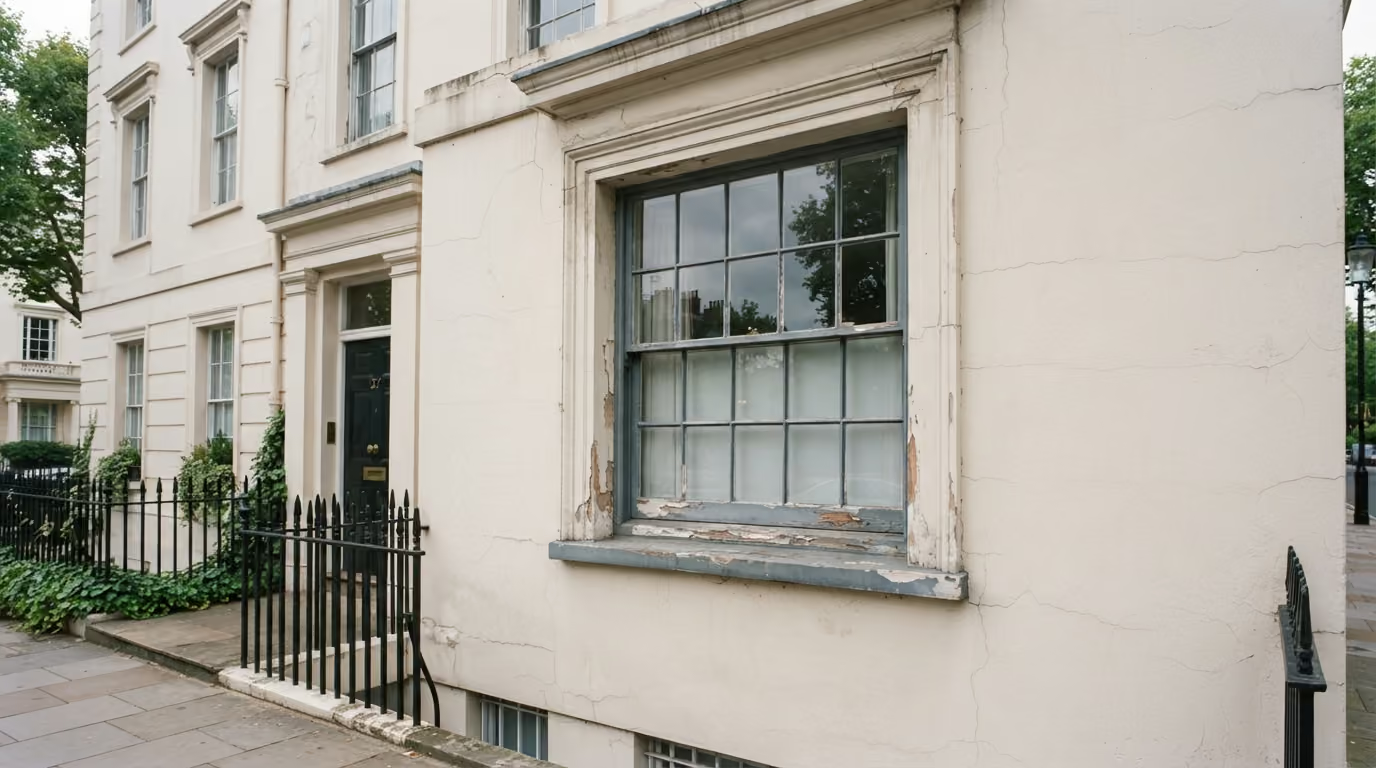
It is better to repaint when the surface is tired but still largely sound than to wait for wide areas of failure. A slow ten minute walk around your property will tell you most of what you need to know.
If you can tick two or three of these in more than one area, the facade is ready for a planned repaint rather than spot patching. Small local repairs are sometimes sensible, but once failures become common the most cost effective path is a full, well managed repaint.
.avif)
Not all elevations age at the same pace. A simple check of sun and exposure helps set realistic expectations.
When we survey a Notting Hill or Kensington house, we look at each face on its own. The street elevation may need a full cycle sooner than a quiet rear. Sometimes we plan a main elevation repaint now and schedule the rear and side later, so cost is spread without letting any area fall too far behind.
Most traditional stucco and older renders in London need to breathe. Moisture naturally moves through the wall. If a dense, plastic style coating is applied, moisture can become trapped. Over time this can cause blisters, hollow sounding areas, and salt blooms that show as white crusts.
We favour breathable, mineral friendly systems that allow vapour to pass while still shedding rain. These give a calm matte or low sheen finish that suits period terraces. They protect the substrate instead of fighting it. Choosing the wrong system may make the house look neat for a short time, then trigger deeper problems that cost more to correct later.
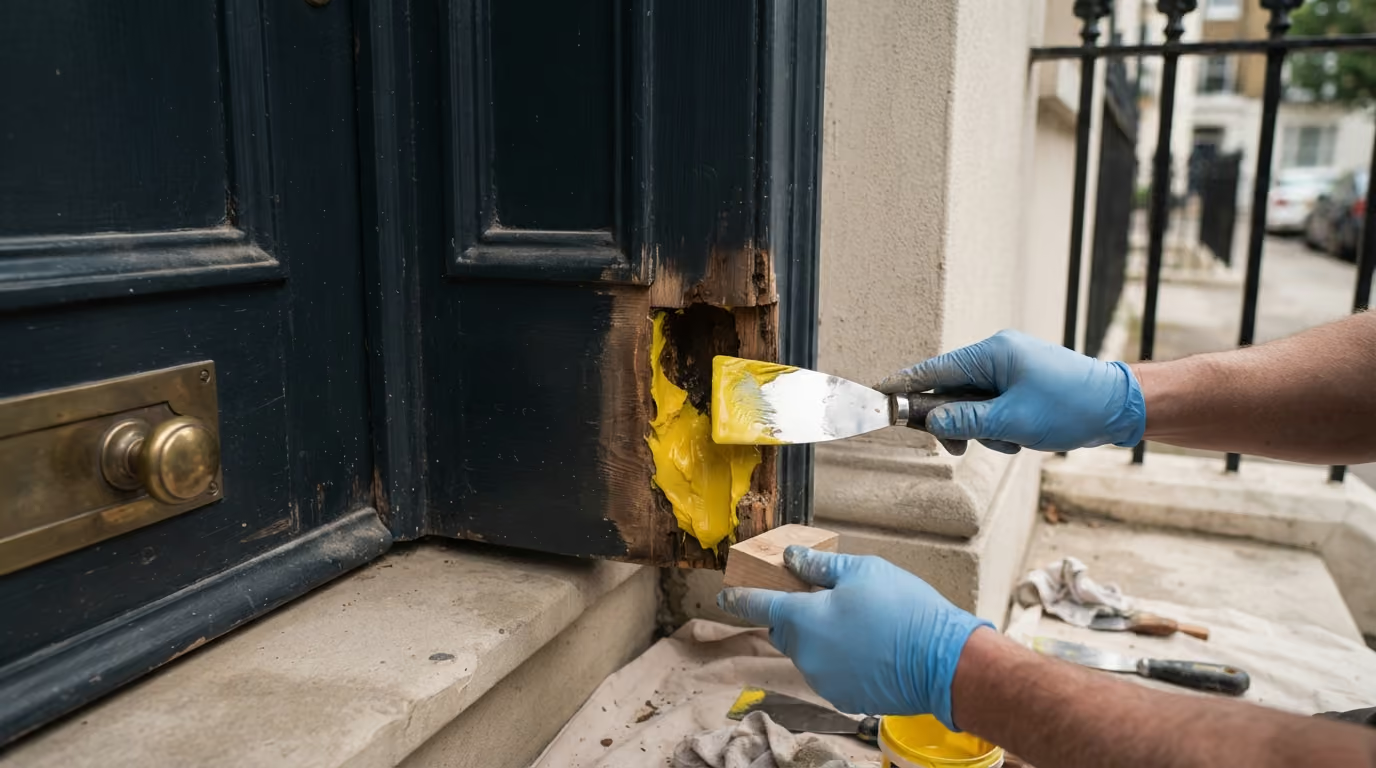
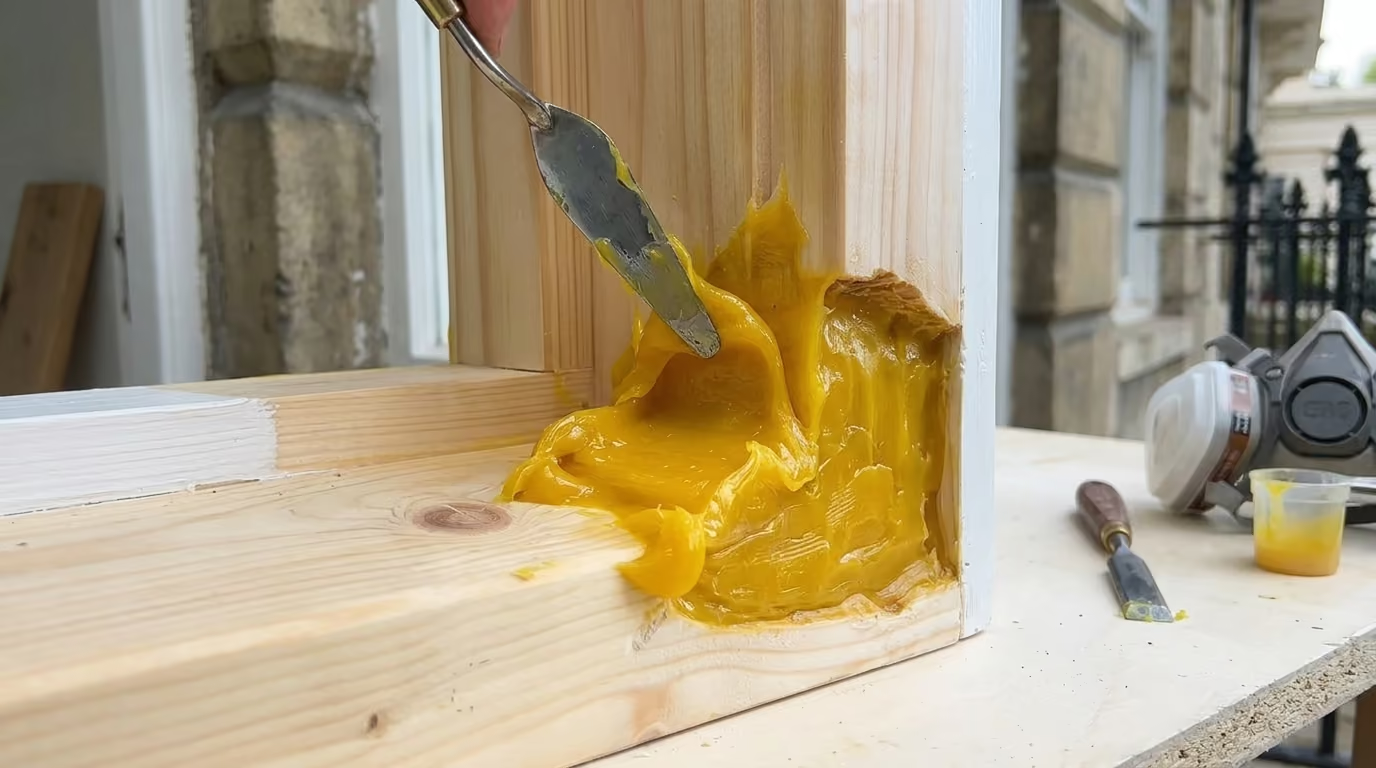
Good exterior work starts with honest repairs. Paint is not a plaster. It will not hide real defects. On a typical Notting Hill or Kensington stucco facade we look for three main things.
Details matter. Strings, cornices, and window mouldings should keep their original profile. Heavy smoothing and building up with filler can soften lines and change the way the terrace reads. On heritage projects we follow the approach set out in our exterior and heritage painting service and in case studies such as the West London period home.
.avif)
Many facades need a gentle clean before any repairs or paint. The goal is to remove surface dirt, algae, and loose matter without damaging the stucco.
You can see the effect of clean, well prepared external surfaces in projects such as the Elegant private estate and other recent projects, where fresh paint reads as part of the building rather than as a cosmetic layer on top.
Exterior work in Notting Hill and Kensington rarely happens in a bubble. Streets are close, pavements are narrow, and neighbours care about how projects feel from the outside.
On terraces where several houses share a line, owners sometimes choose to plan work together so scaffold can be shared and colour consistency is protected. Whether you act alone or as a group, a clear written scope and simple schedule keep the repaint calm rather than stressful.
Many clients refresh interiors and the exterior within the same two or three year window. A simple route keeps everything in step.
Interior schemes using Bauwerk limewash or refined interior painting sit very well with a measured, breathable exterior on stucco. You can see this balance in the Central London residence project, where outside and inside read as one considered scheme.
.avif)
Most problems we see come from quick solutions that ignore the fabric underneath.
A short survey and a written plan at the start prevent all of these. You understand what needs doing, why it matters, and how long it will take. The result is a facade that looks right for the street and lasts well between cycles.
You can make a quick note of your stucco condition before you call anyone.
With these photos and notes, we can often give you an early sense of whether a full repaint is due now or whether you have a year or two before it becomes urgent.
We work across Prime Central London, with frequent stucco repaint projects in Notting Hill, Kensington, Chelsea, Belgravia, Knightsbridge, and Westminster. Many of these homes are listed or in conservation areas, so we are used to working with breathable systems and measured colour choices.
Not sure if your Notting Hill or Kensington stucco facade is due a repaint? Share a few photos, your street setting, and the last time work was done. We will reply with a clear view of what is needed and a calm plan for timing. To begin, you can request a site visit and we will arrange a time that works for you and your neighbours.
Tell us a few details about your project and our team will review the enquiry and come back to you within one working day.