.avif)
Thinking about luxury wallpaper in Chelsea but not sure what will suit your home? This guide explains the main wallpaper types, how we prepare walls so seams stay calm, and how to avoid the common mistakes that make premium paper look cheap.
Short answer: Luxury wallpaper looks best in Chelsea homes when three things are right. The paper is suited to the room, the wall base is perfectly prepared, and the layout is planned so seams and repeats land in calm places. Most problems come from rushed prep and poor setting out, not from the wallpaper itself. If you want a finish that feels tailored rather than “stuck on,” start with a proper base plan and a careful installer. For help with specification and installation, see our wallpaper service.
Wallpaper is back in Prime Central London, but it is being used differently than it was years ago. In Chelsea, Kensington, Knightsbridge, and Belgravia, many clients now choose wallpaper for depth, texture, and quiet detail, not loud pattern. A refined wallpaper can make a room feel finished in a way paint sometimes cannot, especially in period homes with cornices, panelled doors, and tall sash windows. Yet wallpaper is honest. If walls are not properly prepared, the paper will show it. If seams are not planned, your eye will find them every time you enter the room.
This guide explains the main luxury wallpaper options, where each type works best, how we prepare walls so they stay smooth, and what choices help your paper look consistent year after year.
Luxury wallpaper is not only about price. It is about how the wallpaper behaves and how it looks on the wall. Many premium papers have richer inks, deeper embossing, cleaner repeats, and better substrates. Some include real materials such as natural fibres or metallic touches. Some use special printing methods that create a soft, layered look.
In Chelsea homes, the most common reasons clients choose premium wallpaper are:
Not all wallpapers behave the same. Choosing the right type for the room is the first step to a result that lasts.
These are common choices for feature walls and full room wraps. They can be very refined, especially in subtle patterns or tone on tone designs. Many non woven papers are easier to hang and remove than older papers. They suit reception rooms, bedrooms, and studies in Chelsea and Kensington.
Vinyl options are useful in high traffic spaces because they wipe clean more easily. A vinyl coated paper can still look premium, especially when the design is calm and the finish is not too shiny. These are often a good fit for hallways, stair walls, and children rooms where marks are more likely.
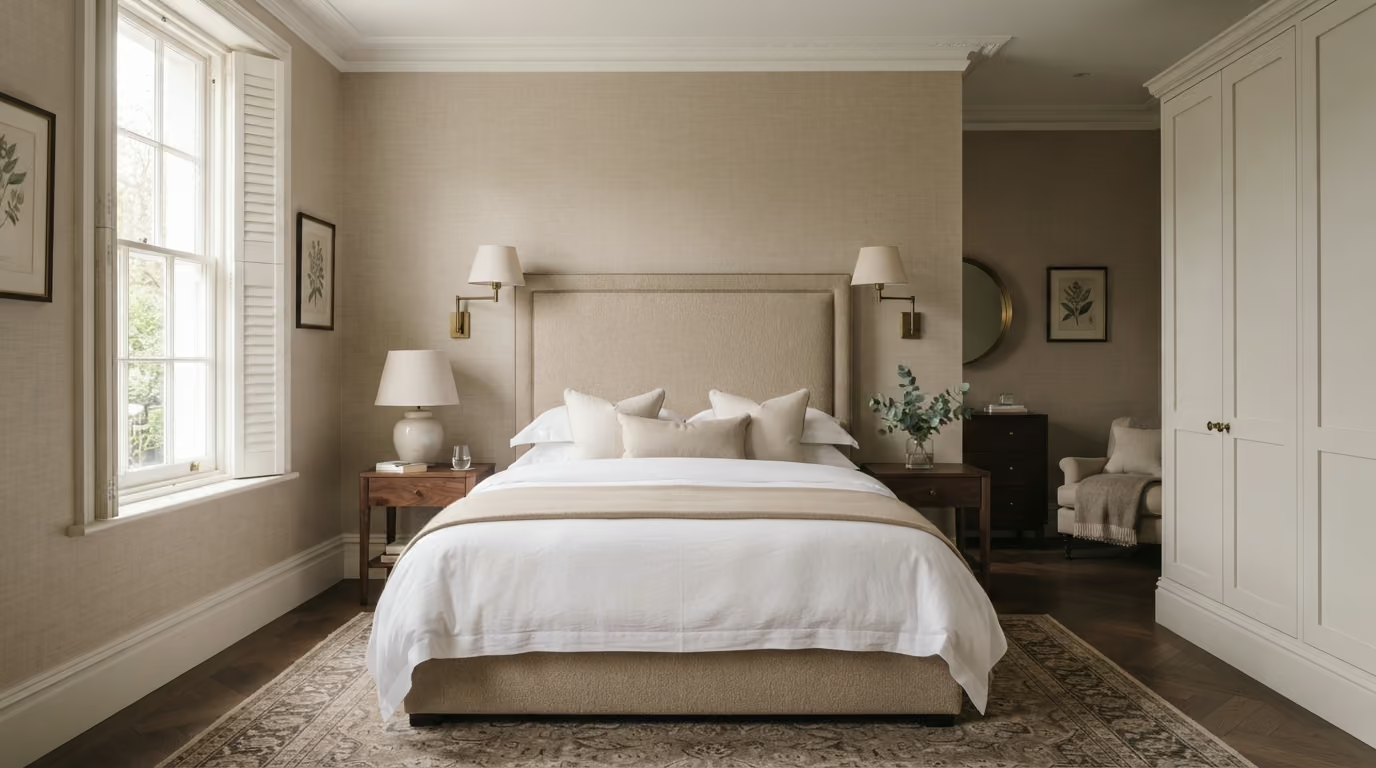
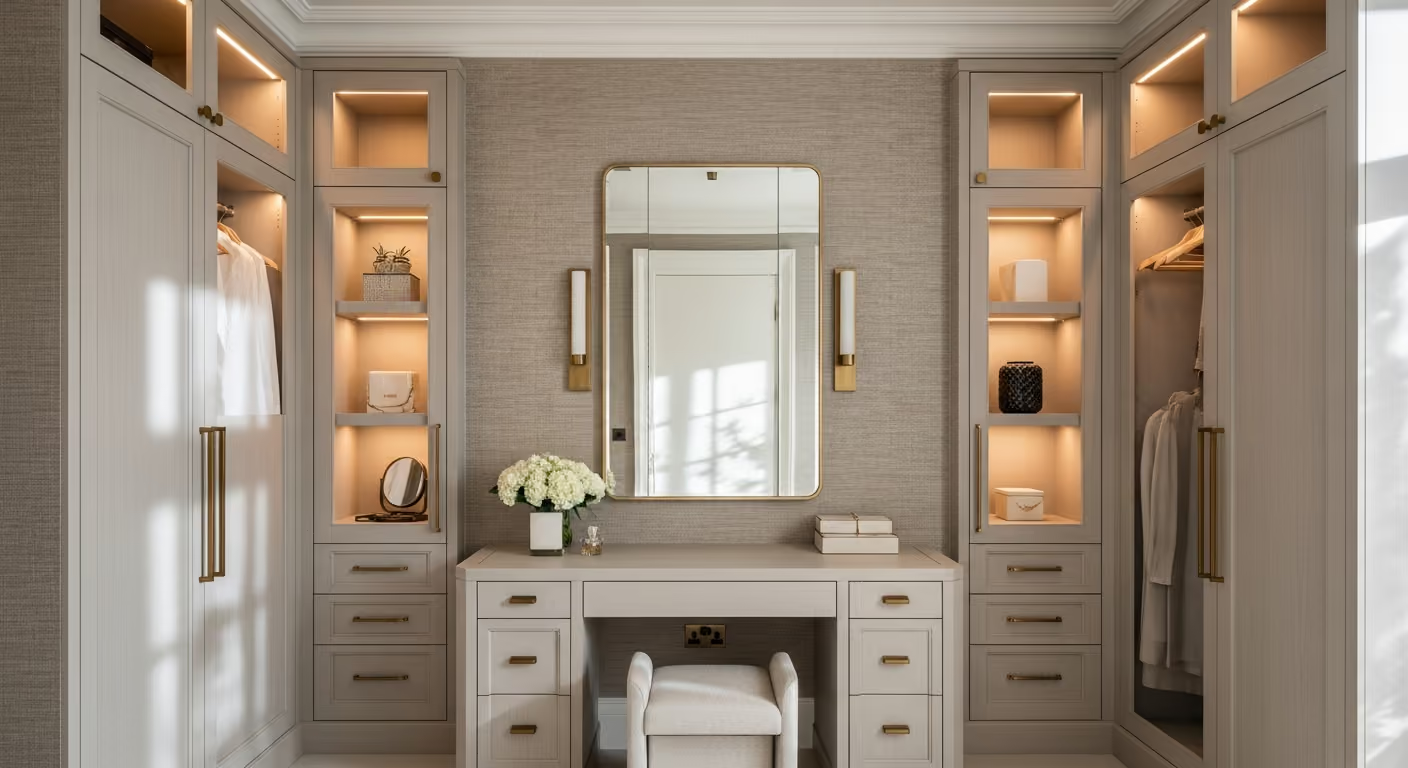
Options such as grasscloth and other natural weaves can look beautiful, but they need careful planning. They can show seams more than smooth papers, and they prefer stable, well prepared walls. They work well in bedrooms, studies, and dining rooms where contact is lower. They are less ideal for narrow hallways where bags and coats brush walls daily.
Embossed wallpapers can hide small wall imperfections better than very smooth papers, and they bring depth without a busy pattern. Many Chelsea clients like these for reception rooms and powder rooms where they want a quiet statement.
Murals can be stunning, but they are less forgiving. The wall needs to be very smooth, and the setting out needs to be exact so the image sits correctly behind furniture and across windows. In Prime Central London, murals are most often used behind beds, in dining rooms, or in a study where you want a single focal wall.
.avif)
Wallpaper works best where you spend time and where the wall is seen in calm light. A few locations tend to deliver the highest impact.
Hallways can work too, but the choice needs to be practical. If your hallway in Chelsea or Knightsbridge sees constant contact, we often suggest either a wipeable wallpaper or paint in matt or soft sheen on the most vulnerable walls, with wallpaper used as a feature where it will not get knocked.
The biggest difference between a wallpaper job that looks premium and one that looks average is the base. Wallpaper does not hide bad walls. It highlights them. In many Chelsea townhouses, the walls have a long history of paint coats, old repairs, and fine cracks from natural building movement. Those issues can be invisible in a quick repaint, then suddenly obvious once wallpaper goes up.
Our wall prep process is simple in principle and detailed in practice:
When walls are very uneven, we may recommend a skim coat before lining. This is common in older properties where past repairs were done in patches. The goal is a wall that feels like one sheet under your hand. That is what lets the wallpaper look like part of the building, not a surface layer fighting the base.
Luxury wallpaper needs layout planning before the first drop goes up. Setting out is the process of deciding where the pattern starts and where seams will fall. It is a major part of making the room feel balanced.
We plan seams and repeats by:
In a Chelsea reception room, this often means the fireplace wall becomes the anchor. In a bedroom, the headboard wall usually anchors the layout. In a hallway, we plan so the pattern does not feel “cut off” when you enter the front door.
.avif)
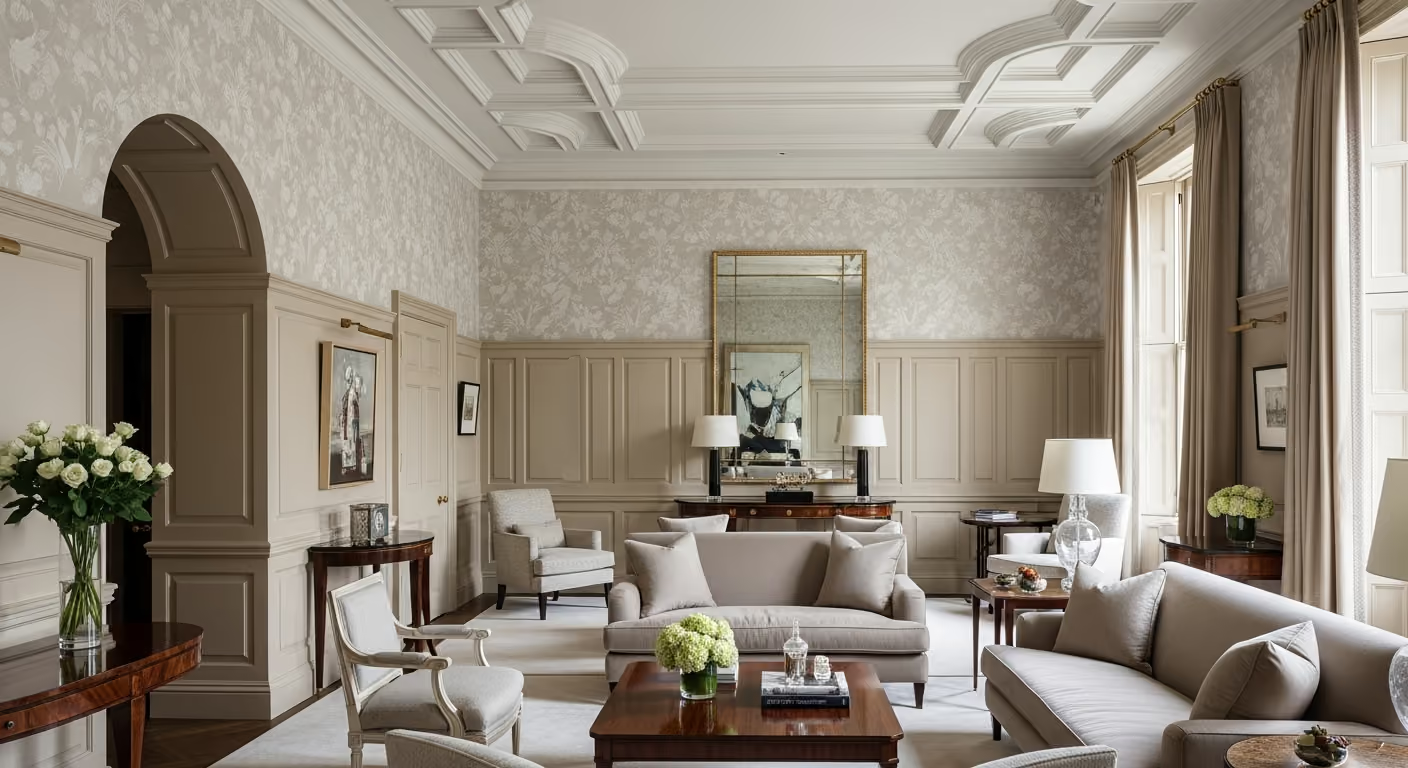
Chelsea and Kensington homes often include cornices, picture rails, panel mouldings, niches, and built in joinery. Wallpaper can look stunning with these details, but it needs careful cutting and clean lines.
In some homes, it makes sense to combine wallpaper with paint so the space feels calmer. For example, wallpaper above a dado with painted panelling below. Or wallpaper on one wall with paint on the rest. Our interior painting and decorating service often works alongside wallpaper installation to make these mixed schemes feel seamless.
Wallpaper is only as good as what holds it. Different papers need different adhesives. A heavy vinyl paper is not the same as a delicate non woven paper. Natural fibre papers can behave differently again. Using the wrong adhesive can lead to lifting seams, bubbling, or staining.
We match adhesive choice to:
We also control open time, the period between paste application and hanging. Too fast and the paper will not relax properly. Too slow and the paste can dry or create uneven bond. Good installation is calm, steady work.
If you have invested in a premium wallpaper, it makes sense to invest in the base and installation too. The difference shows every day, not only on the day the work ends.
Many clients love a bold paper on a sample, then worry later that it feels too busy. A few simple checks help you choose something you will still love in a year.
A tone on tone pattern often ages best. It feels rich without shouting. In Chelsea homes, this is why textured neutrals and soft geometrics are so popular. They add depth without taking over the room.
.avif)
Time depends on prep. Hanging wallpaper can be quick once the wall is ready, but the wall often needs work first.
In lived in homes, we also plan daily protection and tidy pack down so the space stays usable. Many Prime Central London clients stay in the home during the project, so clean routes and clear timings matter as much as the wallpaper itself.
Can wallpaper go over old paint? Often yes, if the paint is sound, clean, and primed correctly. If it is glossy or unstable, it needs prep first. We check this during a survey.
Will seams always show? Seams should sit quietly when walls are lined and the paper is hung correctly. Some natural fibre papers show seams more by nature. We explain this before you decide.
Is wallpaper a good idea in a hallway? It can be, but the type matters. For very busy hallways, a wipeable wallpaper or a paint scheme may be more practical, with wallpaper used as a feature in a protected zone.
Can you match wallpaper with painted trim? Yes. We often adjust trim tones so the room feels coherent. This is where interior painting and wallpaper installation work best together.
We install luxury wallpaper across Prime Central London, with frequent projects in Chelsea, Kensington, Belgravia, Notting Hill, Knightsbridge, and Westminster. You can see the level of finish we aim for in our project portfolio, including homes such as the Georgian London interior.
Thinking about luxury wallpaper in Chelsea? Share a few photos of the room, ceiling height, and any wallpaper samples you like. We will reply with a clear plan for wall prep, lining where needed, and a clean installation schedule. To begin, request a site visit and we will set a time that works for you.
Tell us a few details about your project and our team will review the enquiry and come back to you within one working day.