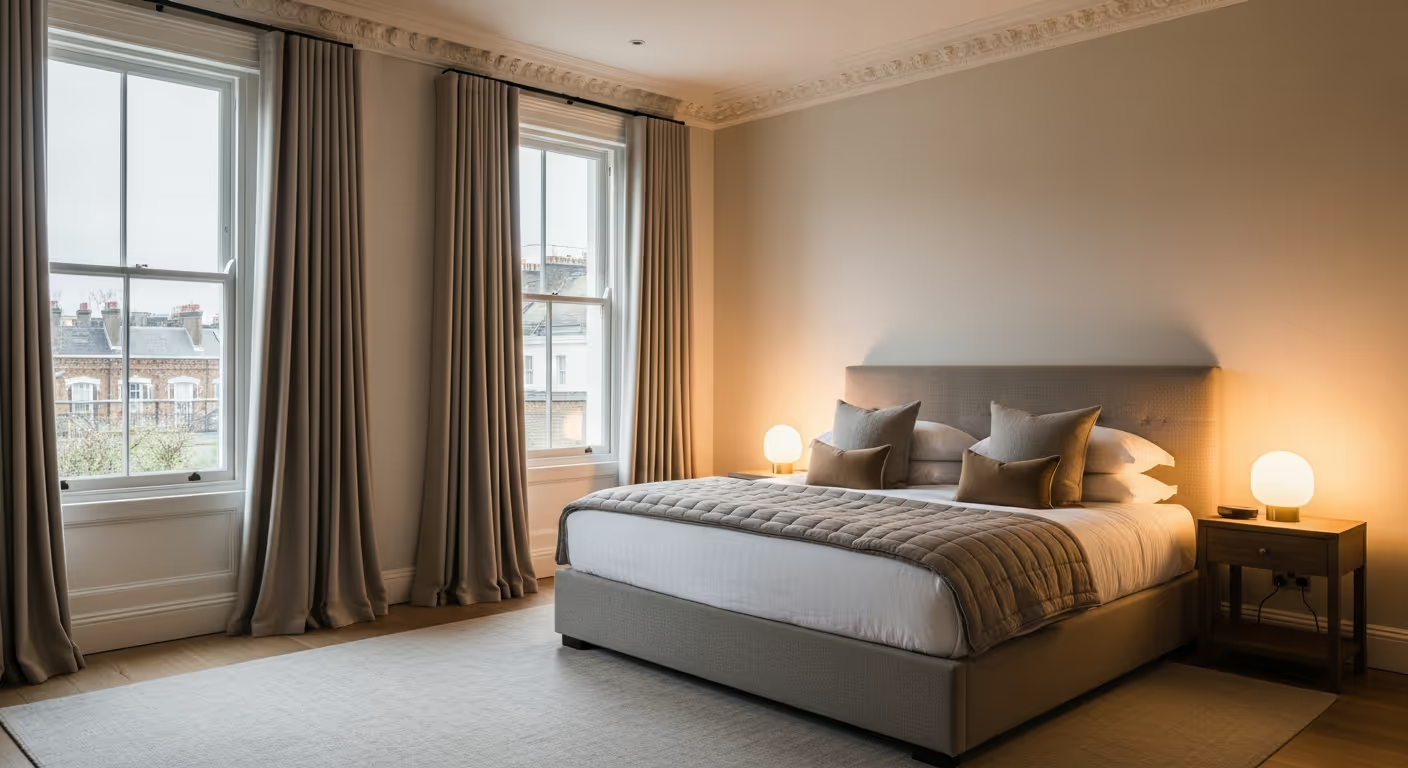
Thinking about Bauwerk limewash for a Belgravia bedroom but worried it may be too delicate? This guide explains where limewash works best, how it handles daily life, what prep it needs, and how to use it in a bedroom without creating stress later.
Short answer: Bauwerk limewash can be an excellent choice for a Belgravia bedroom because bedrooms are usually calm, low contact spaces where the finish can be appreciated properly. It gives a soft mineral depth that standard paint cannot match. The key is using it in the right room, preparing the walls correctly, and understanding that it needs a little more care than a standard painted wall. If you want help deciding whether your room is suitable, see our Bauwerk limewash service.
Bedrooms are where many clients first fall in love with limewash. The finish feels quiet, tactile, and settled. In a Belgravia home with high ceilings, good plaster details, and soft natural light, it can make a bedroom feel calm in a way that ordinary paint often cannot. Yet there is usually one concern behind the excitement. Is it practical enough for real life, or is it too delicate to live with?
The honest answer is that limewash is not for every wall in every house. It is not the best choice for every high traffic area, and it does not behave like a wipe heavy modern wall paint. Yet in the right room, especially a bedroom, it can be both practical and beautiful. This guide explains how it works, where it performs best, what daily life with it feels like, and how to plan the room so the result looks calm for years.
Bedrooms are different from hallways, kitchens, and family rooms. They usually have fewer knocks, less frequent cleaning, and softer lighting. That makes them one of the safest places to use a finish that is chosen for beauty and atmosphere rather than maximum toughness.
In a Belgravia bedroom, limewash works well because:
In short, a bedroom gives limewash the conditions it needs to look good without being pushed too hard by daily wear.
Limewash is not a flat coat of colour. It has movement. The wall surface shows gentle variation, soft clouding, and a matte depth that changes through the day. That is part of the point. If you want a perfectly uniform, sprayed style result, standard paint is the better option. If you want a wall that feels quieter and more natural, limewash often wins.
In a Belgravia bedroom, the look tends to be strongest when:
Limewash is especially good at making pale neutrals feel layered instead of flat. This is one reason it is so often chosen for bedrooms in Prime Central London homes.
Yes, in most bedrooms it is practical enough. The main thing is to use it with realistic expectations. Limewash is not fragile in the sense that it falls apart easily. It is more that it is a finish chosen for calm beauty, so it is best in spaces where the wall does not need frequent scrubbing.
It tends to be practical in bedrooms because:
That said, if the room is a children’s bedroom with active play, or if the bed sits very close to walls that are regularly touched, a standard paint may still be the easier choice. The room type and how it is used always matter more than the idea of the finish alone.
You do not always need to limewash every wall. In many Belgravia homes, the best result comes from thinking about where the finish will be seen and where it will be protected.
Good areas for limewash in a bedroom:
If the room has a desk chair rubbing one wall, or a narrow passage close to wardrobes, you may want to keep those specific surfaces in standard paint and use limewash on the calmer walls only.
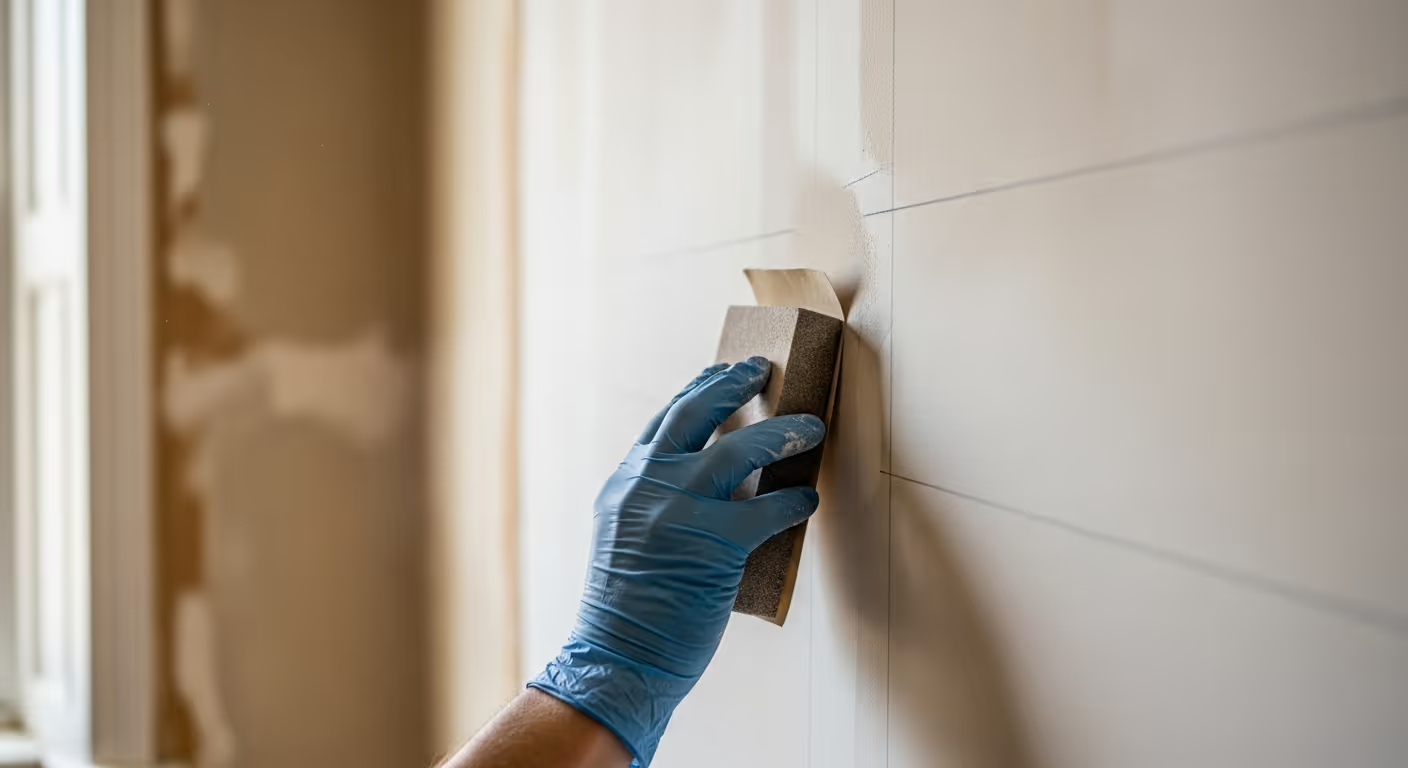
Limewash is honest. If the wall is uneven, the finish will not hide it. If there are mixed repairs, old patching, or uneven suction, you are more likely to see inconsistent drying and patchiness. This is why prep matters so much.
A proper limewash prep plan often includes:
In older Belgravia homes, this can be the difference between a wall that looks beautifully soft and a wall that looks randomly patchy. The finish should have movement, but not disorder.
Bedrooms usually suit limewash best when colours stay quiet. The beauty of the finish comes from depth and texture, so the tone does not need to be loud.
Colour directions that often work well in Belgravia bedrooms:
North facing bedrooms usually benefit from warmer undertones. South facing rooms can take slightly cooler neutrals without feeling cold. Sample panels are still the safest way to judge the result, especially because limewash reads differently at different times of day.
Standard paint is simpler, more uniform, and easier to touch up. Limewash has more character and depth, but it asks for a little more understanding. The choice comes down to what you value most.
Choose standard paint if:
Choose limewash if:
Many homes use both systems well. Bedrooms and reception rooms in limewash, and higher traffic spaces in standard paint, all linked through undertone so the house feels coherent.
Clients often ask whether limewash is stressful to live with. In the right room, it usually is not. It is not like owning something that must never be touched. It is more like choosing a finish that rewards a slightly gentler kind of use.
In practical terms:
For most adult bedrooms, that is a very comfortable level of care. In fact, many people find the room becomes easier to keep calm because the finish encourages a softer, more intentional scheme.
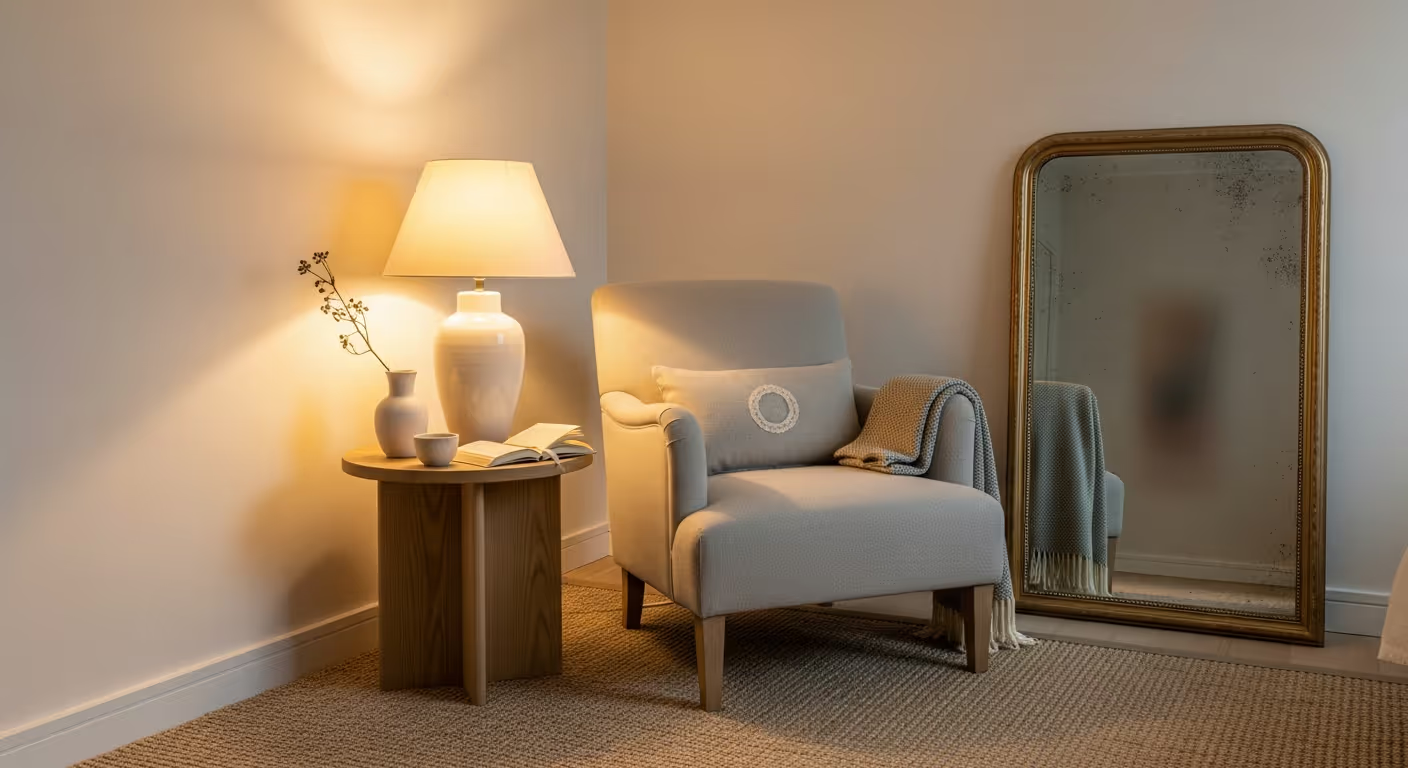
Yes, and in many bedrooms that is the best route. Limewash does not have to cover every surface. It works well alongside other finishes if the palette is kept under control.
Good combinations include:
If you are using wallpaper in nearby rooms, our wallpaper service can help keep tone and texture balanced so the room does not feel overdesigned.
Most concerns about limewash come down to four questions.
Will it mark too easily?
In a bedroom, usually not in a way that becomes a real problem, provided the room is not heavily used or constantly cleaned.
Will it look patchy?
It should show natural movement, not random patchiness. Proper prep and wall preparation are what prevent the wrong kind of inconsistency.
Can it be touched up?
Yes, but not like standard paint. Touch ups often need feathering into a wider area so the finish stays natural rather than spotty.
Is it worth it compared to paint?
If you care about mood, softness, and a more mineral, lived in elegance, many clients find it absolutely worth it in bedrooms and reception rooms.
Most disappointment with limewash comes from a mismatch between the room and the finish, or between expectations and the actual character of the product. With the right room and the right prep, that rarely happens.
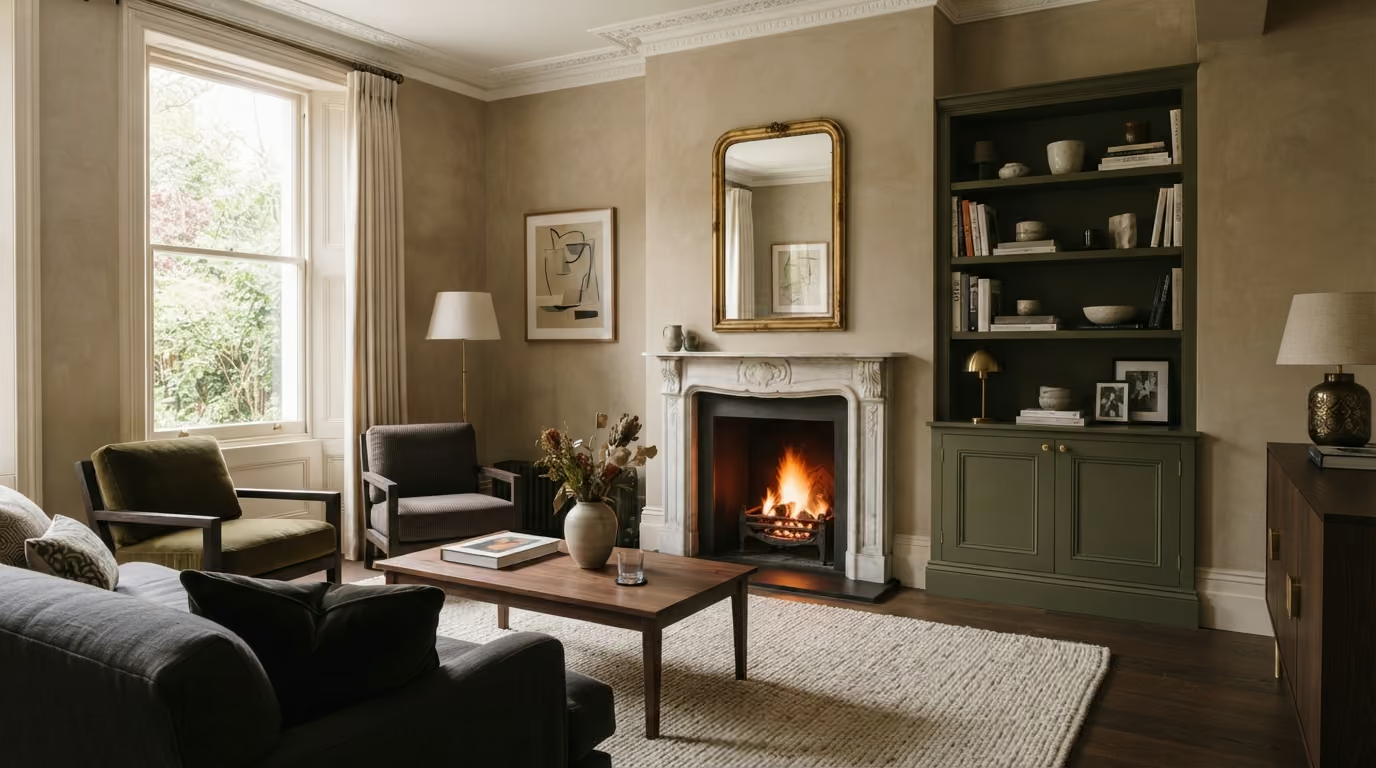
We carry out Bauwerk limewash projects across Prime Central London, including Belgravia, Chelsea, Kensington, Notting Hill, Knightsbridge, and Westminster. Many of these are bedrooms and reception rooms where clients want a finish that feels softer and more tailored than standard paint.
Thinking about Bauwerk limewash for a Belgravia bedroom? Send a few photos of the room, tell us how the space is used, and share any colour directions you like. We can advise whether limewash is the right fit, plan sample panels, and prepare the walls properly for a calm, high end finish. To begin, request a site visit and we will arrange a time that suits you.

Tell us a few details about your project and our team will review the enquiry and come back to you within one working day.