.avif)
Not sure if spraying or brushing is best for your Knightsbridge woodwork? This guide explains the real differences in finish, mess, timing, and long term care, so you can choose the right method for doors, skirting, and built in joinery in Prime Central London homes.
Short answer: Spraying usually gives the smoothest finish on interior woodwork in Knightsbridge, especially on doors, frames, and built in joinery. Brushing and rolling can still look excellent when the prep is strong and the right products are used, and it can be simpler for small areas or touch ups. The best choice depends on how much woodwork you have, how close you are to moving in or staying in the home, and how perfect you want the surface to look under side light. If you want help planning the right approach, see our interior painting and decorating service.
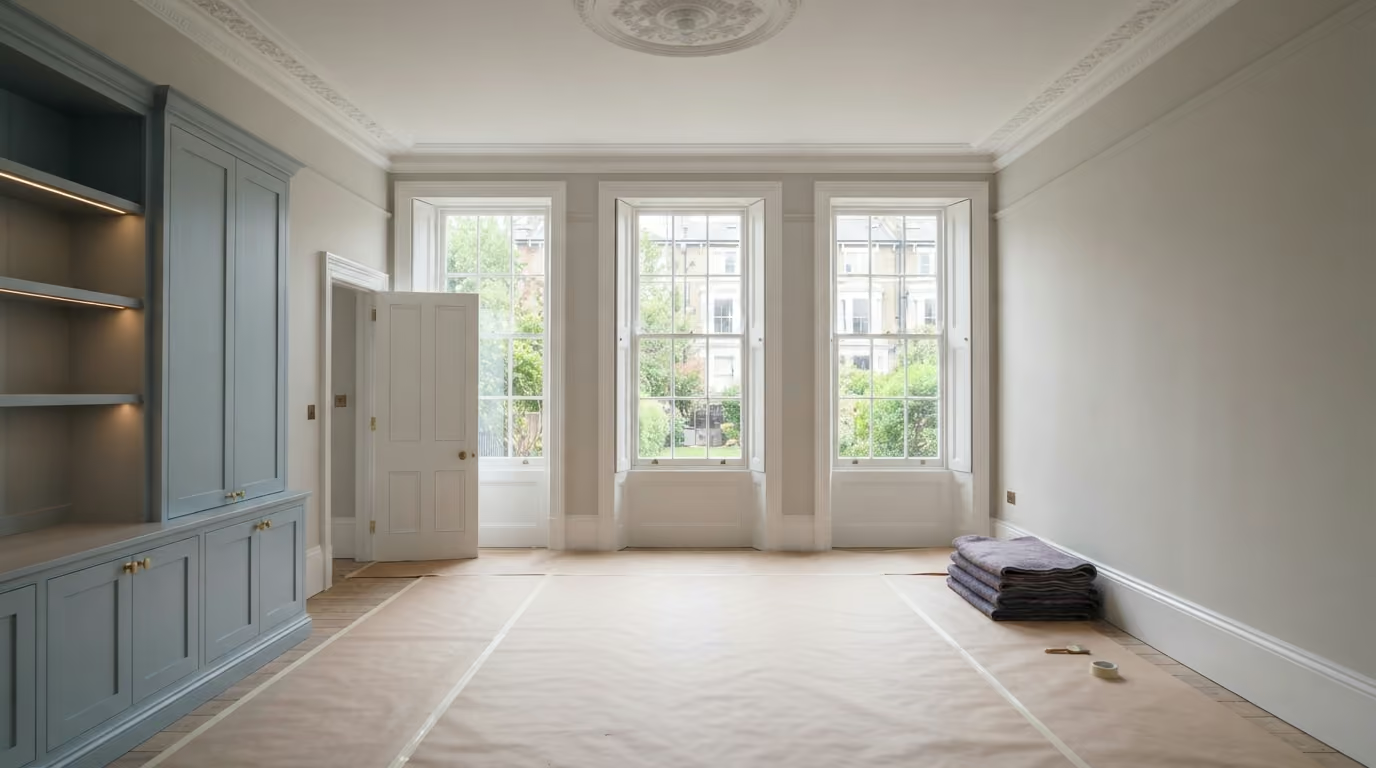
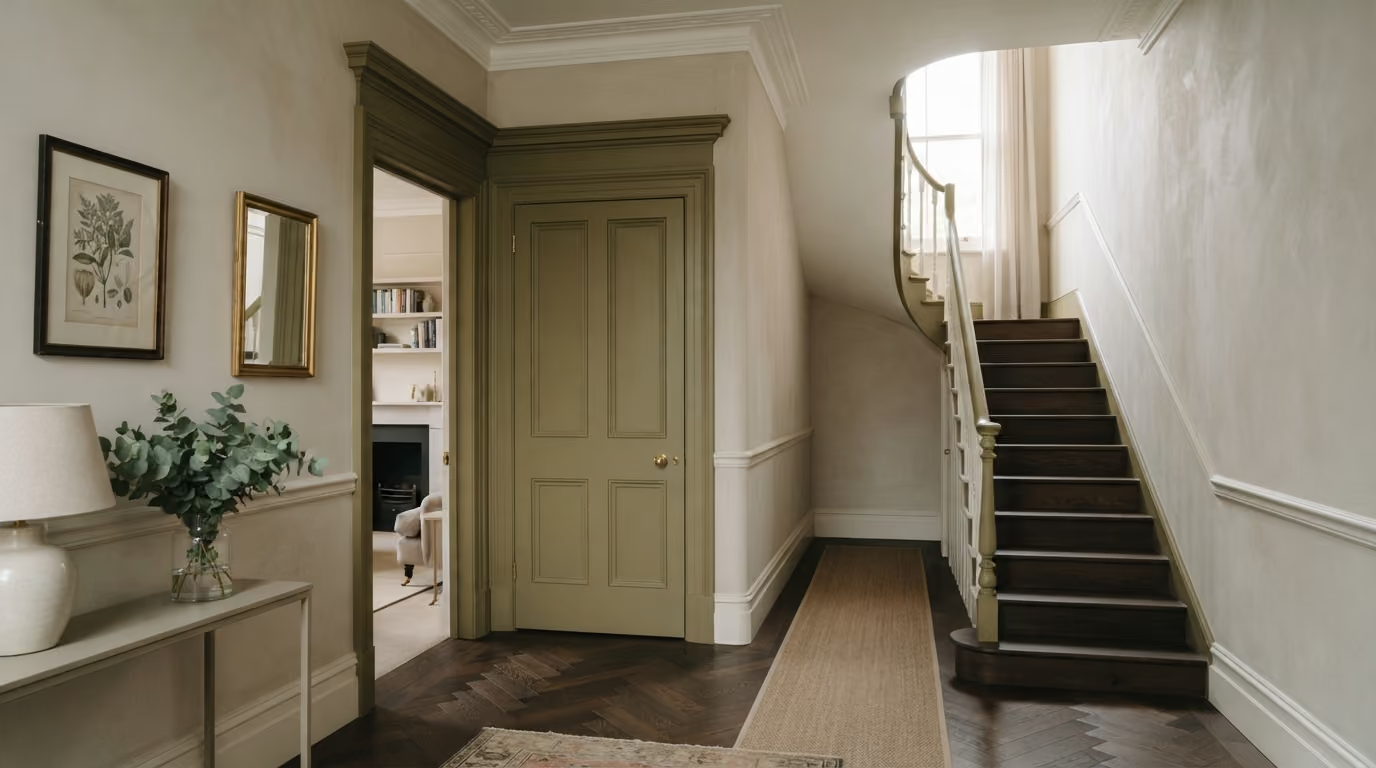
In Knightsbridge, Belgravia, Kensington, and Chelsea, woodwork is often a bigger part of the room than people expect. Tall skirting, panelled doors, sash window frames, shutters, and built in wardrobes create the outline of the space. When that outline looks sharp, the whole room feels calm. When it looks tired, even new furniture can feel less special.
Clients often ask one question. Should we spray the woodwork or brush it. Both methods can be correct, but they suit different homes and different goals. This guide explains what each method does well, where each one can disappoint, and how to decide room by room without guesswork.
When we say woodwork, we mean the painted elements that people touch and see up close. In a Knightsbridge home this often includes:
These surfaces take contact every day. Hands push doors. Shoes scuff skirting. Rings knock frames. Light from lamps grazes across panels. That is why the finish quality matters, and why the method matters too.
Spraying puts paint on the surface in a fine, even coat. When done properly, it creates a very smooth finish with minimal brush or roller marks. It can look close to a factory finish, which is why many owners and designers like it for premium interiors.
Spraying is most useful when:
In a Knightsbridge townhouse, sprayed woodwork can make the whole space feel newly built, even when the architecture is historic. The doors and frames look crisp, and the finish reads as intentional rather than patched.
.avif)
Brushing is the traditional method. A good decorator can create a refined finish with brush and small rollers, especially on moulded details where spraying is not always the simplest option.
Brushing and rolling can be the better choice when:
A brushed finish is not meant to look rough. When done well, it should still look clean and professional. The difference is that it may show a little more texture than spraying, especially in strong light. In many period homes that is fine, and sometimes it even feels more in keeping with the building.
Clients often care about four things. How it looks, how disruptive it is, how long it takes, and how it holds up.
Spraying usually wins for smoothness. Brushing can still look excellent, but it depends more on technique, drying conditions, and how flat the substrate is.
Spraying needs more masking and protection. That can feel more intense during the work. Brushing often needs less masking, but it can take longer on complex profiles.
Spraying can be fast once masking is complete. Brushing can be slower across many doors and long runs of skirting.
Both methods can be durable when the right paint system is used. Durability comes more from prep and product choice than from the application method alone.
Whether you spray or brush, prep decides the final result. A smooth coat of paint over a rough surface still looks rough. A glossy coat over grease still fails. In Knightsbridge and Belgravia homes, we often see layers of past paint on doors and skirting. Some are sound. Some are built up and uneven.
Common prep steps for woodwork include:
This is where a woodwork refresh stops looking like a quick repaint and starts looking like a proper upgrade. If your home has been lived in for years, this step matters even more than the colour.
Here are common Knightsbridge situations where spraying tends to give the best value.
Spraying is also useful when you want an even sheen level across the whole room. A patchy sheen is one of the fastest ways to make woodwork look tired. Spraying helps keep that consistent.
.avif)
Brushing and rolling often make more sense in these cases.
Brushing also keeps future maintenance simpler. If you expect to do small touch ups over time, a brushed finish is often easier to blend than a perfect sprayed surface.
The main worry with spraying is mess. In reality, a tidy spraying setup is possible, but it depends on strict protection and clean working habits.
Key steps that keep a Knightsbridge home calm during spraying:
If the project is large, we often work in phases. One floor or one run of rooms is prepared and completed, then the next. This reduces disruption and makes it easier for owners to stay in the home during the work.
Many Prime Central London schemes use matt or soft sheen on hallway walls, then a separate system for woodwork so it stays crisp and easy to wipe. The exact system depends on the joinery and the use of the space, but the principle stays the same. Walls and woodwork behave differently, so they often need different products.
If you are refreshing both walls and woodwork at the same time, it helps to plan the order. Woodwork often takes more time in prep. Starting with woodwork, then finishing walls, often gives the cleanest result, since walls can be cut in sharply against finished trim.
If you are pairing paint with specialist finishes in quieter rooms, you can also link woodwork colours to nearby finishes such as Bauwerk limewash. Keeping undertones aligned helps the home feel consistent from room to room.
Here is a simple room based view to help you decide.
These areas take the most knocks. Doors and skirting here benefit from a finish that wipes well. Spraying can look excellent, but brushing can also work well when the prep is strong. The decision often comes down to how many doors and how tight the space is.
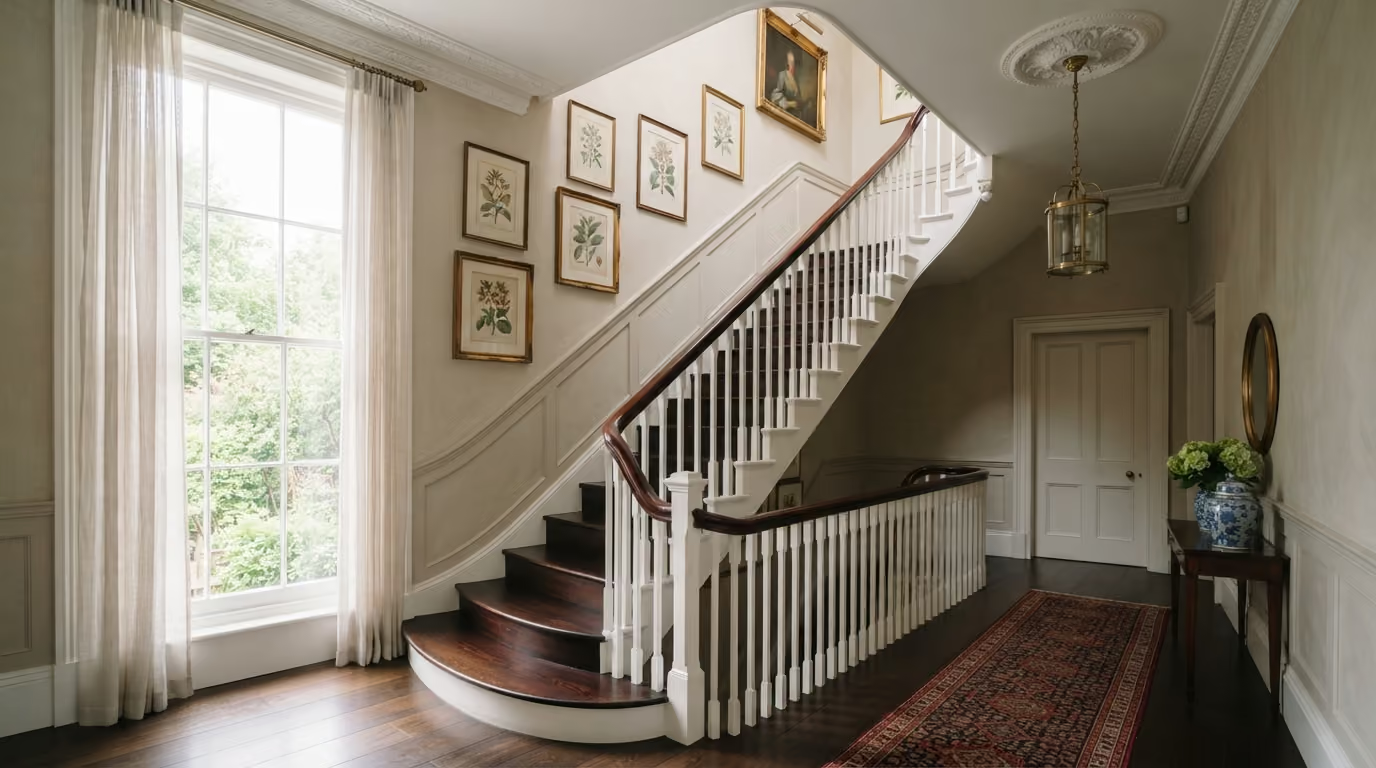
These rooms often have the strongest lighting and the most visible joinery details. Spraying can make panelling and doors look very crisp here. If there is ornate moulding, brushing can still be the better option for control.
Bedrooms are calmer. Brushing can be enough for many bedrooms, especially if the goal is a soft, classic look. Spraying becomes useful when there are large wardrobes or a full wall of joinery.
Wipeability matters. Many clients choose the method that allows the most durable system. Spraying can help create an even finish on cabinet faces, but it also needs careful protection in busy homes. A survey helps decide what is realistic without stress.
.avif)
The fix is not complicated. It is calm planning and careful prep. That is what creates the high end look, not a single magic tool.
Will sprayed woodwork chip more easily? Not if the prep and system are correct. Bond is driven by cleaning, sanding, priming, and the right top coat.
Is brushing always cheaper? Not always. On many doors, brushing can take longer than spraying, and time is a major part of cost. The best value is the method that achieves the result with the least rework.
Can you spray just the doors and brush the skirting? Yes. Mixed approaches are common. The key is consistency in sheen and colour so the room reads as one.
Can we stay in the home? Often yes, if we work in phases and protect routes well. During a survey we can suggest the calmest schedule for your layout.
We refresh interior woodwork across Prime Central London, with frequent projects in Knightsbridge, Belgravia, Kensington, Chelsea, Notting Hill, and Westminster. You can see the level of finish we aim for in our projects, including homes such as the Georgian London interior and Central London residence.
Not sure if you should spray or brush your Knightsbridge woodwork? Share a few photos of your doors, skirting, and any built in joinery, plus a note on whether you will be living in the home during the work. We will reply with a clear recommendation and a tidy plan. To begin, you can request a site visit and we will set a time that works for you.
Tell us a few details about your project and our team will review the enquiry and come back to you within one working day.