.avif)
Thinking about Bauwerk limewash for a Kensington townhouse but not sure if your walls are ready? This guide explains what limewash needs from the surface, how we plan sample panels, and how to avoid patchy results in Prime Central London light.
Short answer: Bauwerk limewash looks its best when the wall base is mineral friendly, flat, and evenly primed. The common causes of patchy limewash are uneven suction, mixed old coatings, and rushed prep around repairs and corners. A simple process fixes this: inspect the substrate, repair properly, control suction with the right base system, then apply sample panels and agree the final look before the full room. For more detail on our approach, see our Bauwerk limewash service.
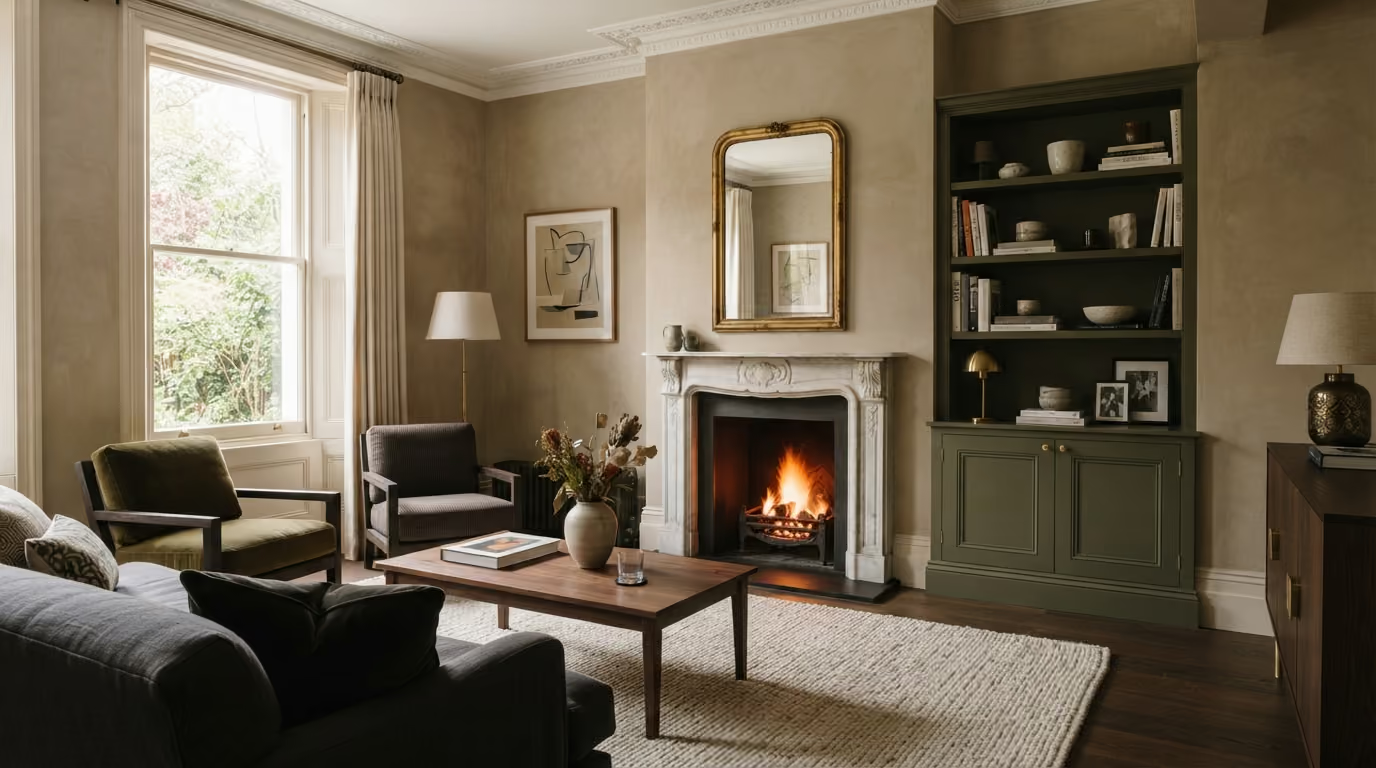
Kensington townhouses and prime flats often have the exact features that make limewash feel right. Tall ceilings, fine plaster, cornices, and natural light that shifts through the day. Limewash can bring a calm depth that standard paint struggles to match. Yet limewash is less forgiving than normal paint. If the base is wrong, the finish will tell on you. If suction is uneven, you can get dull patches and harsh marks. If repairs are not flat, the wall can look unsettled in side light.
This guide explains how we prepare walls for Bauwerk limewash in Prime Central London homes, what to watch for in older buildings, and how to plan a room so the final result feels intentional and consistent.
Limewash is a mineral finish. It behaves differently to a film forming paint that sits on top of the wall. That is why the surface matters so much.
In simple terms, limewash wants:
When these conditions are met, limewash develops the soft movement people love. When they are not met, limewash can look blotchy or stressed, even if the colour is beautiful.
Kensington homes can include several wall types across one property. Each can be suitable for limewash, but each needs its own checks.
This is why we start with a survey rather than jumping straight to colour charts. The wall tells us what the system needs.
Uneven suction is the main reason limewash looks patchy. One area absorbs quickly and dries dull. Another area absorbs slowly and dries with a different depth. In a Kensington reception room with strong daylight, those differences can show clearly.
Here are the most common causes of uneven suction:
Our fix is simple. We aim to create a consistent base across the whole wall, not a patchwork of different materials. That usually means full surface prep and a full base coat system, not local quick repairs only.
.avif)
Before any sanding or priming, we inspect. This takes less time than people think, yet it saves the most money later.
If the wall is not ready, we do not hide it. We explain what needs correcting so the limewash finish does not carry the problem forward.
In a period townhouse, repairs are normal. Old picture hooks, past leaks, chased cables, and small cracks happen. The key is how repairs are finished.
For limewash, we want repairs to be:
On tall stair walls, even small ripples can show. If a wall needs skim work to restore a flat plane, that is often the right call. It is far easier to fix the base once than to try to fight a visible wall after limewash is applied.
After repairs are flat and dry, the wall needs a base system that supports limewash. The goal is consistent suction and good bonding across the surface.
We choose the base system based on the wall condition and history. In simple terms:
This step is where many poor limewash jobs fall down. People rush it, or they prime only patch areas. Limewash then dries in visible blocks. We treat the base as part of the finish, not as a quick step on the way to colour.
.avif)
Sample panels matter more with limewash than with standard paint. A painted card cannot show how limewash will move on your wall. The same colour can feel different in different rooms, depending on light and on the way the wall absorbs the finish.
We recommend:
In Kensington and Chelsea, this step often reveals the best choice. A tone that looks perfect on a chart can read cooler on a north facing wall. Another tone that felt warm on paper can look balanced in real London light.
Limewash is applied differently to standard wall paint. Brushwork and coat build are part of the character. That is why two rooms can feel slightly different, even in the same tone.
The final look is shaped by:
We set expectations clearly. Limewash is not meant to look like a perfectly uniform sprayed coating. It is meant to look natural and calm. The aim is controlled variation, not random patchiness.
Most clients choose limewash for rooms where they want softness and depth.
For heavy contact areas such as busy hallways and stairs, many clients choose standard wall paint in matt or soft sheen for easier care, then use limewash in the quieter rooms. If you want help building that balance, our interior painting and decorating service works alongside limewash projects so the whole home feels coherent.
.avif)
Limewash ages differently to standard paint. It can stay beautiful for a long time in low touch spaces, but touch ups need a careful approach so they do not show as obvious patches.
Practical care tips:
If a room is likely to need frequent cleaning, we usually advise keeping limewash for feature rooms and using a more wipeable system in that specific space.
Kensington townhouses often have a mix of finishes across floors. The best schemes feel consistent even when the wall texture changes.
We often do this by:
You can see this kind of calm continuity in our projects, where period details and modern layouts are handled with the same level of care. A good reference is the Georgian London interior project, where finishes sit quietly alongside historic features.
Can Bauwerk limewash go over old paint? Sometimes, but it depends on the existing coating and the base preparation. Heavy acrylic build up or unstable paint can cause bonding problems. A survey is the safest way to confirm.
Will limewash look blotchy? It should show gentle movement, not random patchiness. Blotchy results usually come from uneven suction or rushed prep, which is why base work matters so much.
Does limewash work in busy homes? Yes, when used in the right rooms. Many families use limewash in reception rooms and bedrooms, and keep the highest traffic zones in a more wipeable wall system.
Do I need samples? Yes. Sample panels are the easiest way to avoid surprises in Prime Central London light.
We carry out Bauwerk limewash projects across Prime Central London, with frequent work in Kensington, Chelsea, Belgravia, Notting Hill, Knightsbridge, and Westminster. Many of these homes are period properties where breathability and a calm finish matter as much as colour.
Want Bauwerk limewash that looks calm and consistent in your Kensington home? Share a few photos of the room, note whether the walls are old plaster or recently skimmed, and tell us your preferred colour direction. We will reply with a clear base plan, sample panel approach, and a tidy schedule. To begin, you can request a site visit and we will set a time that works for you.

Tell us a few details about your project and our team will review the enquiry and come back to you within one working day.