Choosing Bauwerk limewash for a Knightsbridge living room can bring softness, depth, and a calmer feel than standard paint. This guide explains how to choose the right colour, test it in London light, and avoid tones that look flat, cold, or patchy once they are on the wall.
Short answer: Bauwerk limewash works beautifully in Knightsbridge living rooms when the colour has enough warmth, depth, and softness to respond well to changing London light. The safest route is to choose a small family of warm neutrals, stone tones, putty shades, or muted earthy colours, then test large sample panels on the actual walls. Limewash should look gently varied, not flat or patchy. For help choosing and applying the right finish, see our Bauwerk limewash service.
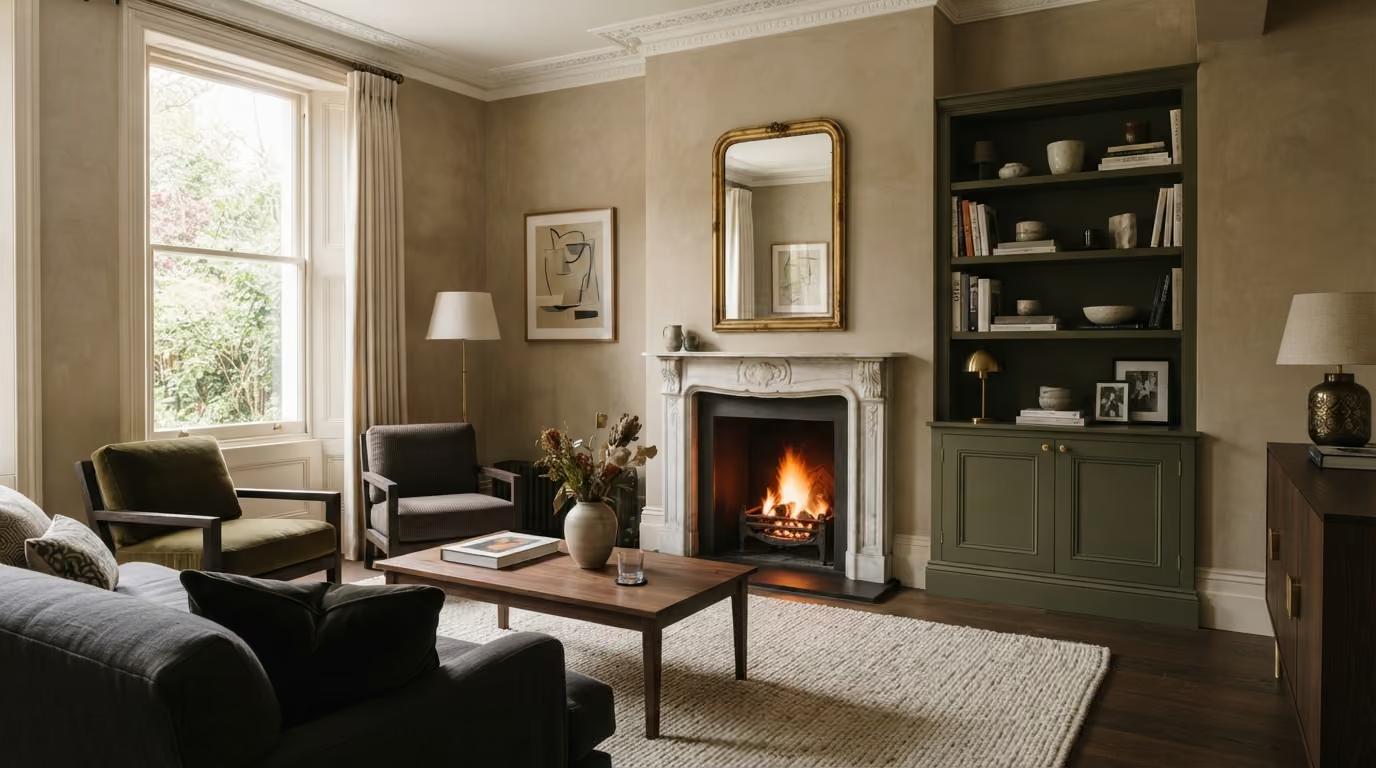
A Knightsbridge living room often has the right ingredients for limewash. Tall windows, elegant plasterwork, soft furnishings, art, and enough natural light for the finish to show its character. Bauwerk limewash can make a room feel calm and layered without relying on strong pattern or heavy colour. It gives walls a mineral softness that changes through the day, which is exactly why so many designers like it for high end homes.
Yet colour choice is where many people get nervous. A shade that looks perfect on a small card can feel too cold once it is on a full wall. A pale tone can disappear. A grey can turn flat. A warm neutral can become too creamy under evening lamps. This guide explains how to choose a Bauwerk limewash colour for a Knightsbridge living room so the final result feels refined, not dull or surprising.
Standard paint usually creates a more even film of colour. Limewash is different. It is a mineral finish with natural movement, so the colour does not sit on the wall in the same flat way. It has soft variation from the brushwork and the surface beneath it.
This means limewash can make simple colours feel richer. A warm stone tone can look layered. A putty shade can feel soft and architectural. A gentle clay neutral can add warmth without looking heavy. But it also means colour choice needs more care, because undertones and light changes become more visible.
With limewash, the aim is not perfect uniformity. The aim is controlled movement. The wall should feel alive, but calm.
Living rooms in Knightsbridge often benefit from finishes that feel quiet and tactile. The room may already include strong design elements, art, antiques, bespoke joinery, lighting, or soft furnishings. In that setting, the wall finish should support the room rather than compete with it.
Limewash works well because:
In a formal living room, this kind of subtle depth can be more valuable than a strong colour statement.

The same limewash colour can look different from one living room to another. Before choosing a shade, look at the light. This matters more than the paint chart.
Ask these questions:
A north facing room may need a warmer tone to stop it feeling cold. A south or west facing room can often handle a more balanced neutral because the light already adds warmth. A room used mainly in the evening should be checked under lamps before you commit.
For Knightsbridge living rooms, warm neutrals are often the safest and most elegant choice. They have enough body to avoid looking flat, but they still feel calm and easy to live with.
Good directions include:
These tones tend to work well because they sit between white and colour. They are not stark, yet they do not dominate the room. Bauwerk limewash gives them extra depth, so they still feel special.
Cool grey can look elegant in the right space, but it is risky in many London living rooms. In a room with limited sun or cool daylight, grey based limewash can lose warmth and start to feel dull. Since limewash has a very matte surface, it will not bounce light in the same way a glossier finish might.
Cool greys are most risky when:
If you like grey, consider a warmer greige or putty tone instead. It can still feel refined, but it will usually live better in a Knightsbridge setting.

Not every limewash living room needs to be pale. Deeper tones can look beautiful in Knightsbridge, especially when the room is used in the evening or has strong lighting and good proportions.
Deeper colour directions that can work well include:
The trick is to keep saturation controlled. Limewash already brings movement and depth, so a colour does not need to be very strong to feel rich. A slightly muted shade often looks more expensive than a bold one.
With standard paint, small samples can sometimes be enough. With limewash, large sample panels are much safer. You need to see how the finish moves on your wall, in your light, with your furniture nearby.
A proper sample process should include:
The doorway check is important. A colour may look interesting up close, but the real question is whether the room feels calm when you enter.
Undertone is the hidden warmth or coolness inside a colour. In limewash, undertones can become more noticeable because the surface has movement.
Watch for these:
A good colour choice is not only about the wall. It has to sit well with rugs, curtains, sofas, art, and timber. Always judge the sample beside the key materials in the room.

Limewash can only look calm when the wall base is properly prepared. If the wall has uneven suction, old patch repairs, mixed coatings, or poorly sanded filler, the final colour can look inconsistent in the wrong way.
Good preparation usually includes:
Natural movement is desirable. Random patchiness is not. The difference usually comes down to preparation.
Many Knightsbridge homes use limewash in the living room and standard paint in hallways, kitchens, bedrooms, and service areas. That can work very well if the colour logic is clear.
Simple ways to connect the spaces:
For hallway walls, matt or soft sheen remains the practical route. The hallway can still visually connect to limewash rooms by matching undertone and warmth.
Limewash is beautiful, but it is not always the right answer. In some living rooms, standard paint may be the better choice.
Paint may suit better if:
A good finish choice should match how the room is used, not only how the sample looks.
Most limewash regret comes from rushed colour choice or poor wall preparation. Both can be avoided with a careful process.
Will Bauwerk limewash look patchy? It should show soft natural movement, not random patchiness. If it looks patchy in the wrong way, uneven suction or poor preparation is often the cause.
Can I use limewash in a formal living room? Yes. It is one of the best rooms for it, especially when the space has good light and lower wall contact.
Should I choose a pale or deeper colour? Pale warm neutrals are safest, but deeper muted tones can work well in evening rooms with good lighting.
Can limewash match painted rooms nearby? It can be closely coordinated by undertone and colour family, though the finish will always have more movement than standard paint.
We carry out Bauwerk limewash projects across Prime Central London, including Knightsbridge, Kensington, Chelsea, Belgravia, Notting Hill, and Westminster. Many of these projects involve living rooms and reception rooms where owners want calm depth, soft texture, and a finish that feels tailored to the property.
Want help choosing Bauwerk limewash for your Knightsbridge living room? Send a few photos of the room, note the light direction if you know it, and share any colour families you like. We can help narrow the options, plan sample panels, and prepare the walls properly so the finished room feels calm, layered, and refined. To begin, request a site visit and we will arrange a time that suits you.

Tell us a few details about your project and our team will review the enquiry and come back to you within one working day.